EPA says PCSD must move toxic soil piles at Treasure School site

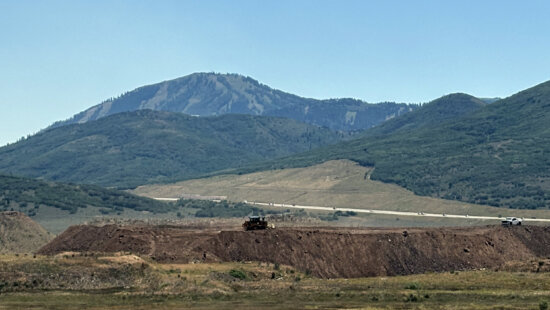
PARK CITY, Utah — State and federal regulators say toxic soil stockpiled at the Park City School District’s Treasure Mountain Junior High construction site cannot stay on the property and must be removed to a permitted landfill.
The determination, issued in a June 12 letter obtained by TownLift, appears to end the district’s effort to keep highly contaminated material on site through a regulatory exemption. The Utah Department of Environmental Quality (DEQ) agreed the soil qualifies for what’s termed a Bevill exemption under state hazardous waste rules. But the DEQ concluded, after coordinating with the EPA, the site’s environmental covenant requires soils exceeding Toxicity Characteristic Leaching Procedure, or TCLP, thresholds to be removed and disposed of offsite.
The DEQ determination did not stipulate a timeline for removal but stated it must occur quickly.
“The DERR also requests a schedule be provided for the expeditious removal of stockpiled soils exceeding TCLP thresholds from the site,” the letter states.
The Park City School District did not respond to a request for comment in time for publication Tuesday.
The ruling is a clear statement from state and federal regulators that the most contaminated soil excavated during construction cannot simply be buried back on the school property.
Recent testing of the piles found dangerously elevated contamination, with lead exceeding federal hazardous waste thresholds by five times and arsenic reaching up to 100 times the commercial soil standard used by the EPA and Summit County.
This year, Board of Education President Meredith Reed and Superintendent Lyndsay Huntsman repeatedly assured the public that the piles were being handled properly.
The Treasure Mountain campus sits atop land contaminated by historic mining in the area and is governed by a 2017 environmental covenant created after an EPA cleanup action. The covenant requires excavated soils failing TCLP standards to “be managed as hazardous waste and disposed of” at a facility permitted by the DEQ. Soils that pass TCLP testing may remain onsite.
The DEQ also told the district that project consultants need written acceptance from the receiving landfill before transporting the piles.
Since work began at the site in August 2025, state scrutiny and communication missteps have plagued the project, which has included demolishing the former Treasure Mountain Junior High School and building a new athletic campus.
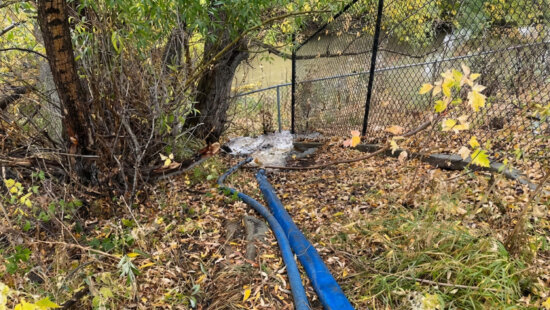
The state investigated an un-permitted discharge of contaminated ground water into a nearby stream, but has not yet released its findings. District contractors also received a non-compliance notice for mishandling of asbestos during the school demolition.
The DEQ did not include cost estimates in its direction to the district. Transporting the toxic soil off-site is likely to be significantly more costly than burying it.


2266 E Garfield Avenue
Salt Lake City, UT 84108