Nordic Combined officially dropped from the Olympics

ZURICH, Switzerland — The Alpes 2030 discipline and event program was approved by the IOC Executive Board (EB) following the recommendations of the Olympic Program Working Group (OPWG), which assessed the proposals submitted by the International Federations (IFs) and the Organising Committee with regard to ski mountaineering.
When approving the Milano Cortina 2026 sports program in 2022, the IOC EB decided to closely monitor the performance of snowboard parallel giant slalom (PGS) and Nordic combined, given challenges observed in past editions of the Games from participation and audience engagement perspectives.
During every Games edition, the IOC conducts a global study covering all Olympic Winter Games sports, disciplines and events across key markets on all five continents. The evaluation during Milano Cortina 2026 measured 14 popularity indicators across broadcast coverage, digital media, general public interest, ticketing and press, involving up to 50+ markets per indicator.
The IOC EB noted that PGS – as part of the snowboarding discipline – had demonstrated significant improvement since Beijing 2022 across several popularity indicators. It was therefore decided to retain the PGS events on the Alpes 2030 program, provided that they will not have a standalone field of play.
Based on the findings of this study, together with trends observed across previous studies of past editions of the Olympic Winter Games, the IOC EB discussed the status of Nordic combined and decided not to include the discipline on the Alpes 2030 program.
Across most of the popularity indicators, Nordic combined ranked lowest among all Olympic Winter Games disciplines at Sochi 2014, PyeongChang 2018, Beijing 2022 and Milano Cortina 2026. At the most recent Olympic Winter Games, it was the lowest-ranked discipline in 11 of the 14 popularity indicators assessed.
In addition, the discipline continues to face challenges in terms of universality and participation at the Olympic Games. Only five National Olympic Committees (NOCs) won medals in Nordic combined across the last four editions of the Olympic Winter Games.
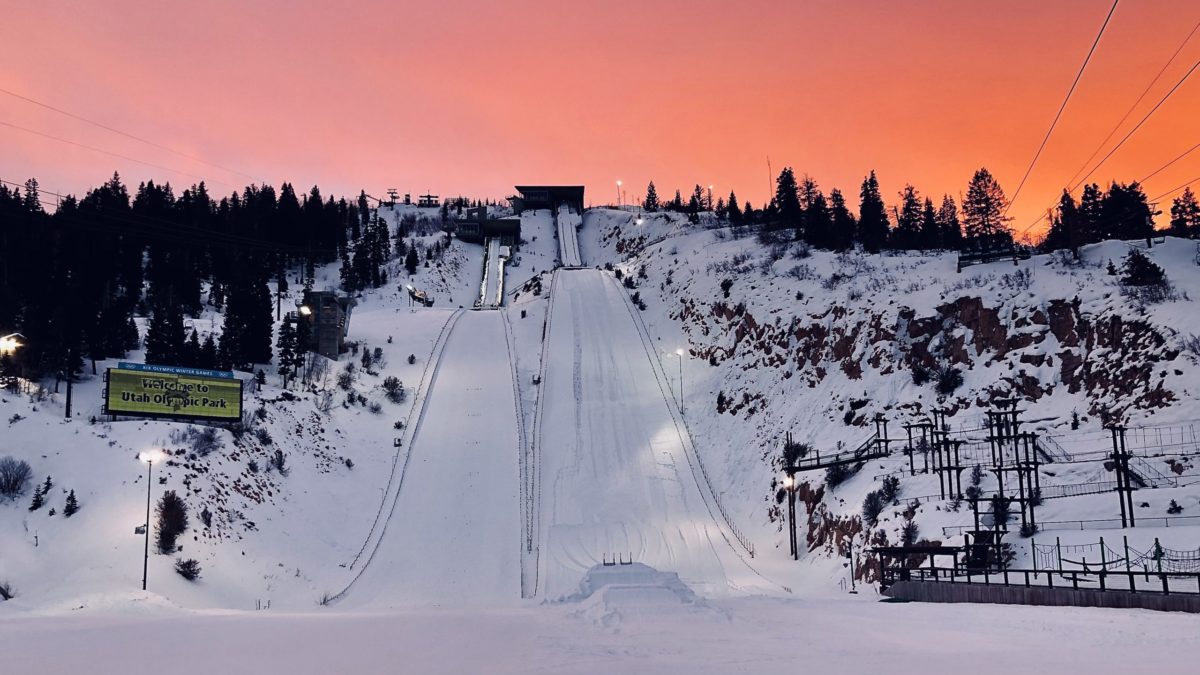
Nordic combined will remain on the program of the Dolomiti Valtellina 2028 Winter Youth Olympic Games and is eligible for future inclusion at the Utah 2034 Olympic Winter Games through the candidate discipline pathway under the evaluation process established within the Fit for the Future strategic framework.
Nordic combined athletes and Olympians will continue to have access to all the programs designed for athletes and Olympians which are available via Athlete365.
As a principle, feedback on the 14 popularity indicators has also been provided to all International Federations so that they can work closely with the IOC to further improve for the next Games editions, particularly those disciplines and events with lower rankings.
The discipline and event program for Alpes 2030 was assessed in line with the previously established evaluation criteria and not under the new framework approved on 25 June 2026 by the IOC Session, as part of the IOC Fit for the Future process, which will be applied only from Brisbane 2032 onwards.
Overall, 26 new events were proposed by the IFs and the Organising Committee. The IOC EB decided to add three disciplines and 16 events, to enhance gender equality, innovation and youth interest, in line with the principles approved in 2024.
The discipline and event changes introduced for Alpes 2030 concern four sports:
Biathlon:
Mixed singles relay (event)
Skating:
Figure skating: synchro9 (event)
Speed skating: men’s team sprint and women’s team sprint (events)
Ski and snowboard:
Freeride (discipline) with men’s ski, men’s snowboard, women’s ski, women’s snowboard (events)
Freestyle skiing: mixed team ski cross (event)
Snowboard: mixed team snowboard parallel (event)
Ski jumping: women’s super team (event)
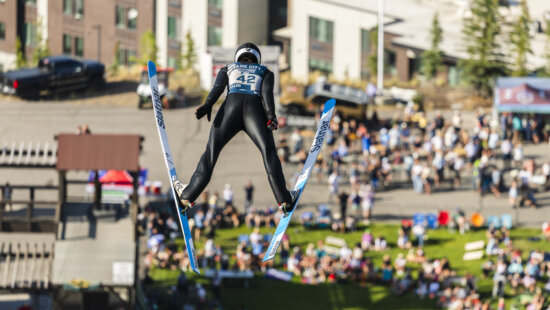
Removal of Nordic combined (discipline)
Ski mountaineering (sport proposed by the French Alps 2030 Organising Committee and approved by the 146th IOC Session in June):
Individual (discipline): men’s individual and women’s individual (events)
Sprint (discipline): men’s sprint, women’s sprint and mixed relay (events)
Athlete quotas have also been adjusted across several sports and disciplines, with the overall quota set at 3,046 athletes, comprising 1,525 female athletes and 1,521 male athletes (including the OCOG-proposed sport of ski mountaineering).
These changes reflect the IOC’s commitment to ensuring that gender parity is achieved and that the Olympic program continues to evolve and remain relevant to future generations of athletes and fans, while controlling cost and complexity.
Freeride (ski and snowboard), and synchro9 (figure skating)
Freeride (ski and snowboard) and synchro9 (figure skating) will make their first appearance on the Olympic stage at Alpes 2030.
Freeride has experienced rapid international growth, benefitting from a strong youth fanbase and visually spectacular competition. It uses a natural field of play, which minimizes its impact on the Games. Comprising four events, it will provide an Olympic opportunity for 44 athletes (22 women and 22 men) to compete at the Games for the first time. Freeride started in the 1990s to develop as a discipline.
The inclusion of synchro9, a team event, is a key factor in achieving gender parity at Alpes 2030. The event will be contested in the existing figure skating venue. Synchronized skating has demonstrated strong spectator appeal and delivers a dynamic competition atmosphere. It was officially recognized as a discipline by the International Skating Union (ISU) in the 1990s.
First gender-equal Olympic Winter Games
As a result of the changes introduced to the program, Alpes 2030 is set to achieve gender parity by quota allocation for the first time in Olympic Winter Games history, building on the progress achieved at Milano Cortina 2026, which delivered the most gender-balanced edition to date.
Female athlete quota places will account for 50 percent of the total quota of 3,046 athletes. The program will also achieve parity in the number of events staged, with 56 women’s and 55 men’s events, in addition to 15 mixed events.
Additionally, four sports will increase women’s participation, with two reaching full parity:
- Luge: from 44.3% to 50%
- Skiing: from 48.6% to 50%
- Bobsleigh: from 32.9% to 39.5%
- Ice hockey: from 43.4% to 45.6%
Initial sports program
The seven sports on the Alpes 2030 initial sports program were approved by the 142nd IOC Session in Paris in July 2024, at the same time as the host election.
In addition, ski mountaineering was officially added as a sport to the program for the 2030 Olympic Winter Games in the Alps. The decision was taken by the 146th IOC Session in Lausanne in June 2026, following a proposal from the French Alps 2030 Organising Committee.
Further information on the Olympic program can be found via this link: Sports program and results.
Venue masterplan updates approved
The French Alpes 2030 Organising Committee also proposed some updates to the Alpes 2030 venue masterplan, which were approved by the IOC EB in addition to those approved at the previous meeting on 22 June.
Following the 146th IOC Session decision on 25 June 2026 to include ski mountaineering in the Alpes 2030 sports program, the EB approved Montgenèvre as the host venue for this sport. This allows for integration with an existing competition venue and the Olympic Village in Briançon, ensuring operational efficiency and athlete convenience.
The IOC EB also approved adjustments to the Paralympic venue masterplan to create a more compact plan and maximize the use of Olympic venues, subject to approval by the International Paralympic Committee Governing Board.


4251 E Lipizzan Jump
Moab, UT 84532