DEQ finds illegal contaminated-water discharge after Park City School District downplayed permit violations

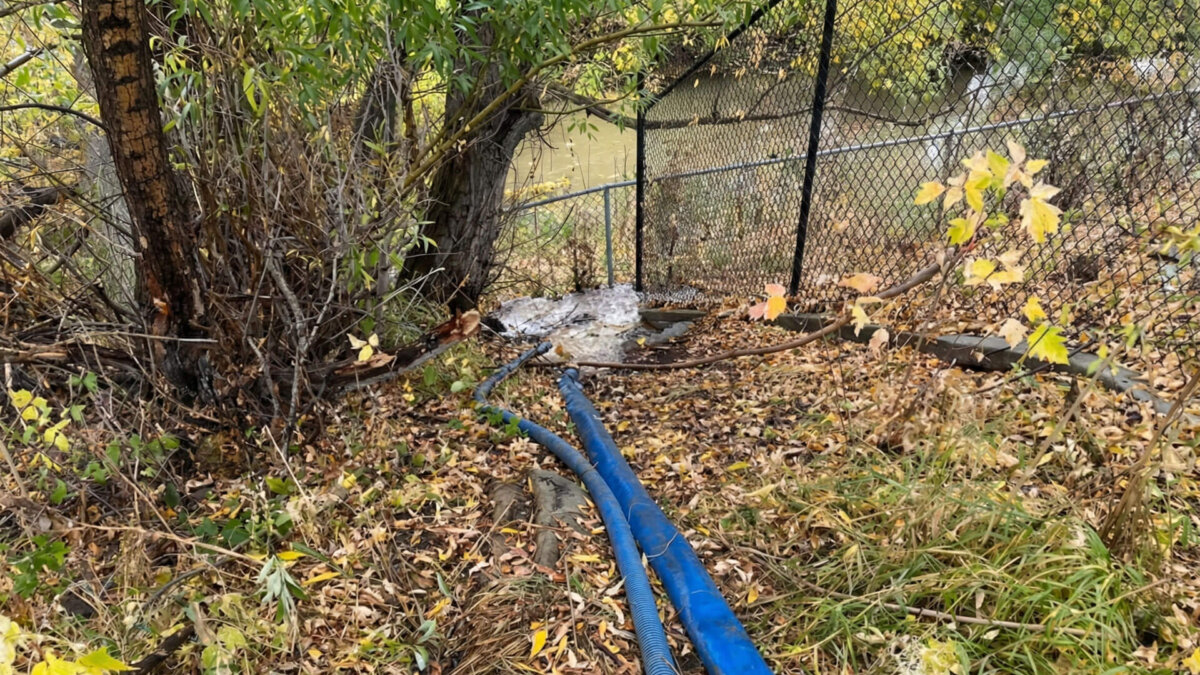
State regulators found more than 500,000 gallons of contaminated groundwater were discharged from the Treasure Mountain site without proper permitting, contradicting key claims the district previously sent to the community.
PARK CITY, Utah — Nearly a year after contaminated groundwater was discharged from the Treasure Mountain construction site into storm drains and a tributary of Silver Creek, Utah environmental regulators determined that Park City School District contractor Hogan & Associates Construction violated state and water-quality law. The violations carry potential civil penalties of up to $10,000 per day, although the state has not imposed a fine.
On September 2, 2026, The Utah Division of Water Quality (DEQ) issued a Notice of Violation to Hogan. DEQ found two violations of Utah’s Water Quality Act and water-quality rules: discharging pollutants into waters of the state and making a discharge without first securing the required permit.
The Federal Clean Water Act establishes basic legal structure for regulating pollution in U.S. surface waters. Utah administers an EPA-authorized permitting program designed to implement the federal Clean Water Act.
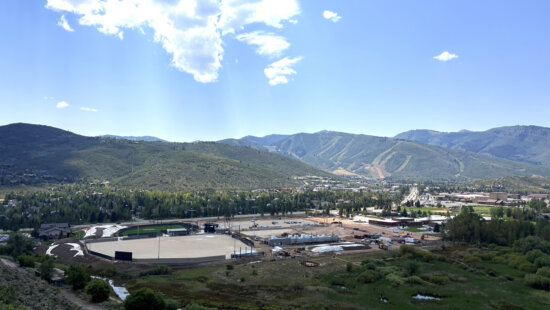
The state found Hogan discharged roughly 492,312 gallons of groundwater contaminated with high levels of lead and arsenic into a storm drain over 17 days between Sept. 9 and Oct. 8, 2025, as well as 26,496 more gallons into Pace Homer Ditch Oct. 10. The discharge was part of the demolition of the former high school site, which sits on land containing hazardous levels of cancer-causing contaminants.
The enforcement action is against Hogan, which DEQ identifies as the operator of the project. Park City School District owns the site but is not named as a violator in the order. Hogan can appeal the state’s findings if it chooses. DEQ spokesman Dave Noriega says Hogan has until Oct. 3 to file any appeal and as of September 29, no appeal had been filed.
While the order does not assess a penalty against PCSD, it documents the district received information and guidance about groundwater-discharge requirements before the September and October discharges documented by DEQ, which was not heeded. The district later distributed an environmental overview containing assertions about permitting and consultant guidance that conflict sharply with DEQ’s findings.
Those discrepancies are found in an environmental overview the district distributed publicly in 2025. PCSD distributed the overview in an email to the public “intended to help dispel rumors, reduce confusion, and ensure that factual information is available to leadership and stakeholders.”
At the time, the district portrayed the incident as a complicated permitting matter involving “non-hazardous” groundwater. For months, PCSD officials claimed in interviews and press releases that a “privately-owned” stormwater system, groundwater classification and consultant guidance “suggest that a permit may not have been required initially.”
That position directly challenged TownLift reporting that characterized the discharge as unpermitted.
DEQ has now formally found that Hogan discharged pollutants without first obtaining the required permit or treatment process, confirming the central issues raised in TownLift’s reporting.
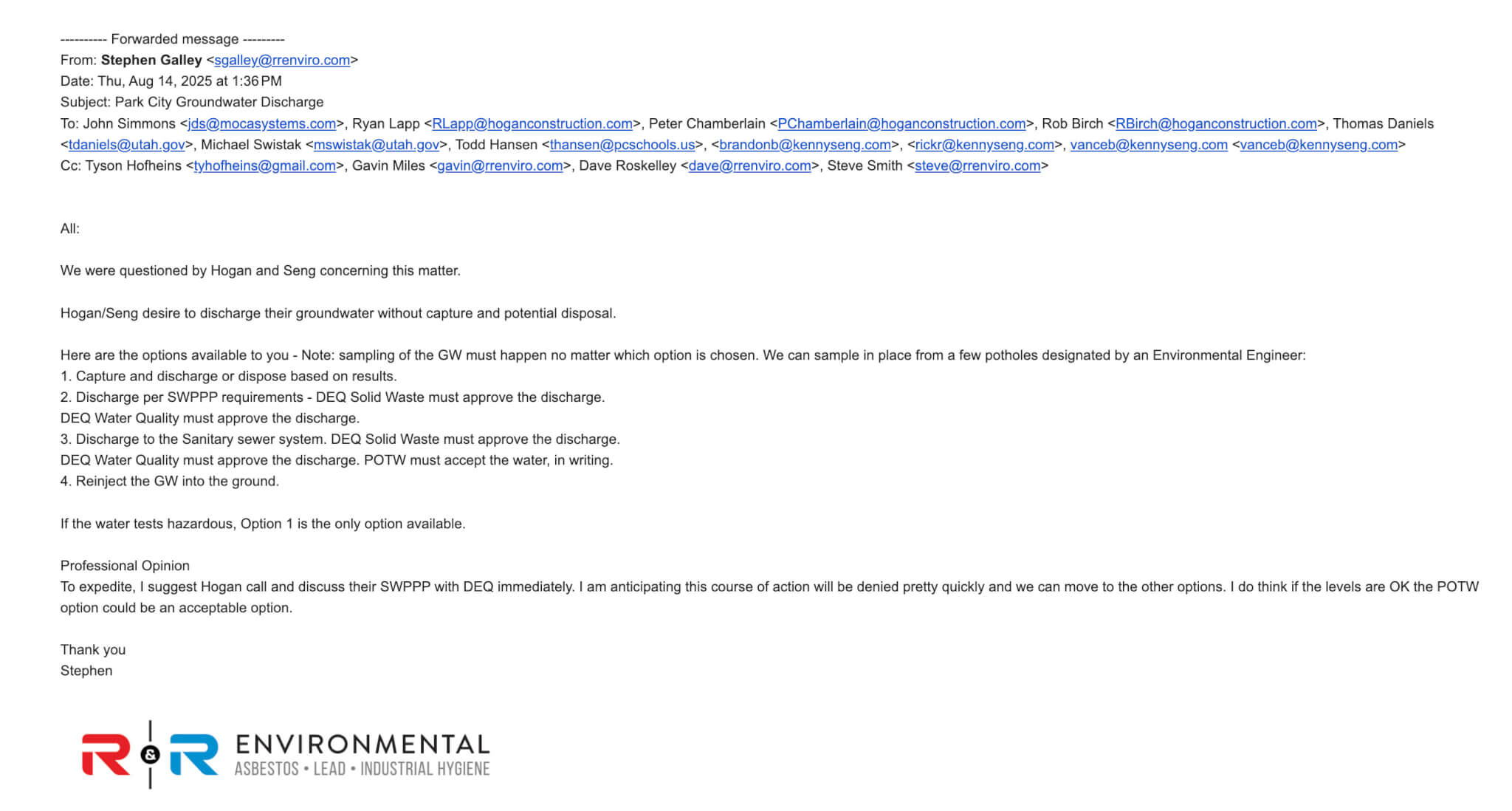
The state’s findings underscore the importance of an Aug. 12, 2025, email from R&R Environmental, the district’s former environmental consultant, obtained by TownLift along with other records showing the district and contractor received written information about the groundwater and permitting requirements before work began.
That email outlined water handling requirements and urged Hogan to contact DEQ ”immediately.” It was sent to Hogan and district project lead Todd Hansen, the Director of Support Services.
By Oct. 10, DEQ had notified Hogan and its stormwater-management subcontractor that the discharges were unauthorized without the appropriate permit coverage. Hogan submitted an application for a construction-dewatering permit that day, certifying the activity as dewatering of “uncontaminated groundwater.” DEQ later concluded that groundwater testing already provided to Hogan showed the water contained high levels of lead and arsenic, making it ineligible for discharging.
Also on Oct. 10 an email obtained through GRAMA request shows that R&R raised alarms and warned the district, including Park City School District Business Administrator Randy Upton and Hogan, that the polluted water was being pumped into Silver Creek, potentially since the project began. The email explained that was prohibited and said regulators were being notified because all groundwater must be captured and characterized before release.
That email urged the district to prepare for media scrutiny, advising it to “prepare a statement for the press” and “start preparing your statements now,” adding, “We will all be answering for this.”
PCSD subsequently ended its relationship with R&R Environmental, citing “performance and communication factors” in an email to TownLift. The records reviewed by TownLift do not establish that R&R’s warnings about the groundwater discharge were the reason the relationship ended. The district made no announcements about the pollution until an anonymous whistleblower contacted media to report significant project concerns about the groundwater discharge and improper asbestos handling.
PCSD disputes reporting and whistleblower claims
In November of 2025, PCSD spokesperson Colton Elliott emailed TownLift and other local media saying only a one-day pump into the creek occurred. In that email and the public environmental overview, the district characterized all other pumping as routed through “an existing municipal storm drain structure” and “consistent with permitted drainage pathways already in place.”
DEQ’s findings draw a different picture of the broader discharge activity. Park City Municipal said last year stormwater from that drain (and most drains in the city) flows into the Silver and McLeod Creeks. Those are protected by the EPA for domestic purposes with prior treatment, the state said in its report on the PCSD pollution.
DEQ’s order also makes clear that routing construction groundwater through a storm drain did not eliminate the permit requirement.
A comparison of DEQ’s findings with the district’s environmental overview reveals several material conflicts between the district’s public account and the facts later established by the state.
For example, PCSD’s environmental overview described a settling-tank operation to filter out dirty sediment from polluted water as lasting “over a period of days.” It said workers ran the water through the system into a district-owned private storm line, which is how “non-hazardous” groundwater is handled.
In a later press release describing a state-required permitting process, PCSD described settling tanks, chemical treatment to remove metals, filtration and dilution. DEQ also found that the earlier groundwater was substantially similar to water later tested at the site, which contained arsenic, lead, mercury, zinc and other pollutants.
This raises questions about the district’s explanation that “non-hazardous” meant the groundwater did not require “specialized containment or treatment for disposal.”
The district’s account also differs from DEQ’s findings on when discharge activity ended.
The district told the community that once environmental personnel discovered the direct discharge, “the discharge stopped immediately.” It also said “no ongoing surface discharge continued after environmental staff became aware of it.”
But the DEQ report found discharge continued after Oct. 10. It cited an Oct. 13 sample taken from an active discharge and a daily log showing pumping from 10 a.m. to 4 p.m. at 40 gallons per minute that day.
DEQ also cited an amendment to Hogan’s stormwater pollution prevention plan, made in December, that said dewatering occurred through Oct. 17 and that “water was taken from the ground and put into the river.”
The state report said Hogan did not explain the discrepancies.
No fine yet, but cleanup questions remain
Utah law allows civil penalties of up to $10,000 per day of violation.
DEQ spokesperson Dave Noriega said they have until Oct. 3 to appeal its findings and fines could come after that.
In April of 2026, PCSD Superintendent Lyndsay Huntsman and school board Vice President Nick Hill acknowledged there had been “missteps” in the handling of contaminated groundwater as the district prepared to resume dewatering under stricter treatment and testing requirements.
The district did not respond for a request for comment on the state’s finding or respond to questions about whether it had received any subsequent regulatory communications that materially changed what it had previously told the public.
TownLift has requested comment from Hogan & Associates Construction regarding the DEQ findings and will update this story with any response.
Previous TownLift coverage
- DEQ investigates Park City School District contractor for unpermitted discharge into city creek
- Groundwater tests show arsenic and lead contamination at Treasure Mountain school demolition site
- Park City School District narrative on Superfund site water discharge undercut by permits, emails, and city records
- Documents show PCSD contractor discharged contaminated water without permits while school district told public otherwise
- PCSD admits permitting “misstep” as it moves to treat and discharge contaminated groundwater


4251 E Lipizzan Jump
Moab, UT 84532