Park City School District says hazardous soil removed from Treasure Mountain site, state investigation still pending

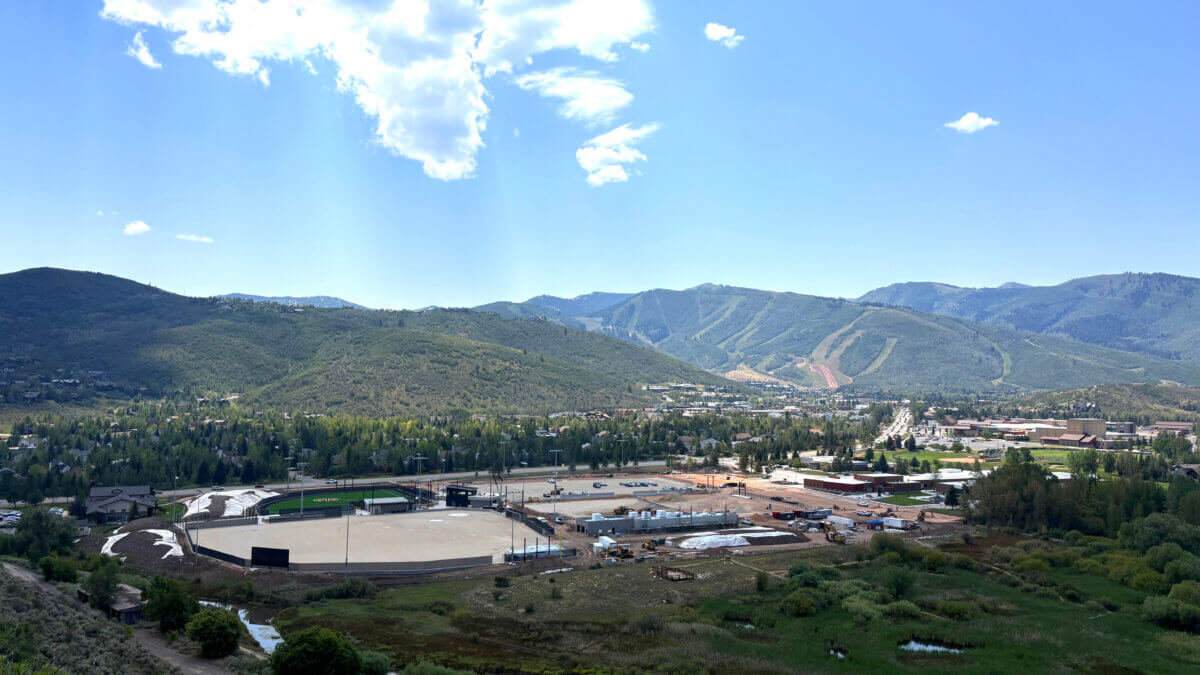
PARK CITY, Utah – The Park City School District says it has removed all soil from the former Treasure Mountain Junior High site that tested as hazardous waste, but questions remain about the district’s handling of contaminated groundwater that was discharged into a nearby stream last fall.
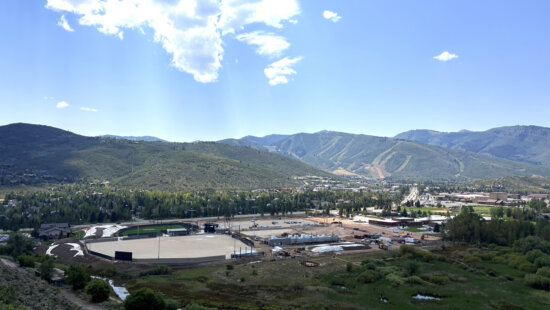
The district is converting the property into the Treasure Mountain Sports Complex, with soccer fields, tennis courts and softball and baseball fields.
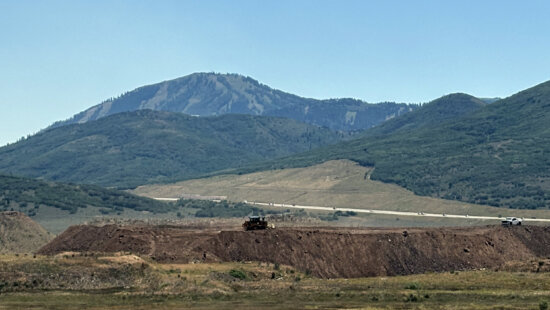
The soil removal comes after the Environmental Protection Agency in June determined toxic soil stockpiled for months at the district’s construction site must be moved. The decision upheld an environmental covenant that regulates the site and ended the district’s effort to keep highly contaminated material on site through a regulatory exemption.
View this post on Instagram
Superintendent Lyndsay Huntsman told KPCW this week all soil that failed the federal Toxicity Characteristic Leaching Procedure, or TCLP, is now in a landfill south of Provo.
The TCLP is a lab test used to determine whether contaminants can leach from waste at concentrations high enough for the material to be regulated as hazardous waste.
Huntsman said soil that passed the TCLP test stays where it is and will be used in a berm around the softball and baseball fields. The berm will be capped with clean soil and landscaped over, she said.
Park City School District public information officer Colton Elliott said 3,100 tons of soil were removed and it cost the district $60,450.
The district’s update comes after months of scrutiny over the handling of contaminated soil and groundwater at the property.
Soil contamination was more extensive than the district’s latest update suggests
The district’s latest update frames the removal of TCLP-failing soil as if the site’s hazardous-material problem has been resolved, but it doesn’t mention the fact that the 2016 environmental covenant explicitly required soil failing the TCLP test to be managed as hazardous waste and disposed of at a permitted facility.
Not all contaminated soil is considered hazardous waste. Soil can contain elevated concentrations of toxic metals and still pass the TCLP test.
Testing at the former junior high site found lead concentrations as high as 7,330 milligrams per kilogram and arsenic concentrations as high as 300 milligrams per kilogram. The lead concentration was more than 36 times the limit established under the environmental covenant governing the property, while the highest arsenic concentration was about 100 times the EPA and Summit County commercial/industrial soil screening level.
Separate TCLP testing found lead at concentrations nearly five times the federal threshold for hazardous waste. These toxic piles sat uncovered and partially covered for months as the district sought an exemption to re-bury the soil.
The 2016 environmental covenant, established through the U.S. Environmental Protection Agency’s Superfund program, outlines how the site is to be handled by the district.
“Soils that fail the Toxic Characteristic Leaching Procedure (TCLP) must be managed as hazardous waste and disposed of within a Utah Department of Environmental Quality permitted facility,” the covenant states.
Contaminated groundwater discharge remains under investigation
The soil cleanup is separate from another unresolved environmental issue at the project: the handling and discharge of groundwater encountered during construction.
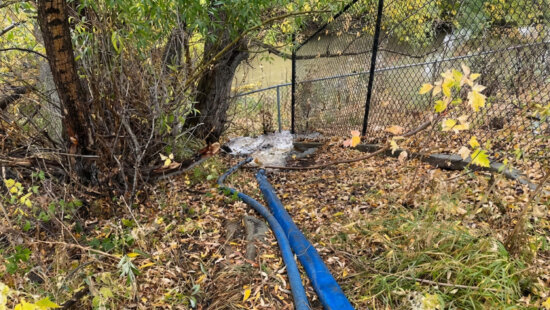
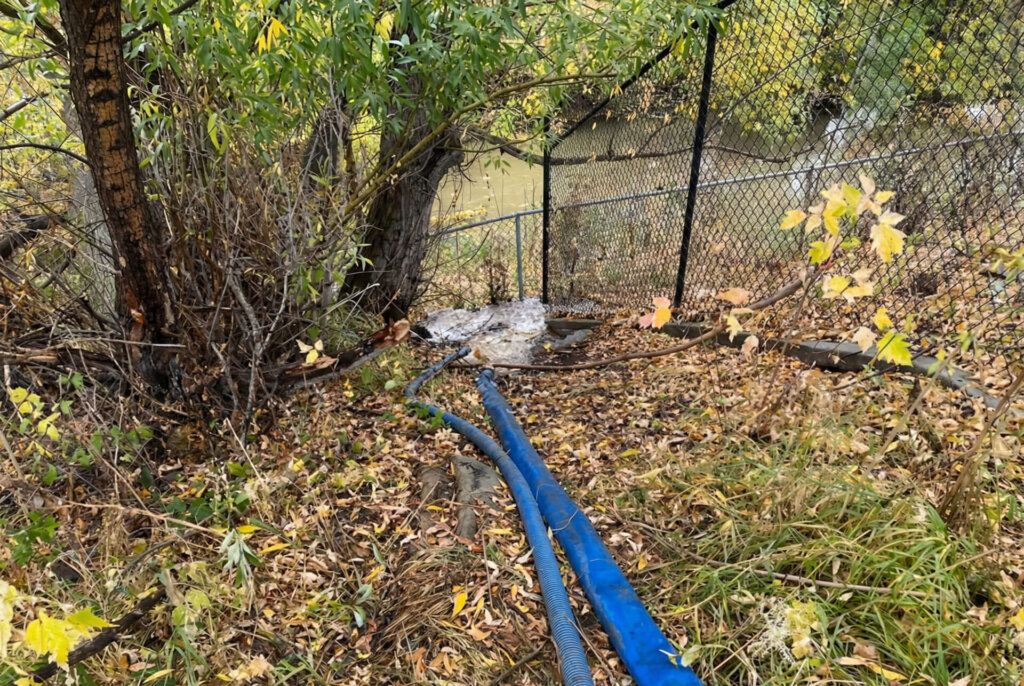
In October 2025, contractors working at the site pumped contaminated groundwater into a nearby stream. The stream is connected to Silver Creek, a Class 1C drinking-water source.
Records obtained by TownLift show that groundwater samples at the site, collected before the October discharge, contained elevated levels of arsenic and lead. An August groundwater sample measured lead at 0.287 milligrams per liter and arsenic at 0.041 milligrams per liter.
Those concentrations exceeded a threshold under state law that requires a permit for certain discharges.
District records show that contractor Hogan Construction pumped 26,496 gallons of contaminated groundwater into the stream on Oct. 10.
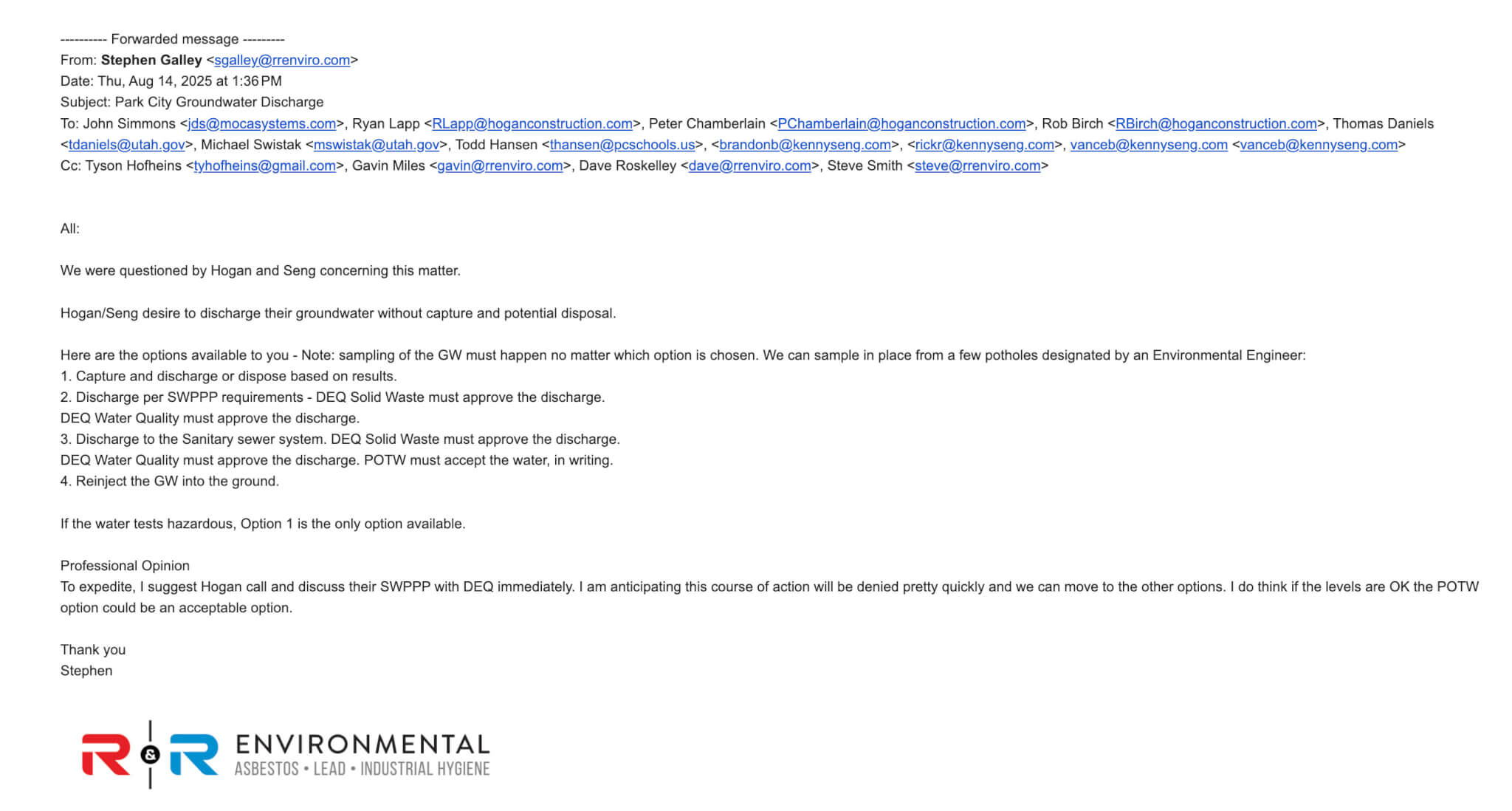
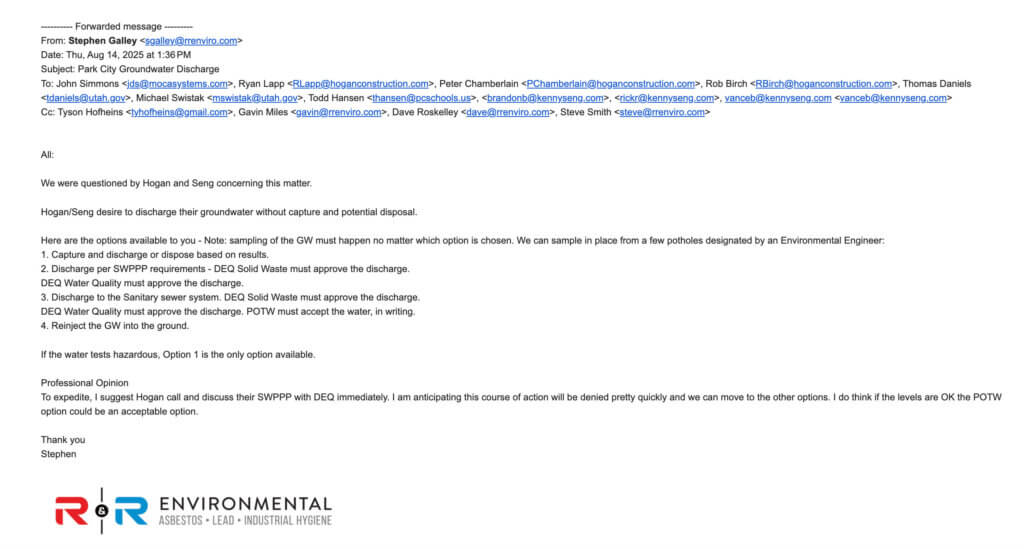
Hogan did not have the required dewatering permit when the discharge occurred. More importantly, even with a permit, the groundwater could not have been discharged untreated because its levels of lead and arsenic were too high. Internal emails obtained through a GRAMA request show that Hogan and the district were warned in writing in August that groundwater failing required tests could not be discharged.
Despite those warnings, contractors discharged groundwater from the site for weeks. Months later Hogan obtained authorization to discharge groundwater only after it was treated using a required weir tank system. That authorization did not apply to the earlier discharges, when water was dumped directly into the stream.
Earlier pumping records also showed nearly 500,000 gallons discharged into a storm drain flowing toward the creek between Sept. 9 and Oct. 8. The 29-day discharge is what the state says it’s still looking into.
The district initially described the groundwater as nonhazardous and said it had been discharged appropriately through a private storm conveyance. In April, however, Huntsman and school board Vice President Nick Hill acknowledged that the contaminated water had not been handled properly and that discharges reached a stream feeding Silver Creek.
DEQ spokesman Dave Noriega said this week that internal turnover within the Division of Water Quality has delayed the release of the department’s investigative findings. That investigation could determine whether the district or its contractors violated state law when contaminated groundwater was discharged from the construction site. Noriega estimated the findings would be made public in early September.
If the state determines the district or its contractors violated the Utah Water Quality Act by discharging contaminated groundwater without the required permit or treatment, they could face civil penalties of up to $10,000 per day of violation under Utah Code 19-5-115.


2266 E Garfield Avenue
Salt Lake City, UT 84108
4251 E Lipizzan Jump
Moab, UT 84532You May Also Like