Proposed fuel pipeline through Summit County raises questions over 910 Ranch route

HF Sinclair’s Pioneer Pipeline expansion would increase refined-fuel capacity between Wyoming and Salt Lake City as county officials weigh routing and conservation constraints.
PARK CITY, Utah — A proposed expansion of the Pioneer Pipeline through Summit County would increase the amount of refined fuel moving between Wyoming and Salt Lake City as HF Sinclair evaluates a broader expansion of its western pipeline network.
HF Sinclair announced in October 2025 that it was evaluating an expansion of the Pioneer Pipeline from Sinclair, Wyoming, to Salt Lake City as the first phase of a larger western pipeline project. The company said the proposed expansion would add approximately 35,000 barrels per day of capacity and connect with an expansion of its UNEV Pipeline between Salt Lake City and Las Vegas. HF Sinclair said the first phase was targeted to begin operating in 2028, subject to board and regulatory approvals.
The company said the project is intended to move more refined fuel from Rocky Mountain production into western markets. HF Sinclair identifies the Pioneer Pipeline as jointly owned by HF Sinclair and Phillips 66.
During a Sept. 14 Snyderville Basin Planning Commission retreat, Community Development Director Peter Barnes told commissioners that a proposed refined-fuel pipeline through the county and referred to the existing line as the Pioneer Pipeline. Staff described the project as an expansion that would generally follow existing pipeline corridors while replacing or paralleling portions of older infrastructure.
Route through Summit County remains under discussion
During the Sept. 14 Snyderville Basin Planning Commission retreat, Summit County staff said the proposed pipeline would largely follow existing pipeline corridors through the county.
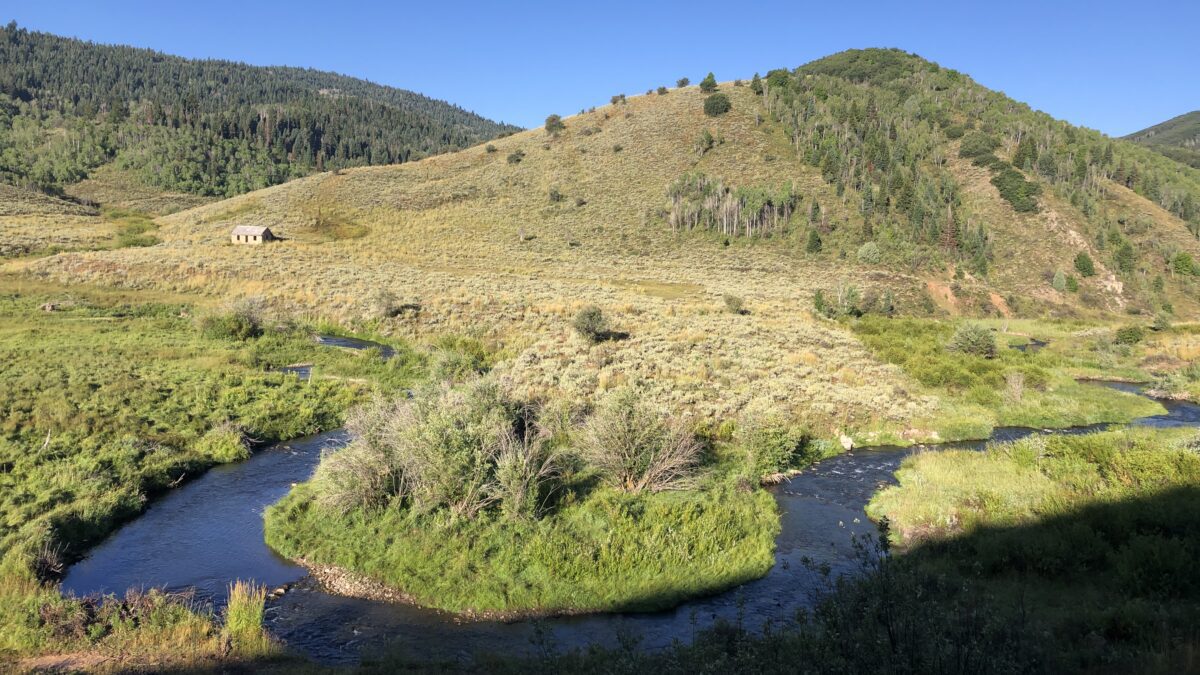
Staff said an existing pipeline easement crosses the county-owned 910 Ranch, but county officials have discussed an alternative route that would parallel Interstate 80 through portions of the area. According to staff, representatives involved with the pipeline have been discussing that possibility with the Utah Department of Transportation.
County officials said the proposed line would carry refined fuels, including gasoline and diesel, and described the project as an effort to replace or parallel portions of older pipeline infrastructure with a larger line.
The route through the 910 Ranch carries additional considerations because the property is protected through a conservation easement supported by federal and local funding.
Summit County announced in January that it had completed its acquisition of the 8,588-acre ranch in partnership with the Utah Division of Forestry, Fire and State Lands and the U.S. Forest Service. The county described the purchase as the largest conservation acquisition in its history.
The U.S. Forest Service awarded $40 million through the Forest Legacy Program toward the purchase, while Summit County committed $15 million from the open-space general obligation bond voters approved in 2021.
At the retreat, county staff said the conservation easement and agreements associated with that funding are part of the discussion over whether the pipeline should follow the existing easement across the ranch or use another corridor.
Summit County would have a local review role
Summit County’s Snyderville Basin Development Code requires applications for hazardous-liquid or hazardous-material transmission pipelines to be processed as conditional uses in all zoning districts.
The county code specifically includes petroleum and petroleum products in its definition of hazardous liquids or materials. It also states that state or federal pipeline laws take precedence when they conflict with county regulations.
The county regulations address issues including environmental impacts, pipeline corridors, essential public facilities and construction standards.
Barnes told commissioners the project would be expected to come before the county through that conditional-use process. He said the county could consider conditions intended to mitigate local impacts, including how pipeline construction crosses waterways and other sensitive areas.
Summit County adopted its pipeline-specific land-use regulations after public hearings in 2014 and 2015, according to county ordinance records.
Project arrives amid broader Utah fuel infrastructure push
Separately, Utah leaders have taken steps this year to encourage additional fuel infrastructure in the state.
In February, Gov. Spencer Cox’s office announced an agreement with lawmakers and industry representatives to increase fuel supply and support refining capacity. The governor’s office said the state and industry would look for opportunities to expand pipelines and fuel storage.
The Utah Legislature also passed H.B. 575, the Fuel Tax and Supply Amendments, sponsored by Rep. Cal Roberts and Sen. Brady Brammer. The legislation includes provisions addressing permitting and right-of-way coordination for certain oil and gas infrastructure. Cox signed the bill in March.
The governor’s office described the legislation as an effort to streamline permitting and reduce regulatory barriers for pipelines entering Utah to increase fuel supply.
In Summit County, that regional infrastructure proposal is now intersecting with a local conservation issue. The county must comply with the conservation agreements governing the 910 Ranch while also applying its pipeline regulations to any formal application that comes before it.
HF Sinclair has said the Pioneer expansion remains subject to regulatory and company approvals, and the exact route through Summit County has not been finalized.


2266 E Garfield Avenue
Salt Lake City, UT 84108