The zoning decision that could reshape Eastern Summit County for decades

Before Ivory Homes can seek approval for thousands of Browns Canyon homes, Summit County must decide whether to create the zoning tool that could allow them.
SUMMIT COUNTY, Utah — Summit County is not yet deciding whether Ivory Homes can build a new community in Browns Canyon. First, it must decide whether to create the zoning tool that could make such a proposal possible.
The Eastern Summit County Planning Commission continued reviewing the proposed Lost Creek Community Zone during a June 18 work session, weighing code language that would create a new path for master-planned development in the Browns Canyon area.
The proposal, brought forward by Garff Rogers Ranches LLC, with Ivory Development as its representative, has become a test case for one of Eastern Summit County’s central growth questions: whether the county can make room for housing for primary residents without opening the door to suburban-scale development in rural areas.
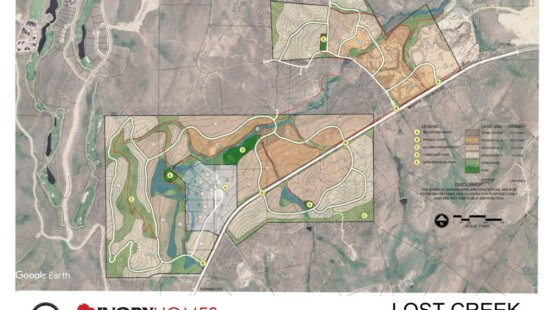
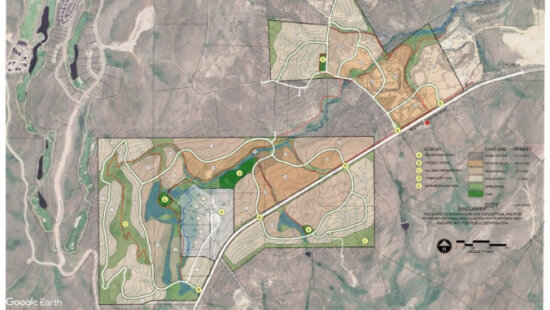
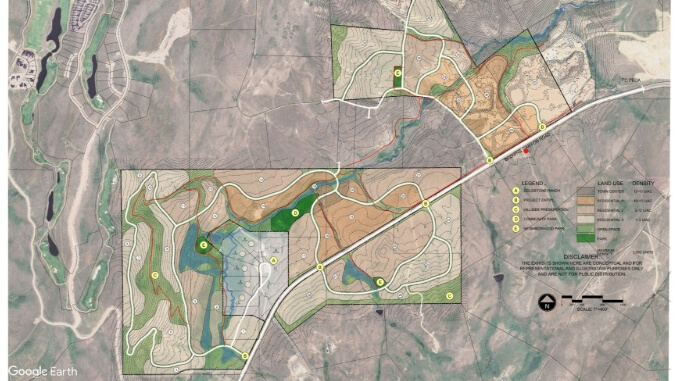
TownLift has been following the Browns Canyon proposal since early March, when county records showed Ivory Development and Garff Rogers Ranches LLC were seeking a new Lost Creek planning framework for land currently zoned AG-80. A conceptual site map submitted to the county at that time showed a stated buildout maximum of 3,002 units.
The request is currently a legislative code amendment, not a project approval. The proposed zone would establish a framework for future development in the Lost Creek area, including residential uses, neighborhood-scale commercial uses, infrastructure requirements, open space, affordable housing, and future development agreements.
Ivory Development President Chris Gamvroulas said in an interview with TownLift that distinction is important.
“Our current application isn’t a rezoning of the property,” Gamvroulas said. “It is to adopt a zone that we would then apply to the property.”
He described the process as being at “the beginning of the beginning.”
The land at issue is in Browns Canyon, where the underlying zoning is currently AG-80, or one home per 80 acres. County materials identify roughly 407 developable acres in the proposal area. The submitted density table indicates a possible range of 2,285 to 3,002 units, depending on future plans and the distribution of density across different development areas.
That scale has drawn scrutiny in Eastern Summit County, where residents have repeatedly raised concerns about traffic, water, emergency services, rural character, and whether large new development would permanently change the area.
Those concerns are not new. At a May work session, TownLift reported that Eastern Summit County planning commissioners pressed Ivory’s team on water, traffic, phasing, public services, rural character, and whether Summit County was being asked to create the framework for a new town-sized development before major questions were answered.
County staff’s questions to the Planning Commission reflected many of those same concerns. The Eastern Summit County Planning Commission asked whether the proposed zone clearly defines the vision, character, type, and scale of development; whether it includes sufficient objective standards; whether infrastructure, water, sewer, roads, and public services are adequately addressed; and whether affordable housing requirements are clear enough.
The proposed language would require a future community plan and development agreement before any project could move forward. Those later steps would address details such as density, setbacks, building height, lot sizes, parking, circulation, lighting, public facilities, and phasing.
The draft language also includes minimum requirements for open space and affordable housing. As written, at least 10% of the community plan area would be set aside as open space, and at least 10% of residential units would be required to meet the county’s affordable housing requirements.
But the central tension remains unresolved: how much certainty should be written into the code now, and how much should be negotiated later through a future development agreement?
Gamvroulas said Ivory is seeking flexibility because the final mix of housing would depend on market demand, infrastructure costs, and future planning. He said the higher-density areas would likely be concentrated near a community center, while lower-density areas would be farther out.
“What we have submitted is, on various parcels, a range,” Gamvroulas said. “We want the center area to be more dense, because that’s where we see institutional uses.”
He said those uses could include a small store, a gathering space or a coffee shop, similar to amenities Ivory has built in other master-planned communities.
Gamvroulas pushed back on the idea that the proposal should be understood primarily as a second-home or short-term-rental play. He said Ivory’s business model in Summit County and the Wasatch Back has focused on primary residents, citing Park City Heights, Francis Commons, Coyote Ridge, and Red Hill in Coalville.
“This is who Ivory Homes is,” Gamvroulas said. “We build 900-ish homes a year, 1,000 homes a year, and maybe 20 of them will be for short-term rentals.”
He said the company does not want to compete with luxury resort communities such as Promontory or Tuhaye.
“We don’t want to compete at Promontory. We don’t want to compete at Tuhaye,” Gamvroulas said. “Those are not our buyers.”
Instead, Gamvroulas argued that Summit County’s current growth pattern is already creating traffic and housing problems because many workers cannot afford to live where they work.
He said the county has continued to issue building permits, but much of that housing has not translated into growth in the primary resident population. In his view, that worsens commuting pressure from Wasatch County, Utah County and other surrounding areas.
“You got the permits, you got the growth, but you’re not housing people that work there,” Gamvroulas said. “And so you’re exacerbating this traffic situation.”
That argument mirrors a broader debate already playing out across Summit County.
TownLift previously reported that Summit County’s draft housing plan identifies a need for thousands more homes than the county’s current production goals contemplate. The draft plan targets households earning between 30% and 120% of the area median income, with a focus on workers and families who fall between traditional low-income housing programs and market-rate home prices.
At the same time, major housing proposals have faced continued scrutiny over traffic, scale, and whether the promised public benefits are sufficient to justify rezones. In the Snyderville Basin, the proposed Junction Commons redevelopment at the former Outlets Park City site has raised similar questions. That project proposes 433 housing units, including 205 affordable units, but Summit County Council members have pressed for more clarity on affordability levels, traffic impacts, and whether the benefits outweigh the risks.
The Lost Creek proposal differs in location and scale, but it sits within the same countywide pressure point: Summit County says it needs more housing for year-round residents, while residents continue to worry that large projects could outpace roads, water, services, and rural character.
Gamvroulas said he understands why residents are skeptical of large development proposals, especially in rural areas.
“There have been enough shady developers in the history of our country that ‘trust me, I’m a developer’ doesn’t go over really well,” he said. “And I get that.”
But he argued that Ivory has a track record in Utah and in the Wasatch Back, including affordable and workforce-oriented housing.
“We will perform,” Gamvroulas said. “We do perform. We have the capital. We have a partnership with the property owners.”
For county planners, the question is not only whether Ivory can build what it says it wants to build. It is whether Summit County should create a new zoning category that could shape rural growth for decades.
Eastern Summit County communities have seen increased interest from developers as land in the Snyderville Basin and Park City areas has become more expensive and constrained. At the same time, county leaders have said they need more housing for workers, families, and year-round residents.
The proposed Lost Creek Community Zone sits directly at that crossroads.
If the county creates the zone, Ivory would still need to return with a future application to apply it to the property. That process would include additional review, public meetings, and more detailed plans.
The Planning Commission did not issue final approval at the June 18 work session. The proposal remains under review.


2266 E Garfield Avenue
Salt Lake City, UT 84108