Is Browns Canyon being asked to make room for a new town?

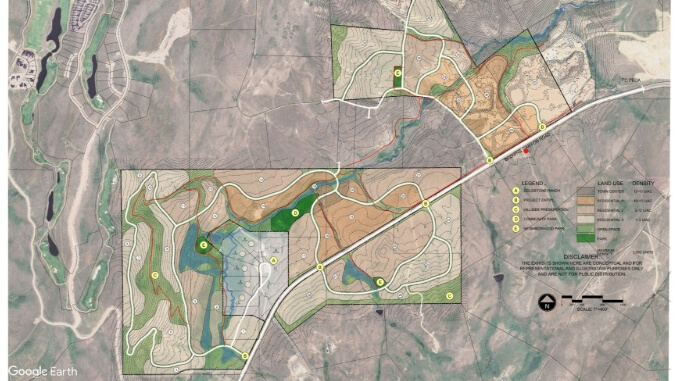
Eastern Summit County planning commissioners pressed Ivory Development on water, traffic, phasing and future incorporation tied to the proposed Lost Creek Community Zone.
KAMAS, Utah — A proposed zoning change for Browns Canyon drew pointed questions from Eastern Summit County planning commissioners Wednesday night, as they pressed Ivory Development’s team on whether Summit County is being asked to create the framework for a new town-sized development before major questions about water, traffic, public services, and rural character are answered.
The May 7 work session focused on the proposed Lost Creek Community Zone, a new zoning designation sought by Garff Rogers Ranches LLC and Ivory Development. The applicants are asking Summit County to amend the Eastern Summit County Development Code to create the zone, which county staff said would allow public or private infrastructure, multiple residential uses, and neighborhood commercial uses in the Browns Canyon/Lost Creek area.
The land is now zoned AG-80, which allows one unit of density for every 80 acres. The applicant owns about 407 developable acres in the Browns Canyon area, with access proposed from Browns Canyon Road, according to the staff report.
The code amendment would not approve a final development plan; it would create the zoning tool. If the amendment is approved, the applicant would still need to return with a separate master-planned development and rezone application that spells out the project layout, utilities, the number and type of units, and other details.
TownLift first reported in March that the proposal included a concept with a maximum buildout of 3,002 units, along with parks, trails, boardwalks, commercial areas, and open space. A later discussion narrowed the project area to about 600 gross acres, with roughly 407 acres considered developable. On Wednesday, the applicant described a potential range from about 2,200 units on the low end to just over 3,000 units on the high end.
County planner Ray Milliner told commissioners that staff’s core concerns remain largely unchanged from the commission’s first review in April. The proposed code, he said, still needs more detail and clearer “guardrails” around density and the rules that would apply to the property. Without those, Milliner said, too much would be left to a future community plan and development agreement.
The staff report echoes that concern. Staff wrote that the proposed zone would enable large-scale, master-planned development of at least 100 acres in a low-density, largely undeveloped area, but that density and intensity are not defined in the proposed language and would instead be established later through a community plan and development agreement. That, staff wrote, “limits predictability regarding the ultimate buildout and potential impacts.”
Staff also warned that Browns Canyon has limited infrastructure and that the proposed language could lead to development moving ahead of utilities. The report said there is currently no requirement to demonstrate that water, wastewater, or other services are available, funded, or built concurrently with development before construction begins.
Commissioners raised that issue repeatedly.
Commissioner Paul Weller said a development of more than 2,000 homes could mean thousands of additional vehicles on Browns Canyon Road and nearby state highways. Summit County, Wasatch County, and the Utah Department of Transportation would all need to be involved, he said, before the public could have confidence in the plan.
Water also drew scrutiny. Chair David Darcey walked through figures from the water and sewer materials attached to the staff report, saying full buildout could require more than 1 million gallons of indoor water use per day. His rough calculation put annual indoor demand at about 1,100 to 1,200 acre-feet before outdoor use.
Applicant representatives said the project team has been developing a water source and would return with more detailed engineering information.
Commissioners also questioned whether the proposed zone could become the first step toward something much larger. Weller said he was concerned the zone could become “phase one” of a broader city in the valley if more parcels are later added. Residents bought in the area, he said, knowing the surrounding land was zoned for very low-density agricultural use, and the proposed change represents a major shift.
“This potentially, in that valley, looks like a city to me,” Weller said, according to the meeting transcript.
Wade Budge, representing the applicant, said the current request is only the first step and would not create an approved project. But he acknowledged that the applicant’s long-term intent includes laying the groundwork for eventual incorporation so the area could become self-sustaining and provide municipal services. Summit County would still collect taxes, he said, while a future municipality would collect a municipal share.
That point connects to TownLift’s earlier reporting. In March, TownLift reported that a request to begin the process for a new preliminary municipality called Lost Creek was not accepted by the Utah Office of the Lieutenant Governor because two feasibility requests had already been filed statewide that calendar year, the maximum allowed under Utah law.
The staff report also flagged precedent as a concern, noting that the proposed zone is a site-specific zoning tool that is not clearly tied to adopted county planning documents, including the Eastern Summit County General Plan. Staff wrote that the zone could establish a precedent for similar requests in other undeveloped areas.
Commissioners also pushed the applicant on whether the project would become a true community or a large housing development with amenities arriving years later. Commissioner David Darcey questioned whether the county could approve homes long before commercial uses, civic spaces, workforce housing, or other public amenities are built, comparing the concern to other master-planned communities where civic and commercial pieces have taken years to materialize.
Applicant representatives said the project would be built around a central neighborhood core, a Lost Creek greenway, trails, parks, commercial areas, and a range of housing types. The highest densities would be clustered near the neighborhood center, they said, with lower densities toward the edges. The concept includes apartments, townhomes, cottages, single-family homes, and larger estate lots. Applicant representatives pointed to Park City Heights, Silver Creek Village, and Terrain in West Jordan as examples of projects with multiple housing types and community amenities.
But commissioners said Browns Canyon presents a different question, because the proposal would bring a large new development framework into a rural area where the surrounding land has long been zoned for agricultural, low-density use.
Several commissioners said rural character remains a central concern. They asked the applicant to consider stronger open-space buffers, green space around the perimeter of the development, and a design that feels more consistent with eastern Summit County’s agricultural landscape.
The staff report said the proposed code requires at least 10% open space and 10% affordable housing. Staff suggested the commission consider whether a higher open-space requirement or additional design standards would better support resource protection and community character. Staff also noted that the Eastern Summit County Development Code does not include specific requirements for the duration of affordability or distribution of affordable units, meaning those details would need to be clearly defined in a development agreement.
Darcey questioned whether housing tied to 80% of the Summit County’s area median income would be truly affordable for many east-side workers and suggested that the county’s housing staff should be involved in the analysis.
Staff also noted that the proposed location does not currently have access to transit or other transportation options for residents — an issue staff said is important when evaluating long-term livability and accessibility.
No vote was taken on Wednesday. The item was a work session, not a public hearing.
The proposal is expected to return to the Eastern Summit County Planning Commission for further discussion. Staff asked commissioners to consider whether baseline standards for density, height, setbacks, and parking should be more clearly defined; whether the proposed zone aligns with the General Plan; what infrastructure and phasing requirements should be established; whether the one-mile proximity standard is appropriately scaled; whether a maximum project size should be considered; and whether the proposed open-space requirement is sufficient.


4251 E Lipizzan Jump
Moab, UT 84532