Browns Canyon could get up to 3,000 homes

Eastern Summit County Planning Commission pushes for tighter code language on proposed Lost Creek Community Zone
KAMAS, Utah — The Eastern Summit County Planning Commission signaled Thursday it is willing to keep working through a proposed Lost Creek Community Zone for Browns Canyon, but not before demanding clearer answers on density, phasing, and the overall scale of what the county is being asked to approve.
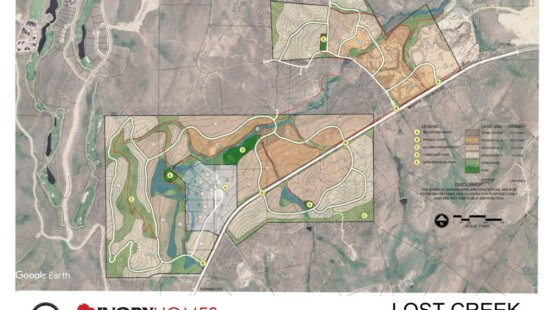
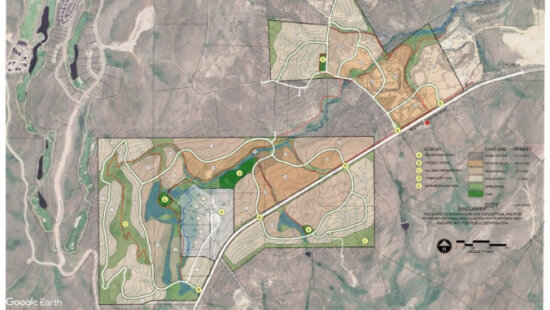
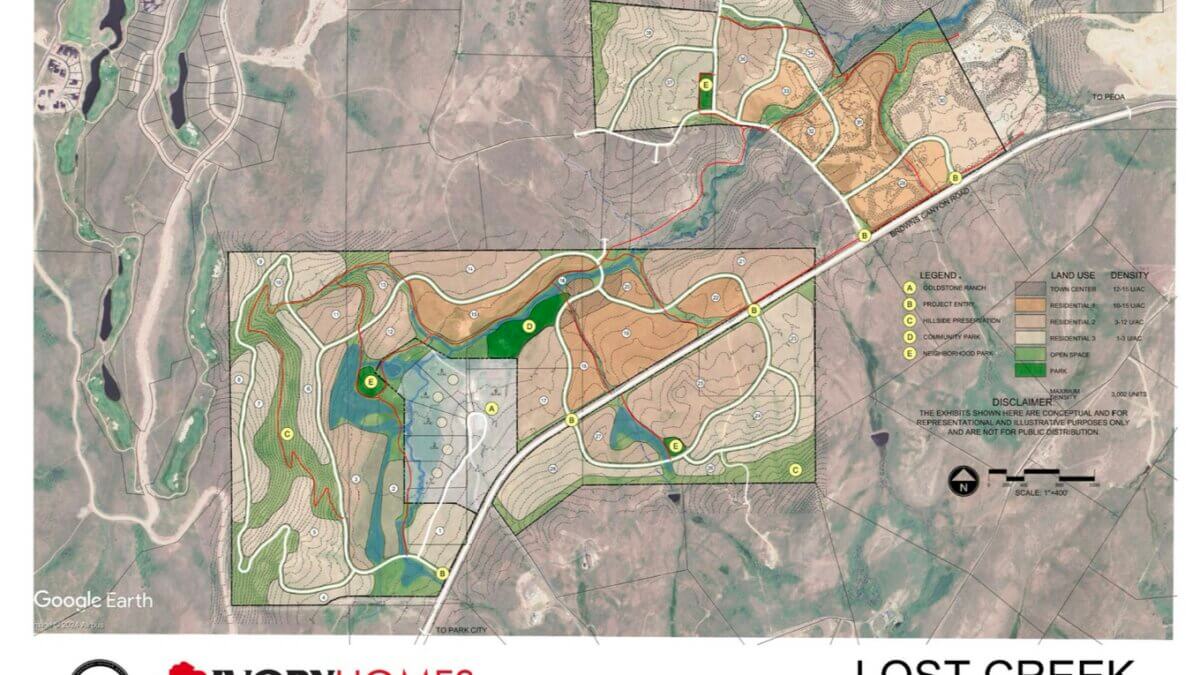
What emerged over the course of the discussion was the outline of a very large project: a phased Browns Canyon community on roughly 407 acres that could ultimately range from about 2,285 to 3,000 homes, according to figures discussed by the applicant team and commissioners.
The proposal, brought by Garff Rogers Ranches LLC and Ivory Development, would create a new zoning framework for land in Browns Canyon currently governed by the Eastern Summit County Development Code. County planner Ray Milliner told the commission the matter before it is a code amendment, not a final development approval, and that a separate master-planned development and rezone process would still be required if the zone moves forward.
TownLift has been following the Browns Canyon proposal since early March, when it reported that Ivory Development and Garff Rogers Ranches LLC were seeking a new Lost Creek planning framework for land currently zoned AG-80, with a concept then described at up to about 3,000 units. More recent TownLift reporting placed the proposal in the wider context of this year’s Capitol fights over growth, annexation and county land-use authority.
Still, commissioners made clear they want a much sharper picture before the proposal advances.
“I’m just trying to get my head around kind of just how big this is, or what the ask is,” Milliner said.
As the discussion continued, the scale came into somewhat clearer focus. The applicant team compared Lost Creek to Terrain, a roughly 600-acre, 3,000-home project, and commissioners used that comparison to press for a more direct explanation of what Lost Creek could become. One commissioner asked whether the county was effectively looking at about 2,000 to 2,500 homes on about 400 acres. Later, the discussion landed on a more specific buildout range of about 2,285 to 3,000 homes.
That prompted another pointed observation from the Milliner: “We’ve been an hour into this meeting, and I still don’t know how many homes.” He added that it is the commission’s job “to get into the details” and develop a clear picture of “what the ask is” and “what the final development would be.”
Commissioners also stressed that the total number of homes is only part of the equation. Phasing, they said, will matter just as much. A project of more than 2,000 homes spread over many years would create different pressures than one moving forward more quickly, particularly when it comes to roads, water, sewer, and public services.
The applicant team described Lost Creek as a long-range community concept centered on a central town core, featuring a mix of housing types, neighborhood commercial uses, trails, and civic space. Representatives said density would be highest near the center and decrease toward the edges. They said the framework is meant to create a complete community rather than a conventional subdivision.
Even so, commissioners repeatedly returned to the same issue: the vision may be broad, but the code needs to be precise. Questions centered on how much land the zone could cover, how the proposed one-mile Lost Creek language would work, and whether additional properties could eventually be folded into the framework. One commissioner said it would be better to work toward language that is “more black and white in the code” — an effort to avoid the kind of ambiguity that has fueled drawn-out land-use fights in the past.
The discussion also surfaced a broader political undercurrent. As the body debated whether to continue refining the proposal, one commissioner said they would rather see the county work with the applicant locally than risk another round of state intervention. “I would much rather us locals be involved,” the commissioner said.
Infrastructure remained a major unresolved question. The applicant said work is underway to identify culinary water sources and water rights, while sewer and traffic improvements would need to be engineered and phased over time. Representatives also acknowledged that full buildout would likely require improvements to Browns Canyon Road.
The commission did not endorse a final development concept. Instead, members appeared open to staff continuing to work with the applicant on the proposed zone language, while signaling that any future version will need to be more specific, more transparent, and more grounded in the realities of growth in eastern Summit County.


4251 E Lipizzan Jump
Moab, UT 84532