Park City athletes train in European wind tunnel for ski jumping skills

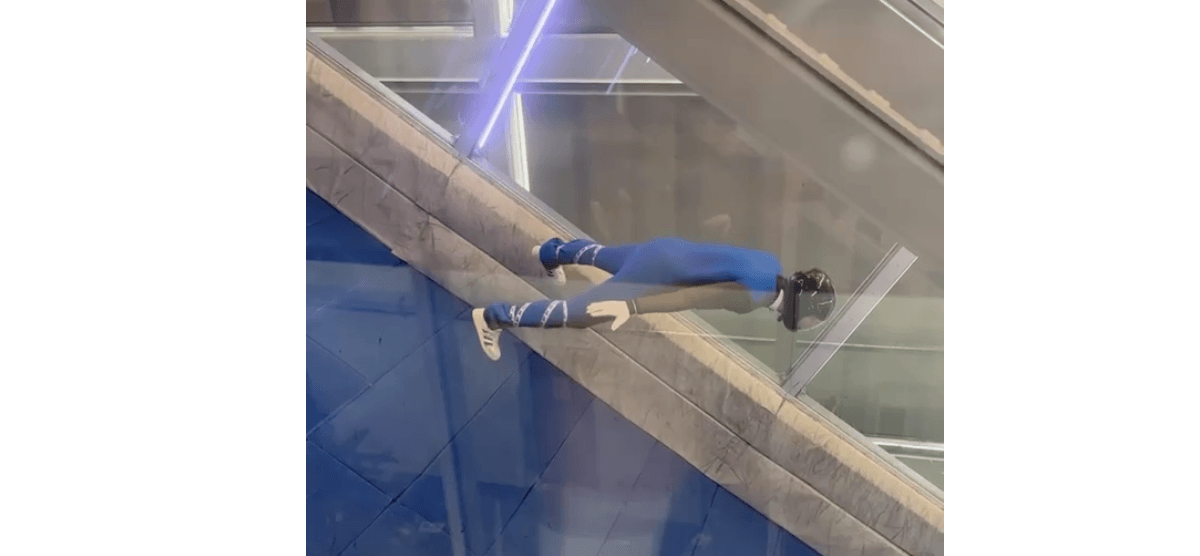
SLOVENIA — Three members of the Park City Ski & Snowboard got the rare and invaluable opportunity to train in a wind tunnel for their Nordic ski jumping skills during a camp in Europe on Friday.
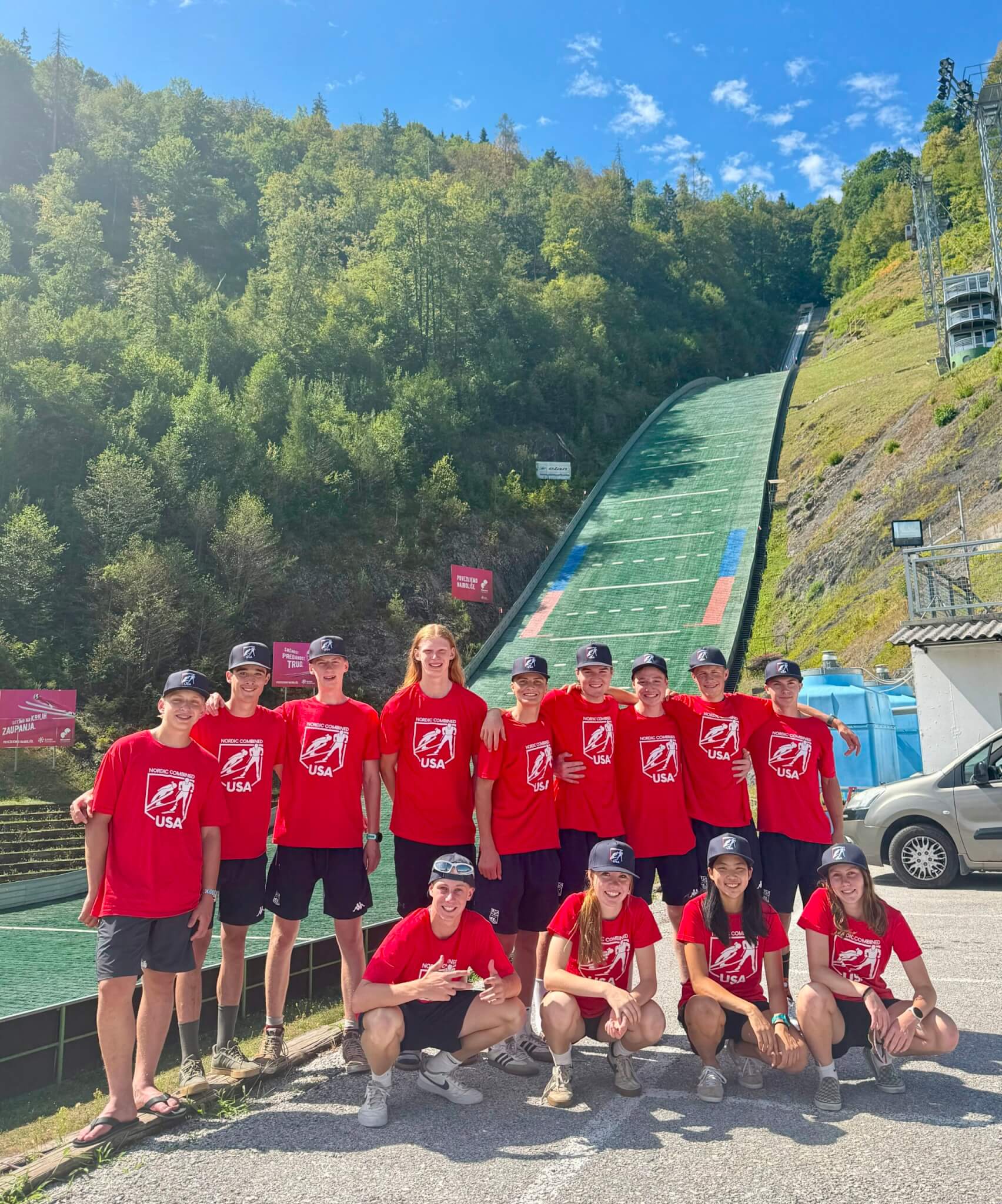
Near the picturesque and popular tourist town of Bled, Slovenia, it was just a short drive from where they were staying, in Planica, an iconic global ski jumping venue where some had been before.
Augie Roepke, Liam Demong, and Luke Miller, all three from Park City, join campers on this trip from Lake Placid, Steamboat Springs, Anchorage, and the Midwest via Nordic Combined USA with a partial grant from the National Nordic Foundation.
The camp will also take them to ski jump in Italy on the 2026 Olympic hills where other Park City athletes recently represented the USA, as well as in Austria. Next week, the group of athletes, which includes hand-picked, invited ski jumpers and Nordic combined athletes, will head to Germany, where a few of them are among the campers in the appropriate age-window criteria to compete in an International Ski Federation (FIS) sanctioned Youth Cup competition.
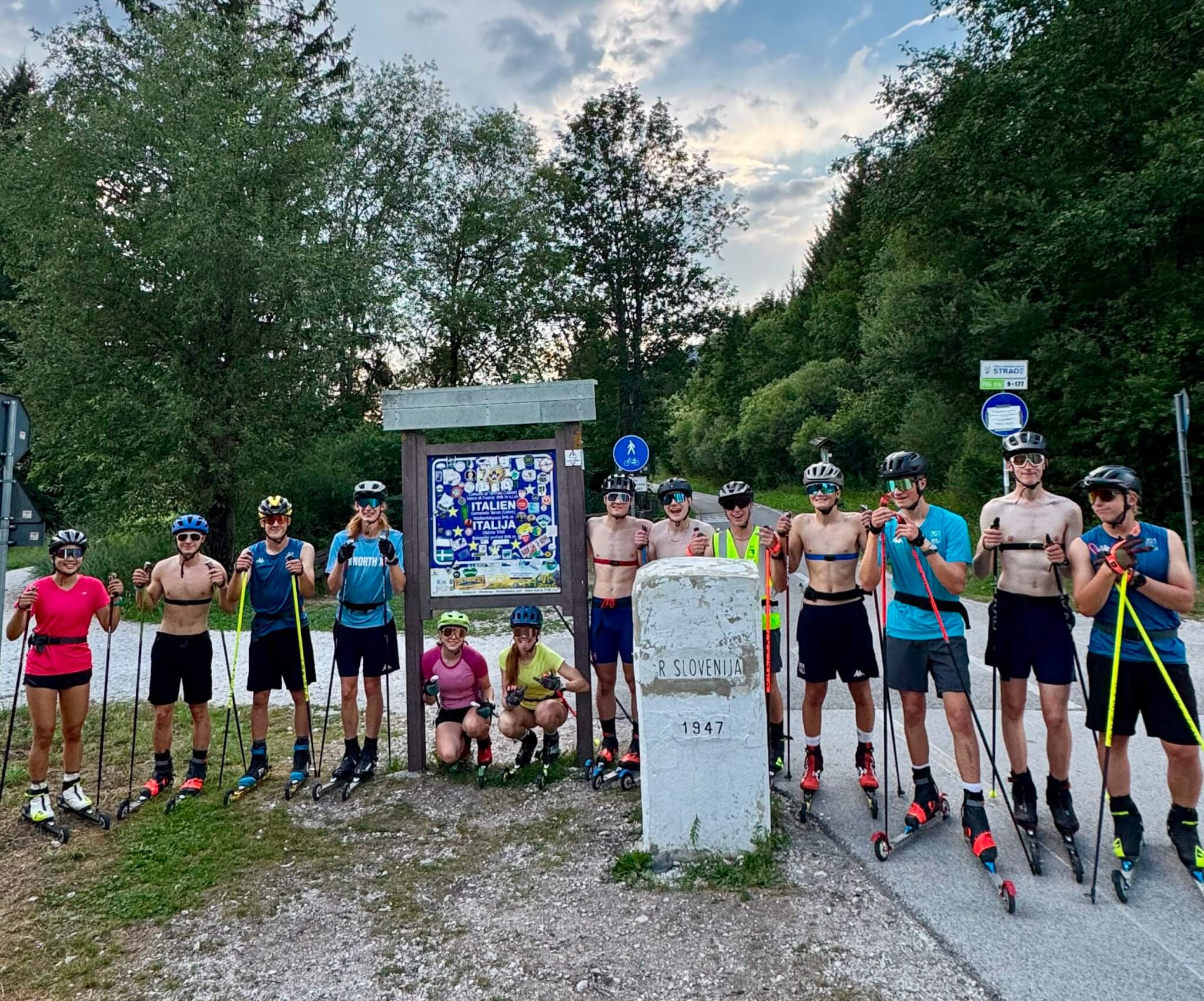
Roller skiing across the Italy/Slovenia border. Photo: courtesy of NCUSA
They all jump, not unlike in Park City, on the big summer green plastic jumps this time of year. The cross-country ski portion of training and competing for Nordic Combined happens on roller skis on roads.
“A full year of intensive flight training, compressed into less than a day, because one hour in our tunnel equals approximately 1,000 ski jumps worth of focused flight time.” Writes Inclined, the wind tunnel business, on their webpage. “Train indoors in the morning, test your technique on the hill by afternoon.”
Wind tunnel training sessions are a way for the two coaches, Michael Ward and Casey Larson, to truly get these three athletes to trust the process of flying through the air and feeling the physical effects of perfectly positive flight time. The jumpers can see in real time how a small move, a one-inch tweak of a foot, a finger, or a head tilt can improve their aerodynamics and ultimately translate to longer distances, thus higher scores in their winter sport.
With no fear of falling, the wind tunnel allows for risk-taking and big moves with one’s hips, arms, and legs to achieve an outcome that the athlete may have only thought about trying. If it doesn’t work out, they collapse down onto a soft, springy landing material with no negative impact.
Utilized by National Teams from most competitive countries, the tunnel offers winds from 145 to 170 miles per hour and flight angles from 14 to 35 degrees.
Then, without waxing the skis, riding a chairlift, and waiting their turn on a mountain jump venue where swirling winds, head winds, tail winds, or no winds are dictating what a jumper can and cannot compensate for outside in a natural environment, they can get back into the wind tunnel and repeat, learn, and apply muscle memory on the spot.
Wind tunnels can provide a forward career-trajectory Ah-Ha moment in this sport.


4251 E Lipizzan Jump
Moab, UT 84532