Turning left: Finding life off the beaten path


Have you ever been bitten by a bug? Not a mosquito or a gnat, but rather, a passion bug. The kind quietly pulling at your curiosity and eventually demanding your presence. Some people go their whole lives without ever feeling this type of pull. Others experience it once and spend the rest of their lives chasing it. Then, there are people like Eli LaMouria, who felt it early, lost it for a time, and fought their way back to it.
Growing up in California, Eli felt the sting of adventure in the mountains of Yosemite: jumping off jagged cliffs without ropes or safety nets, swimming in local lakes by the age of three, and tent-camping with her large family. Nature wasn’t a destination—it was her playground, her teacher, her rhythm.
“We grew up poor, so camping was an inexpensive way to experience adventure for a large family. That’s when I fell in love with the outdoors,” Eli recalls.
There’s something about childhood exposure to the wild that imprints itself differently. It creates memories and identity. For Eli, the outdoors wasn’t something she did—it was who she was. As I write this, I realize I felt it too. That’s why we moved to Utah two years ago.
But life, as it often does, gets interrupted.
After a sudden and unwelcome move to another state when Eli was 10 years old, her zeal for outdoor life faded. Replacing her whimsical rhythms in nature was a more predictable, suburban existence: structured, safe, and noticeably quieter.
“I played soccer, rode my bike, and did all kinds of movement, but not much in the adventure realm anymore,” Eli recalls.
Even in the activity, something was missing. The edge. The unpredictability that had once made her feel fully alive. Her soul, however, remained anchored somewhere far away in the California wilderness she had been pulled from, and far too soon.
“As soon as I could, I moved out and went back west to California. I lived with my grandmother for a few months until I got on my feet.” That return wasn’t just geographical; it was a reclaiming of something she had never fully let go of. After assembling a group of young adults to split the pricey rent of an oceanfront property in Encinitas, California, Eli found herself immersed in community again, only this time with people who would unknowingly help redirect the entire course of her life. It was in this season that something began to shift. Not all at once, but steadily.
What she didn’t yet realize was the adventure she had been missing wasn’t just something she would return to—it would become her lifeline. And eventually, her livelihood.
Rock-N-Water Christian Adventure Camp was where that transformation took root. Here, her life became less about simply living for herself and more about discovering how her love for the outdoors, her ability to connect, and her resilience could be shaped into something purposeful.
Founded in 1989, Rock-N-Water is a Christian organization dedicated to guiding people into the beauty of God’s creation through experiences that promote personal, relational, and spiritual growth. Staff emphasizes biblical principles, using nature, friendship, and challenge as tools for transformation. For Eli, it was a reintroduction to faith, joy, and a version of herself she hadn’t fully known was still there. Growing up in a deeply religious family, she had always been familiar with faith, but something about it felt distant. At times, it is more about rules than relationships. And to her, that felt “off.”
At Rock-N-Water, her childhood understanding of Christianity shifted. Wonder and play returned. The kind of delight that feels childlike but deeply rooted.
“Through the camp owners, I felt what true biblical love was for the first time in my life. That’s when God truly got ahold of me.” Eli smirks, a sideways smile I recognize immediately, carrying both knowing and humility. The kind not needing explanation because it’s been earned through experience. I’ve worn it too. My own encounter with Christ came in an unexpected place: a military boot camp. Different setting, same surrender. Still, there were stars overhead, fires burning, fears rising to the surface. It turns out transformation doesn’t require perfect conditions—just a willingness to submit.
For Eli, that willingness culminated in a moment both simple and profound.
Among the glowing embers of a campfire, she felt something shift. Standing later in the South Fork of the American River, she held a rock given to her days before—a symbolic representation of herself.
Then, she threw it. Not casually, not without thought. With intention.
The rock disappeared into the rushing water, carried beyond sight, settling somewhere beneath the current. There it remains—jagged, unapologetically itself. Not smoothed over like the stones near the riverbank that chose safety.
It’s a striking image, really. Because in that moment, Eli made a decision that would echo through every season that followed: to live boldly, resist the pull toward comfort at the expense of growth, and remain open to the kind of life that asks more but gives more in return.
To choose the current over the shoreline. Today, that type of choice feels increasingly rare.
We live in a world where people are more “connected” than ever, yet often feel profoundly alone. Children grow up tethered to screens, navigating digital landscapes more than physical ones. The natural world, once a place of exploration and grounding, has become an afterthought.
I see it in my own children. Without intention, it’s easy for them to drift, not just away from nature, but toward a quiet kind of disconnection that’s harder to name.
And it’s not just physical. It’s spiritual. Relational.
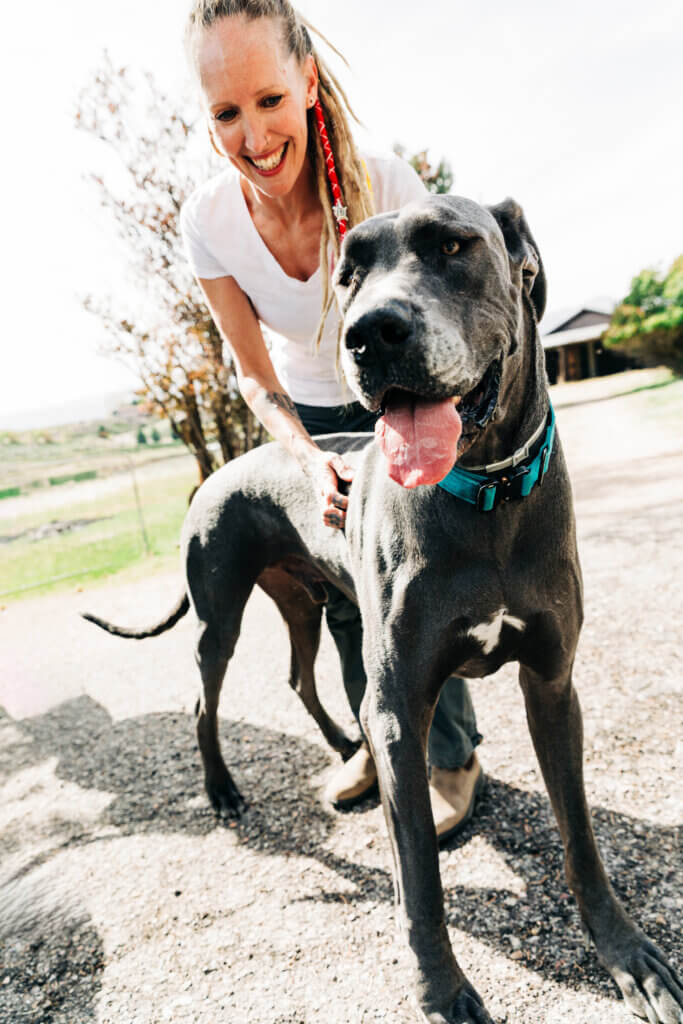
Eli saw it too. And though she didn’t yet know how it would take shape, something in her began paying attention. She worked at Rock-N-Water in 2003 and 2004, and in early 2005, she moved back to her parents’ home in Michigan.
Then, life shifted again. This time, quickly.
“She said ‘YES,’ I said ‘WOW!’ She said, ‘When?’ I said, ‘How about right now?’” The lyrics of Chad Brock’s “She Said Yes” filled the room through karaoke speakers, but it wasn’t just background noise. It became one of those scenes that feels almost cinematic in hindsight.
Tony, microphone in hand, locked eyes with Eli and sang as though nothing else existed. Somehow, in that moment, everything aligned.
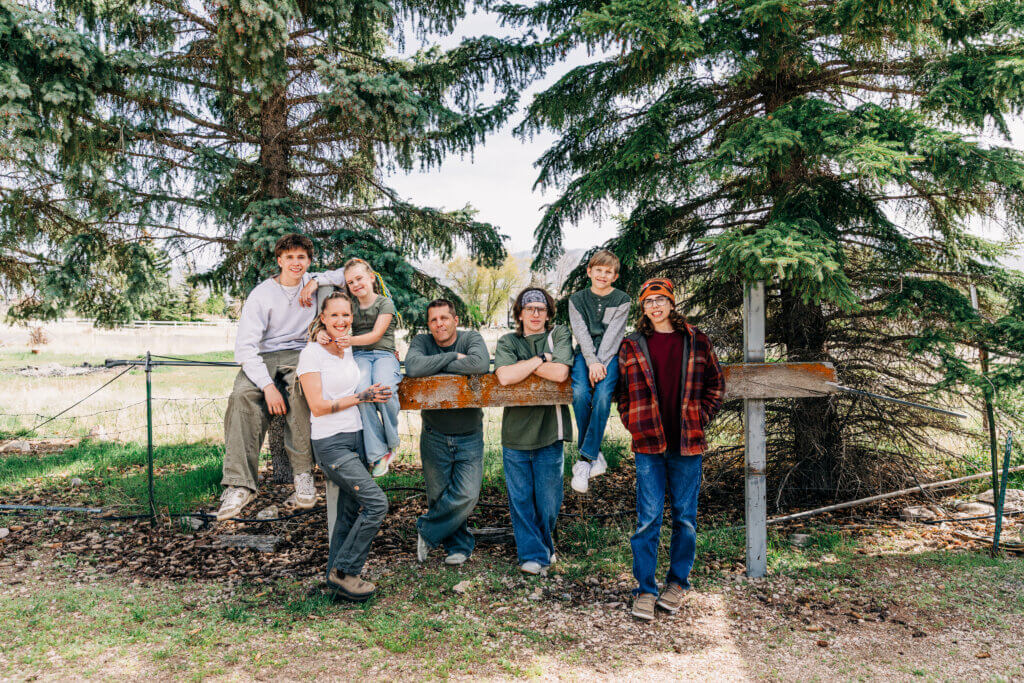
Their relationship moved faster than most would advise, than logic might suggest—it went from meeting to marriage in just three months. But not everything meaningful unfolds slowly. Some things arrive fully formed, asking only for courage to accept them. Ten months later, they welcomed their first child, a son affectionately named after Eli. And just as quickly as life had expanded, it was tested.
In 2005, on their one-year wedding anniversary, Tony was deployed to Iraq with his Marine Reserve unit. “That was a really tough year,” remembers Eli. “I never knew if he would call, and at that time, we didn’t have video calls. He recorded books on CDs and sent them home for baby Eli.” It was a small detail, but it said everything: love finding a way to stay present, even across danger, oceans, and uncertainty.
When Tony returned on Christmas Eve from Fallujah, it marked both a reunion and a reset. The family relocated to Washington, where Tony stepped into a role as a youth pastor, and Eli continued focusing on their growing family. One child became three, three became five. Days became fuller. Responsibilities multiplied. And somewhere in the midst of it all, Eli began to feel that familiar distance again. Not from her family this time, but from herself.
The adventurous spirit that once defined her grew quieter. Her faith felt harder to access. Something deeper began to stir: a suppressed experience of sexual abuse resurfaced, impossible to ignore.
Between 2011 and 2013, Eli entered one of the darkest seasons of her life. A time marked by mental-health struggles so intense that she nearly lost her life, if not for Tony intervening at a critical moment. It’s difficult to put language to seasons like that. They don’t follow a neat narrative arc, lingering and reshaping you in ways that aren’t always visible from the outside.
“I began seeing a really awesome therapist who helped me work through my past traumas,” shares Eli. Therapy became a turning point—not because it erased the past, but because it helped her name it and move through it.
Eventually, something even harder emerged: forgiveness. Not as a dismissal of what happened, but as a release from being defined by it. It became the key that unlocked something long held captive. “In 2017, our only girl and fifth child, Zoe, was born. We were doing a lot of camp ministry, and I was in charge of programming. My roots in adventure and outdoor medicine started to come back. I began to feel alive again.”
“Alive” carries weight when you’ve experienced its absence. It’s one of the reasons I’m running an ultramarathon this year. Eli runs them too. Once the feeling returns, you notice. You protect and follow it. That sense of aliveness led to what she would later describe as an “opportunity of a lifetime.”
A call came from a longtime friend from Rock-N-Water—the same person through whom she had first experienced authentic faith. He, too, had walked through a difficult season.
“The night before the call, Tony had been praying for an opportunity for me, something that would bring fulfillment and alignment. And it came.” For Eli, that meant running adventure camps in China.
Over the course of 18 months, she led camps for a wealthy Chinese businessman’s organization, creating experiences mirroring the very ones that had shaped her years earlier. His son attended Rock-N-Water as a teenager, and the impact had been lasting.
It’s a powerful thing, to become part of the ripple effect that once changed you.
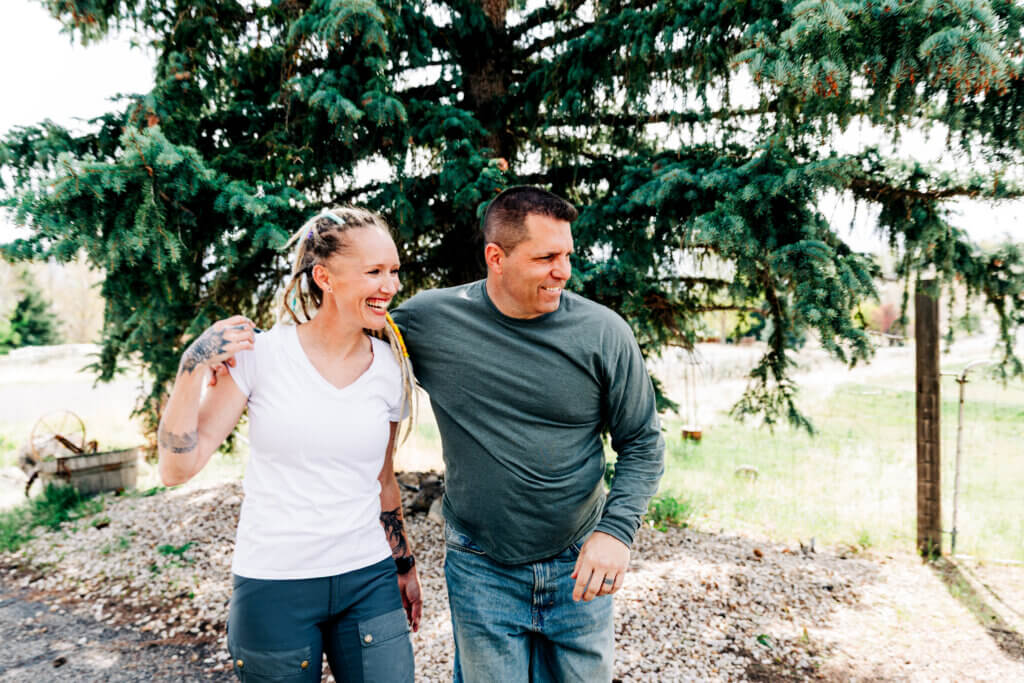
Back home, Tony held steady, raising five children while working as a therapist and a bi-vocational pastor. Although it wasn’t easy, it had a shared purpose. Then came another offer: moving to China full-time. On paper, it meant opportunity and stability. Internally, however, something didn’t settle. Eli couldn’t fully explain it, but she trusted it. Tony always says she has great intuition. She returned home, choosing pause over pressure.
In 2020, the world changed. Covid hit, China locked down, and the company dissolved.
“Had we moved, we would have been stuck there,” says Eli. Sometimes the clearest answers make sense only in hindsight. What felt uncertain at the time became undeniable later: They had been protected. While in China, Eli earned her certification as a wilderness EMT, a step that would unlock her next chapter: Turn Left Adventures, a business built on both skill and lived experience.
Today, Eli designs trips that intentionally blend adventure with therapy, creating space for people to disengage from noise and reconnect with themselves. Her guides are both medically trained and clinically grounded, ensuring each experience is as safe as it is transformative.
“It was wilderness adventure and therapy that saved me,” she notes. “I want others to experience that too.” There’s a difference between offering something and embodying it. Eli does both.
Her business name caught my attention immediately. Why “Turn Left”?
“Statistically, people tend to turn right when they’re lost. I wanted something different—something that reflects doing things differently, safely, and intentionally.” It’s memorable and symbolic. Because sometimes, the path that looks less obvious is the one leading you back to yourself.
Today, Eli stands in a place that once felt unreachable: healthy, grounded, deeply connected to her family, and building something meaningful from the very experiences that once broke her open.
Tony is an associate pastor at Mountain View Fellowship, anchoring their home life, while Eli continues to guide others into the wild spaces that shaped her.
Different roles, same mission. Journalist Nicholas Kristof once wrote, “The wilderness is healing, a therapy for the soul.”
After running many of Utah’s trails, feeling the stretch of open land and the way it strips life back to what matters, I would agree.
And I know Eli would, too.


2266 E Garfield Avenue
Salt Lake City, UT 84108