Politics
Park City approves Community Clean Energy Program, adding $4 monthly utility charge

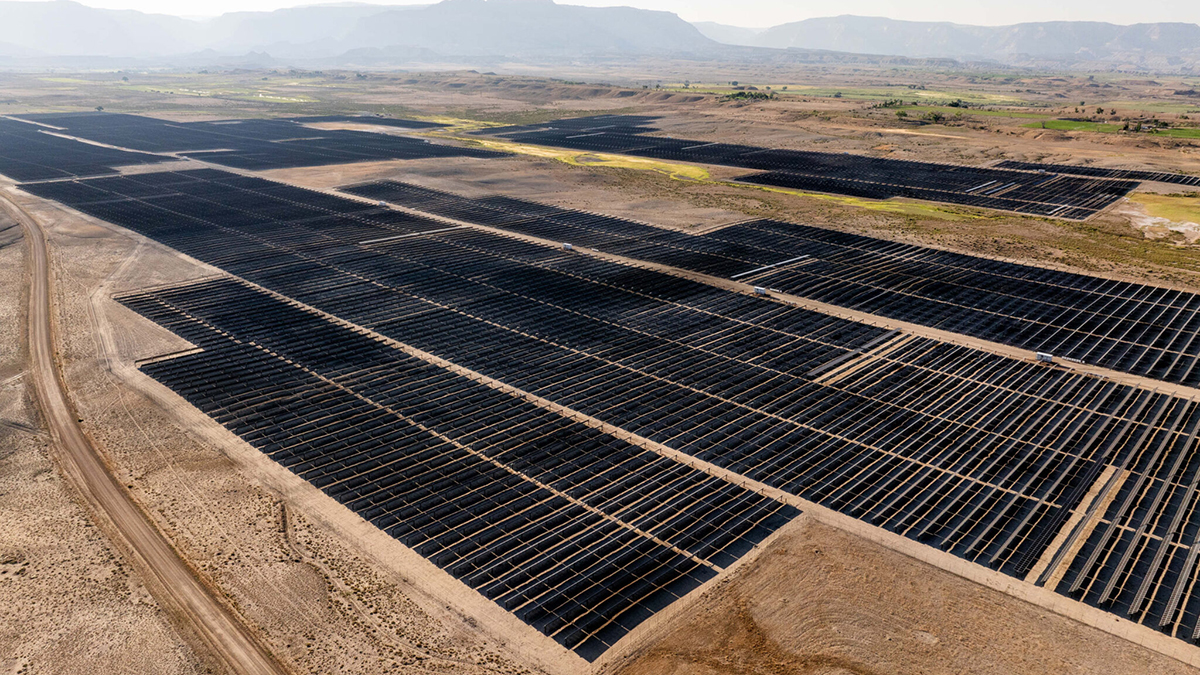
A solar installation in Emery County is pictured on Wednesday, July 31, 2024. Photo: Spenser Heaps for Utah News Dispatch
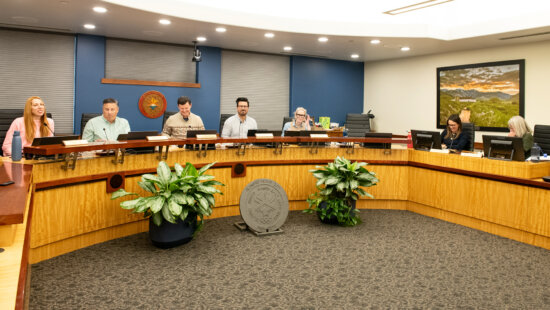
PARK CITY, Utah — Park City will join a first-of-its-kind statewide clean energy initiative after the City Council unanimously approved an ordinance last week adopting the Community Clean Energy Program.
The decision aligns Park City with Summit County and a growing coalition of Utah communities working to expand renewable energy development through a partnership with Rocky Mountain Power.
The program will add a $4 monthly charge to most residential utility bills in exchange for funding new large-scale clean energy projects across the region. Businesses will pay a usage-based rate.
“This is a very complex but beneficial utility program,” said Luke Cartin, Park City’s director of lands and sustainability, during the April 30 council meeting. “What we’re trying to do is bring another option for electricity customers — a competitive clean energy rate.”
A long path to approval
Cartin outlined nearly a decade of work leading up to the ordinance.
Efforts began in 2017 when Park City and Rocky Mountain Power began exploring ways to align the city’s ambitious climate goals with the utility’s multi-state grid. In 2019, Park City joined other municipalities in helping advance state legislation creating a pathway for communities to collectively pursue renewable energy.
That law — recently updated and renamed the Community Clean Energy Act — allows cities and counties to pool demand and work directly with the utility to develop new energy resources.
“This is the only program like it in the country,” Cartin said.
Today, 19 Utah communities are participating in the effort, representing roughly 25% of Rocky Mountain Power’s customer base in the state. Several — including Salt Lake City and Summit County — have already adopted the ordinance.
How the program works
Unlike existing voluntary programs, the Community Clean Energy Program is designed to operate at scale and directly fund new energy infrastructure, such as solar, wind, geothermal, and battery storage projects.
Rather than requiring renewable energy to match demand in real time, the program operates on an annual accounting system — often referred to as “net 100%” clean energy.
That means participating communities aim to add enough clean energy to the grid each year to match their total electricity use over that same period.
“If you look at all participating customers’ usage over a year, the goal is to bring on the equivalent amount of clean energy,” Cartin said.
Electricity will still flow through Rocky Mountain Power’s six-state grid, which includes a mix of energy sources. The program instead ensures that new clean energy is added to the system in proportion to participants’ demand.
What residents will see
For most households, the program will appear as a $4 line item on monthly utility bills. Enrollment is automatic, but customers can opt out.
Cartin emphasized that the opt-out process will be extensive and transparent.
Residents will receive at least two mailed notices from Rocky Mountain Power detailing expected bill impacts and instructions for opting out. The city also plans additional outreach.
“There’s no goal to pull the wool over anyone’s eyes,” Cartin said. “We want to make sure people understand what this is and can decide what’s right for them.”
Low-income households enrolled in Rocky Mountain Power’s discounted rate program will see no net increase in their bills.
Businesses, meanwhile, will be charged based on electricity usage — about six-tenths of a cent per kilowatt-hour — and will receive individualized estimates of their costs.
Timeline and next steps
With the ordinance approved, Park City will remain eligible to participate in the program, but a key deadline looms.
Communities must adopt ordinances by June 2 to stay in the program. Cartin said a majority of participating communities have already done so.
If enough communities move forward, outreach to customers will begin later this year, with billing changes expected in late 2026 or early 2027.
Meanwhile, program leaders are already identifying potential energy projects through a competitive request-for-proposals process.
“This isn’t theoretical,” Cartin said. “We’re already looking at projects that could be brought online in the next few years.”
Park City has set a goal of reaching 100% renewable electricity community-wide by 2030, and officials see the program as a critical tool to help get there.
At the same time, the initiative preserves the existing utility structure, allowing Rocky Mountain Power to continue managing the regional grid while giving communities more influence over energy sourcing.
“If we want to participate, this is our window,” Cartin told council members. “If we don’t pass the ordinance, we step out of the program.”
The council ultimately voted unanimously to move forward.
By: Heather Bergeson


2154 S Rio Verde
Moab, UT 84532
2475 W White Pine Lane
Park City, UT 84060
137 W Bridlewood Lane
Midway, UT 84049
2400 E Walker Lane
Holladay, UT 84117Talk of the Town


Park City Jobs

Sommet Blanc Senior Technician, Diversified Property Services
1 day ago Full time
Resident Manager - Empire Residences, Diversified Property Services
1 day ago Full time $60,000 - $65,000 yearly

Chiropractic Front Desk/Therapy Assistant, Lundstrom Chiropractic
3 days ago Part time $21.50 hourly

Maintenance Tech, Park City Rental Properties
4 days ago Full time $22.00 - $25.00 hourly

Love Fashion, Creativity & Artisan Goods? Join the Blue Sky Nomads Team, Blue Sky Nomads
8 days ago Part time $18.00 - $25.00 hourly