Summit County urges residents to prepare homes for wildfire smoke

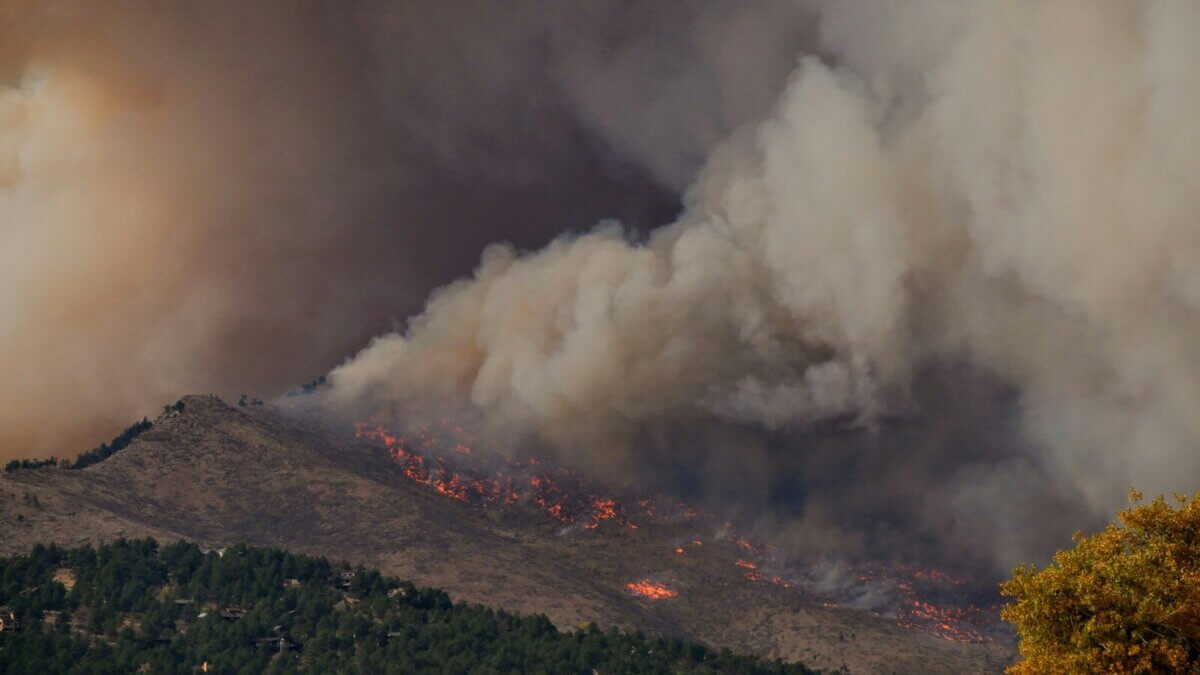
As drift smoke and extreme fire danger return to the Wasatch Back, health officials say indoor air protection should be part of every household’s wildfire plan.
SUMMIT COUNTY, Utah — Summit County health officials are urging residents to prepare their homes for wildfire smoke before skies turn hazy again, warning that indoor air quality can closely track outdoor air quality when homes are not properly sealed or filtered.
“Prepare your household for wildfire smoke events by building a DIY box fan filter, investing in a portable air cleaner, or installing MERV 13 filters if your HVAC can support it, to trap small particles,” Summit County Health said in a recent public message.
The reminder comes during an active stretch of fire weather across Utah and the West. TownLift reported this week that Summit County issued a drift smoke advisory as smoke from fires in Utah and nearby states moved through the area, though no active fires were burning in Summit County at the time. TownLift also reported that Park City’s air quality had been affected by wildfire smoke, with Utah cities ranking among the worst in the nation for air quality.
Wildfire smoke is made up of gases and fine particles from burning trees, vegetation, and other materials. The fine particles, known as PM2.5, are small enough to travel deep into the lungs and can worsen asthma, heart disease, and other respiratory or cardiovascular conditions, according to the Environmental Protection Agency and AirNow, the federal air quality information system.
Health officials say one of the most practical steps residents can take is to create a clean-air room in their homes. The EPA recommends choosing one room that can be closed off from the rest of the house, keeping windows and doors shut, using a portable or DIY air cleaner, and avoiding activities that increase indoor pollution, such as burning candles, smoking, frying food, or vacuuming during smoke events.
For homes with central heating or air conditioning, the EPA recommends using a high-efficiency HVAC filter rated MERV 13 or higher if the system can handle it. Residents may need to check with an HVAC professional before upgrading filters, because higher-rated filters can restrict airflow in systems not designed for them.
Portable air cleaners can also reduce indoor smoke particles when sized appropriately for the room. For residents who cannot buy a commercial air purifier, EPA research has found that DIY air cleaners made with a box fan and a MERV 13 filter can be a lower-cost option for reducing indoor smoke concentrations. The agency recommends using a newer, certified box fan with added safety features, preferably manufactured in 2012 or later, and making sure the filter is sealed tightly to the fan.
Officials also recommend checking the air quality before outdoor exercise or children’s activities. Summit County Health maintains a real-time outdoor air quality monitoring page, and AirNow.gov provides AQI readings and wildfire smoke information by location.
The AQI scale ranges from “good” to “hazardous.” When air quality reaches “unhealthy for sensitive groups,” people with heart or lung disease, older adults, children, teens, and pregnant people should consider reducing prolonged or heavy outdoor exertion. At higher levels, public health agencies recommend that everyone limit outdoor activity.
The home-preparation message is part of a broader wildfire season already shaping daily life across Summit County. TownLift reported earlier this month that fire restrictions are in effect across Summit County and that local fire danger has climbed as hot, dry conditions, low humidity, and wind increase the risk that a single spark could spread quickly.
For residents, health officials say the takeaway is simple: do not wait until smoke is already inside the house. Buy filters early, identify a room that can serve as a clean-air space, keep windows and doors closed during smoke events, and have a plan for children, older adults, and anyone with asthma, heart disease, or other health conditions.
What residents can do now:
- Check whether your HVAC system can safely use a MERV 13 or higher filter.
- Buy replacement filters before smoke events cause local shortages.
- Set up one room as a clean-air room with a portable air cleaner or DIY box fan filter.
- Use a newer box fan with safety certification if building a DIY cleaner.
- Keep windows and doors closed when smoke is heavy.
- Avoid adding indoor pollution from candles, smoking, fireplaces, frying, broiling, or vacuuming.
- Check Summit County Health’s air quality monitoring page or AirNow.gov before outdoor activity.


4251 E Lipizzan Jump
Moab, UT 84532