Junction Commons redevelopment clears planning commission, heads to Summit County Council


PARK CITY, Utah — The redevelopment of the former Outlets Park City advanced Tuesday after a 6-1 vote by the planning commission, with commissioners pressing for a broader traffic strategy and stronger integration of affordable housing.
The Snyderville Basin Planning Commission voted Tuesday to forward the proposed Junction Commons redevelopment in Kimball Junction to the Summit County Council with a positive recommendation, advancing a long-discussed plan to transform the former Outlets Park City into a mixed-use neighborhood.
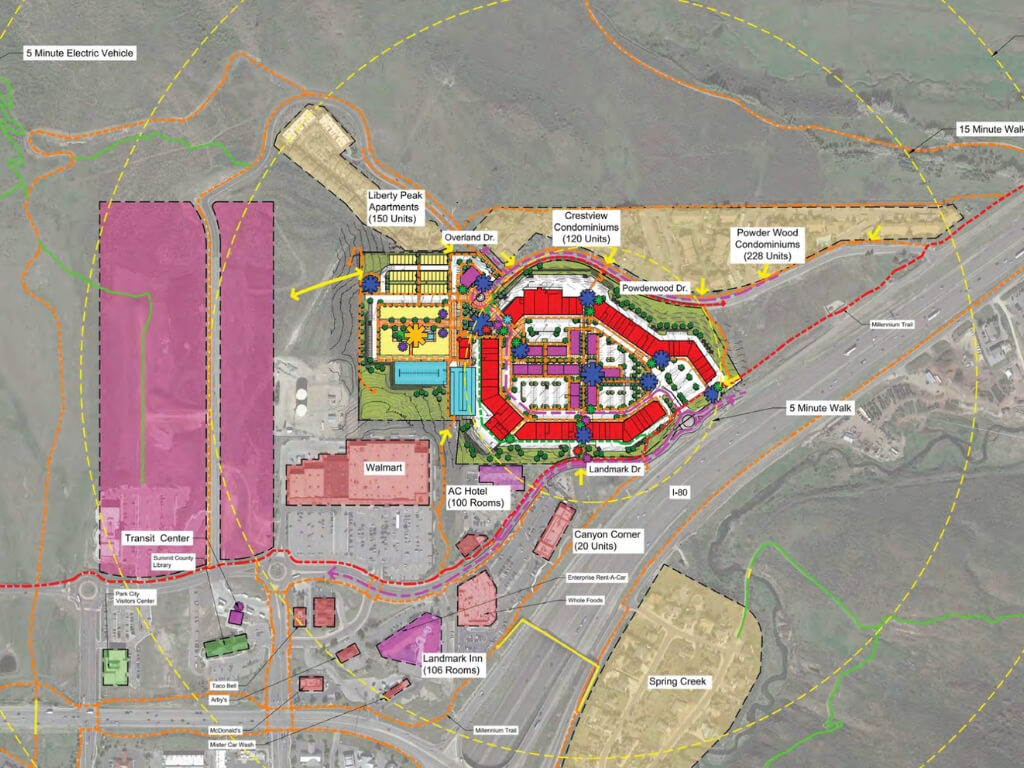
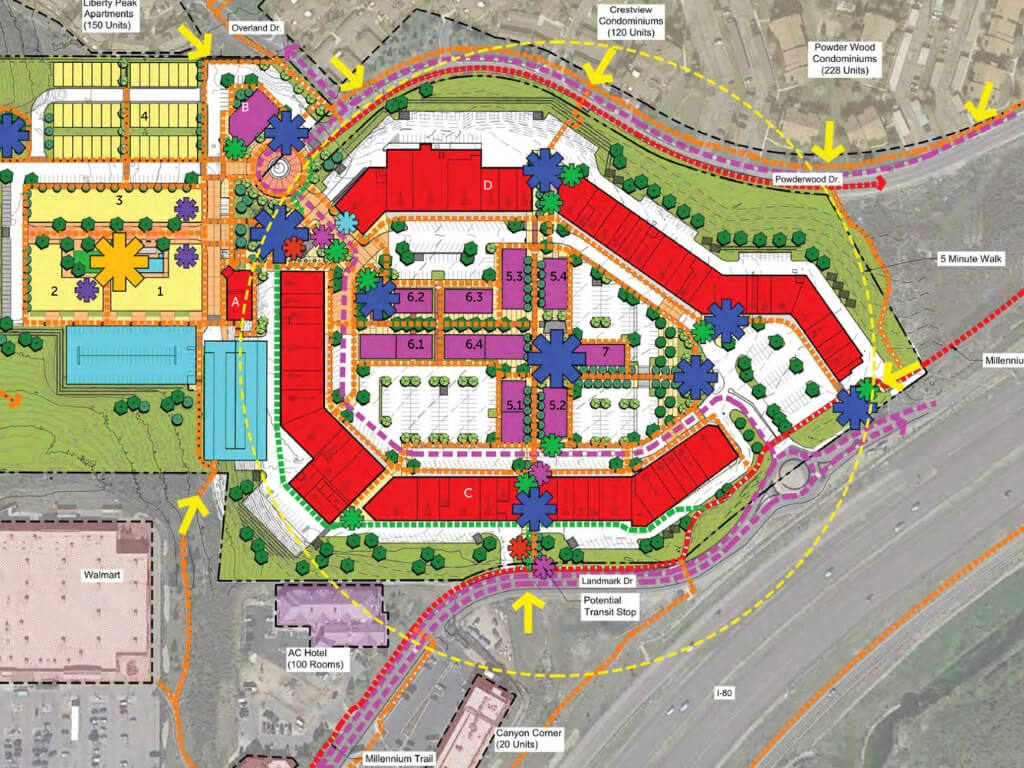
The proposal calls for a rezone and master planned development for the property at 6699 N. Landmark Drive, where the former outlet mall would be redeveloped into a 19-building mixed-use project with 433 residential units, including 42 townhomes, and new commercial infill in the lower portion of the site.
Filed as Project #24-087, the application was submitted by Elliott Workgroup representing SRE Ontario LLC, according to the county agenda.
Plans call for the upper portion of the existing outlet center to be largely replaced with housing, while the lower portion would remain commercial and add roughly 54,000 square feet of new commercial infill with mixed-use buildings and apartments above.
The commission voted 6-1 to recommend approval. Commissioner Tim Jeffrey cast the lone dissenting vote, saying the project is too large.
Even among commissioners who supported the project, traffic remained a central concern.
Commissioner Eric Sagerman said the county should not evaluate Junction Commons in isolation, given the broader wave of development in and around Kimball Junction.
“You can’t look at it just from this project,” Sagerman said. “You have to look at it in conjunction with the others.”
He pointed to nearby and future growth, including other large residential proposals and development pressure near the Utah Olympic Park, and argued that county leaders need to more directly address cumulative traffic impacts rather than continuing to analyze projects one at a time.
Other commissioners echoed that concern, saying Kimball Junction’s transportation network is already under strain and that future approvals should be viewed in the context of the area’s larger road system.
The commission added a condition requiring traffic mitigation planning to account for future development in the surrounding area as the proposal moves forward.
Project representatives said Junction Commons differs from nearby projects because it is a redevelopment of an existing commercial center rather than new greenfield construction.
“This isn’t greenfield development,” project attorney Justin Keys said during the meeting. “We’re taking nearly 100,000 square feet of commercial off right away.”
Affordable housing also drew extended discussion.
Under the proposal, one of the apartment buildings would serve as a standalone affordable housing building, with additional affordable units incorporated in later phases. Commissioners questioned whether that structure would feel too separated from the market-rate portions of the project and whether the development includes enough family-sized affordable housing.
Much of that debate centered on the townhomes.
Several commissioners said the townhomes represent a rare opportunity to create ownership-oriented housing for local families, rather than concentrating affordability primarily in smaller apartment units.
The commission added a second condition requiring three of the 42 townhomes to be affordable, an effort to better distribute affordability within the development and improve integration between affordable and market-rate housing types.
Despite those concerns, the overall tone of the meeting was broadly supportive.
Several commissioners said the aging outlet mall site is an appropriate place for denser housing and mixed-use redevelopment, particularly because it repurposes an already-developed property rather than expanding into open space.
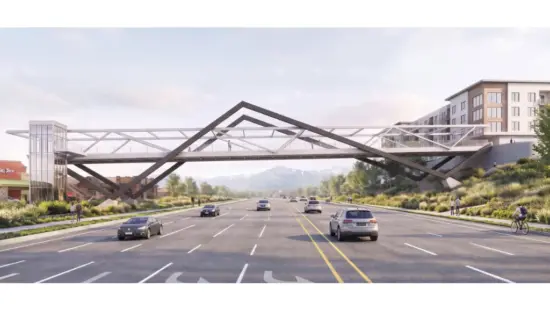
Project representatives also emphasized proposed public benefits, including pedestrian connections, gathering areas, trail access, bike infrastructure, and public-facing open space intended to make the site function more like a neighborhood center than a traditional outlet mall.
The project now heads to the Summit County Council for a future public hearing and final decision on the rezone and master planned development.


4251 E Lipizzan Jump
Moab, UT 84532