8 in 10 Park City respondents prefer open space or a smaller project at the 5-Acre Site

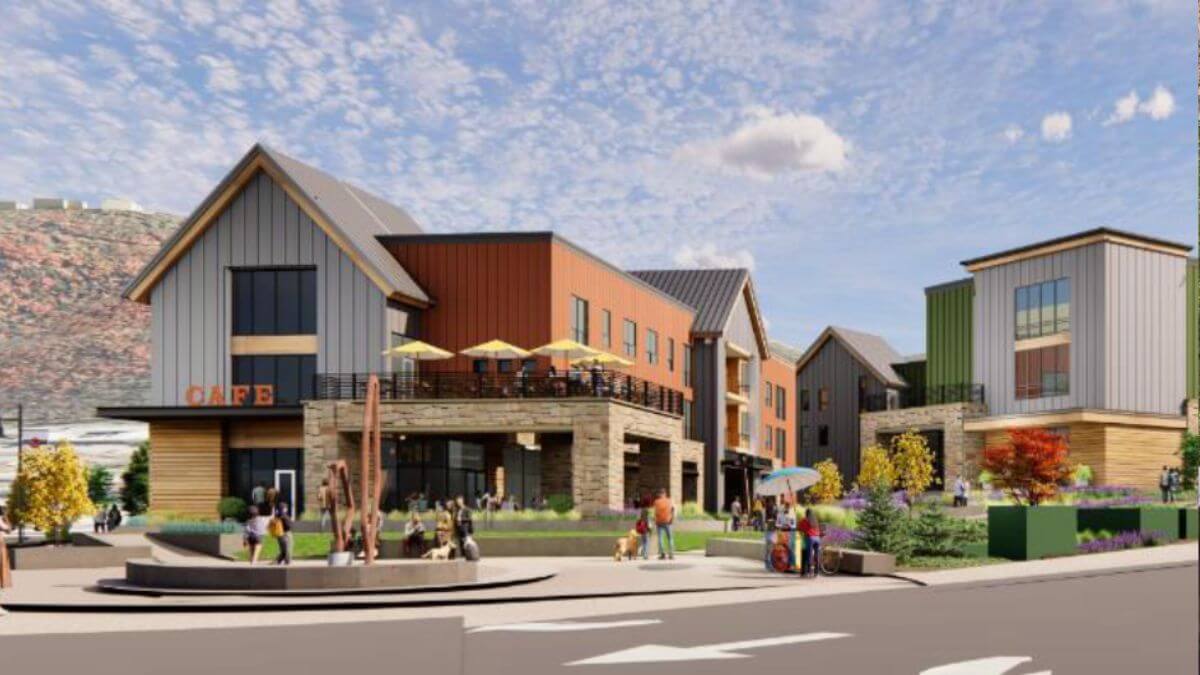
The city's own representative survey rates open space as Park City's defining strength and housing its defining shortage; reader responses suggest deep division over whether this parcel is where to address it.
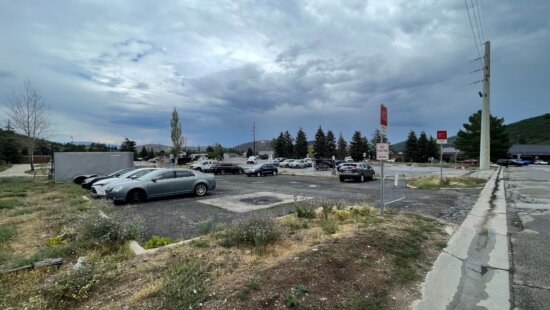
PARK CITY, Utah — Park City residents who responded to a TownLift reader poll have a clear preference for the future of the city-owned Bonanza Five-Acre Site: Build less, preserve more open space.
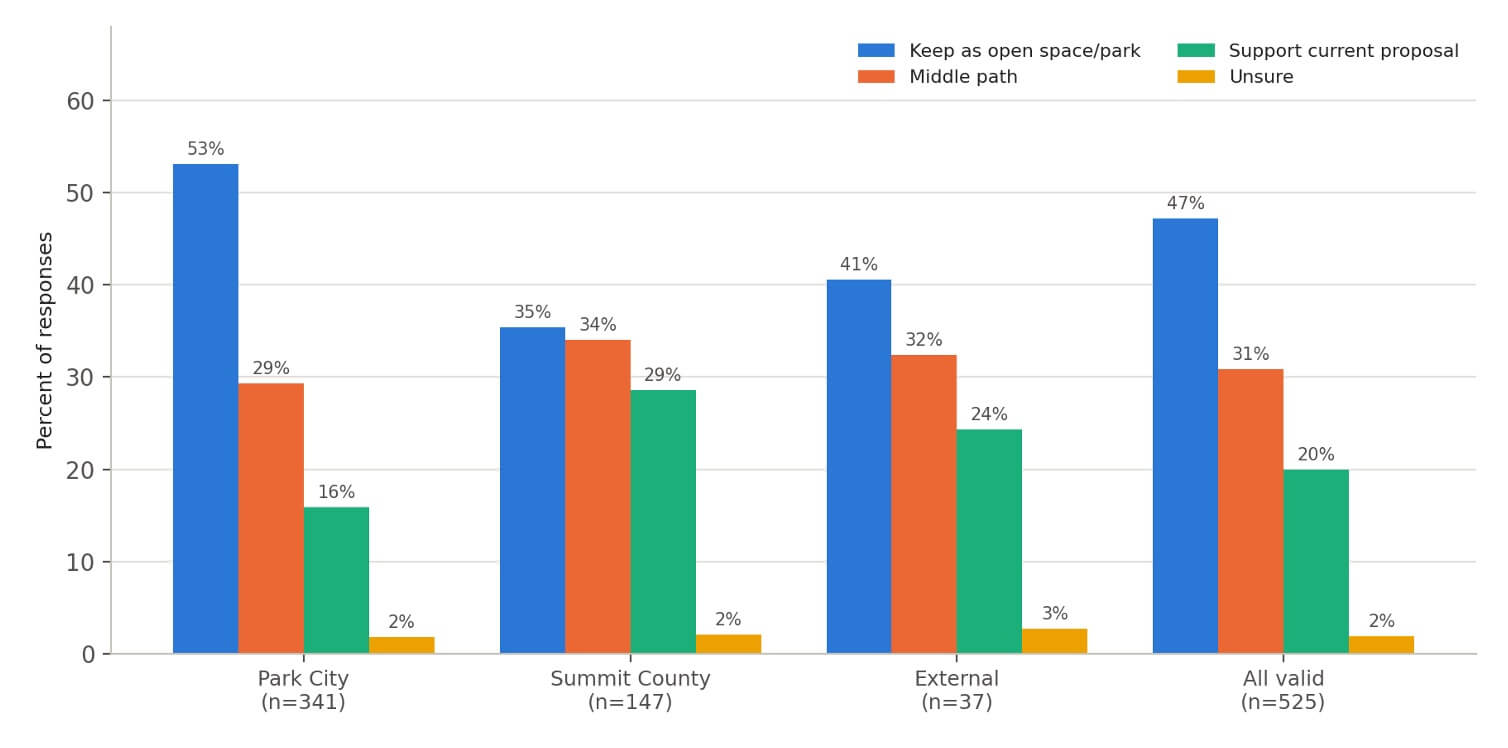
More than 8 in 10 respondents living within Park City city limits favored either keeping the site primarily as open space or pursuing a lower-density development with substantial green space preserved. Of the 341 respondents in 84060, just 16% supported the current proposal from Brinshore Development.
The project calls for 106 rental housing units — 88 of them affordable — along with more than 30,000 square feet of retail, restaurant, café, and nonprofit arts space. Plans also include a childcare center, underground parking with 280 spaces, community green spaces and plazas, an amphitheater, playground, arts pavilion, public art, and multi-use pathways.
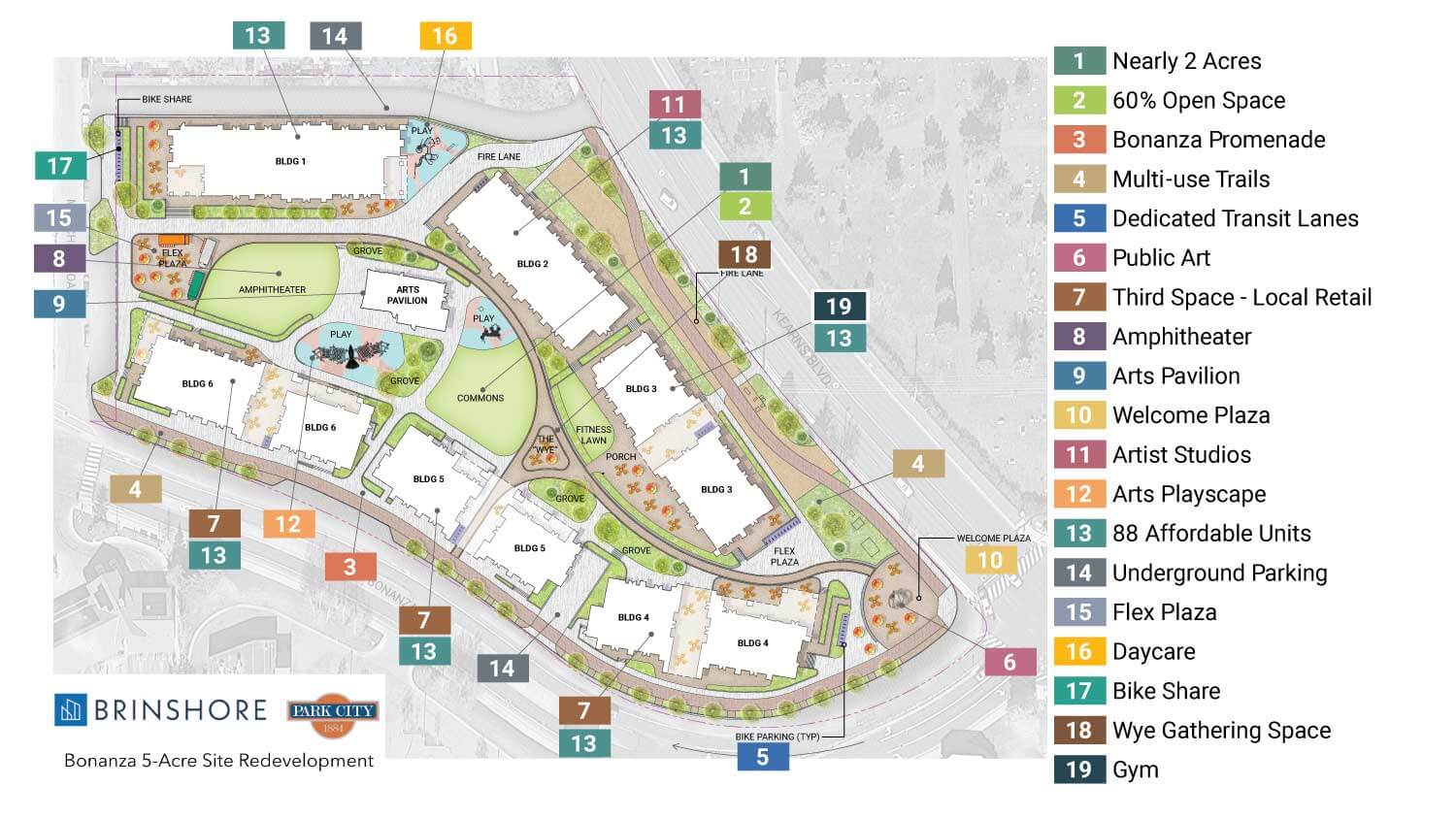
TownLift’s results come as the Planning Commission continues to weigh that proposal, which has drawn a large crowd of residents and community groups to recent meetings. At its Aug. 12 meeting, more than 20 people commented during the public hearing, and the next day at City Council resident group PLACE Park City submitted a petition with 2,399 signatures opposing the development as it stands.
TownLift’s reader poll, conducted Aug. 13-18, drew 551 responses. After screening for duplicate or fraudulent entries, 525 valid responses remained, including 341 from respondents living within Park City city limits, 147 from elsewhere in Summit County, and 37 from outside the county.
Among city residents, 53% said the site should be kept primarily as open space or a park, 29% favored a middle path of reduced density with substantial green space preserved, and 16% supported the current proposal. The remaining respondents selected “unsure / need more information.”
The poll was a self-selected survey of TownLift readers, not a random sample, and has no statistical margin of error. TownLift is publishing its full methodology alongside this story.
The responses suggest the strongest disagreement with the current proposal may be about its scale and form rather than development in general. Nearly 3 in 10 city respondents favored a lower-density approach that would retain substantial green space.
Respondents living elsewhere in Summit County, where many of the workers who could benefit from the project’s housing live, were nearly twice as supportive of the current proposal as city residents, at 29%.
What respondents said
The TownLift poll drew 346 written comments. Among opponents, the most common themes were traffic at the Bonanza and Kearns intersection, the original purpose of the taxpayer-funded purchase as an arts district, and the project’s proposed building heights.
“Once we build on this parcel, we can never get it back,” one Park City respondent wrote.
“Stick to the original intent of the land purchase. This is not the place for high density housing,” another wrote.”
Supporters emphasized the housing shortage’s toll on the local workforce.
“Living in affordable housing through my childhood has allowed me to be a part of this community today,” a Summit County respondent wrote.
“I represent the missing middle, where a couple can make between $150,000 to $250,000 a year and still not be able to afford to live in Park City,” a Park City supporter wrote.
Respondents in all three camps — supporters, opponents and those in between — repeatedly suggested pairing significant green space with transit or parking facilities, an option not among the poll’s choices.
What the city’s own surveys found
TownLift’s results also echo some of the priorities that emerged from the city’s own public outreach, though the surveys asked different questions and were conducted at different stages of the planning process.
As part of the 5-Acre Site Feasibility Study, the city collected 826 responses through two open-participation online surveys, 735 via SurveyMonkey and 91 via Polco, before the city selected Brinshore’s proposal. Under the city’s August 2023 planning contract, those survey questions were written by the consultant team and “distributed through the city’s social media and email lists,” with no random sampling specified.
Respondents were asked to choose up to three types of development or improvements they wanted on the site. In the combined results presented to City Council in August 2023, mixed use was the most-selected option at 68.8%, followed by parks and plazas at 61.4%, restaurants and patios at 58.3% and walkable streets at 48.1%. Multifamily housing was selected by 28.8%, ranking sixth among nine options.
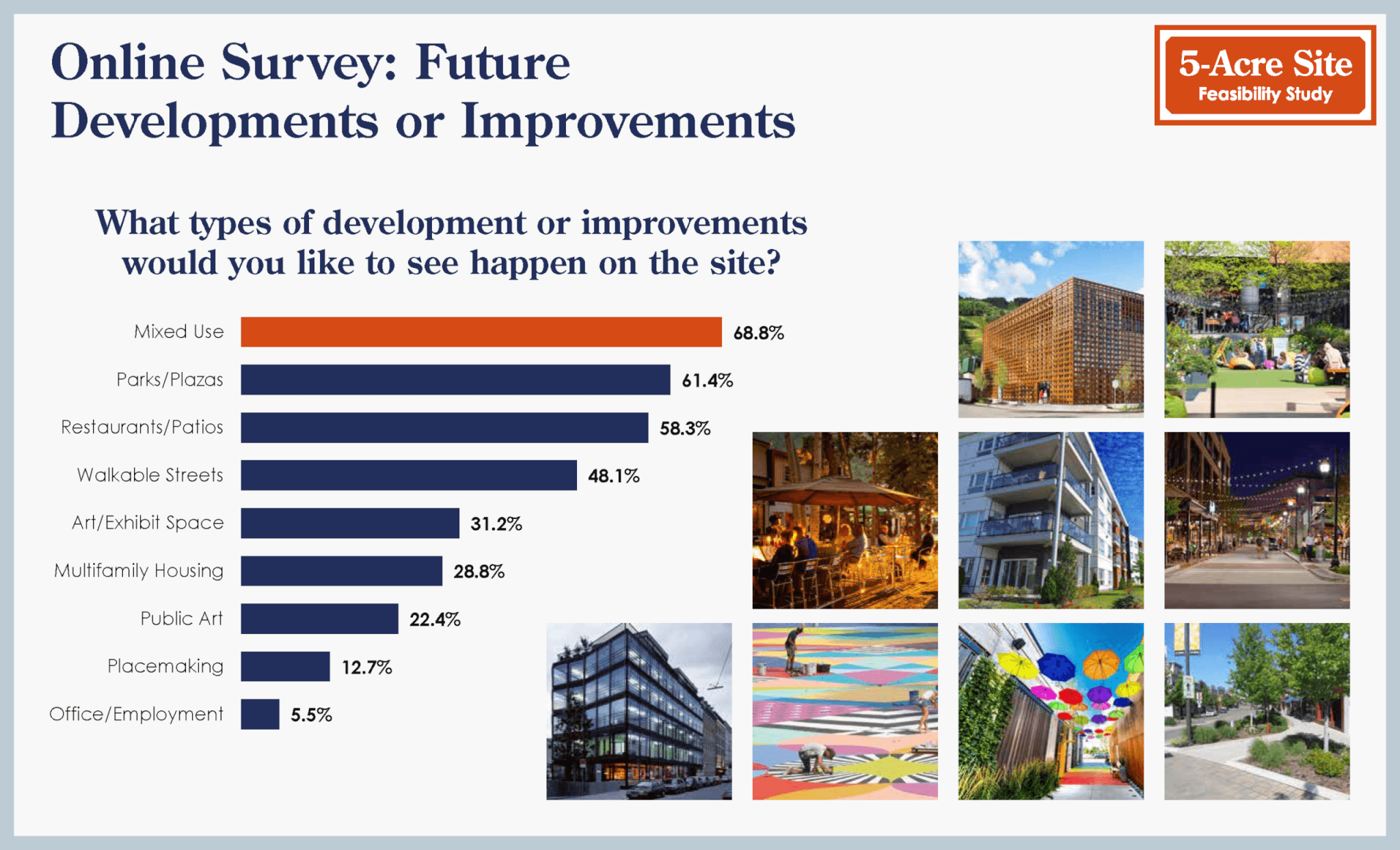
The Brinshore plan is a mixed-use development that combines housing, commercial, arts and public space, while the survey separately measured interest in individual uses and improvements. The results show that mixed use was the most popular overall format, while parks and plazas, restaurants and patios, and walkable streets also ranked ahead of multifamily housing.
Asked why they would spend time at the site in the future, respondents’ top answers were visiting restaurants or bars, shopping at local businesses, and attending community events.
Asked directly whether they supported redevelopment as an arts and culture district, the concept then under study, 46% of those answering the SurveyMonkey survey said yes, 27% said no and 28% answered maybe.
The city’s feasibility surveys, like TownLift’s poll, were open-participation instruments rather than statistical samples.
PLACE Park City, the citizens group behind the petition, has argued the premise of the site has changed substantially since the city’s original outreach.
Impact of public input
The city says public input has remained central throughout the process.
According to Clayton Scrivner, a city spokesperson, roughly 1,500 people participated during the visioning process through meetings, surveys, stakeholder roundtables, and advisory groups. That input established priorities for housing, public open space, local-serving businesses, arts and culture, and connectivity, he said.
“Public input remains meaningful during Planning Commission review,” Scrivner said. “Comments become part of the record and can inform the Commission’s questions, deliberations, and review under the Land Management Code. Public input will also continue to be part of the process as the to Council considers the development agreement.”
Tension on both sides
The city’s 2025 National Community Survey offers another piece of context. Unlike the Five-Acre Site feasability surveys and TownLift’s poll, it was a weighted random-sample survey of 295 residents conducted for the city by Polco, with a margin of error of plus or minus 6 percentage points. It did not ask specifically about the Five-Acre Site.
Residents rated open space and the natural environment among Park City’s greatest strengths. By contrast, only 11% of respondents gave a positive rating to the availability of affordable housing, while 14% gave a positive rating to traffic flow on major streets.
Those findings help explain why the Five-Acre Site has become such a difficult question for the city. Residents have reported high satisfaction with open space and much lower satisfaction with affordable housing availability and traffic flow.
The Bonanza site has become a test of how the city balances two competing priorities: housing and open space.
What’s next
The Planning Commission will continue reviewing the project’s subdivision, master planned development and conditional use permit applications. The next public hearing is scheduled for Aug. 26, when the commission could take final action or continue the matter to Sept. 9. The project would ultimately go before the City Council.
TownLift’s poll results, the city’s feasibility surveys, and the National Community Survey together suggest a community that considers open space its defining strength, housing its defining shortage, and remains divided over whether this parcel is the place to address it.
About this poll: TownLift’s reader poll was open Aug. 13-18, 2026, and collected 551 responses. Duplicate entries were identified by matching IP address, device signature and answer, by repeated email addresses, and by verbatim-identical comments; 26 entries were removed. Zip codes were verified for all 525 valid responses. This is a self-selected poll of TownLift readers, not a scientific survey, and results should not be projected to the community as a whole. TownLift receives no funding from Park City Municipal and has no financial stake in the project.
The most contested five acres in Park City: where do you stand?


2266 E Garfield Avenue
Salt Lake City, UT 84108