October skies over Park City bring Saturn, meteor showers and a Hunter’s Moon

Clear fall nights will offer several reasons to look up, from Saturn at its brightest to meteors born from the debris of Halley’s Comet.
PARK CITY, Utah — October brings longer nights, crisp mountain air and a full calendar of celestial events, with Saturn, two meteor showers and the Hunter’s Moon among the highlights visible from Utah.
The month begins with one of the best opportunities of the year to see Saturn. The planet reaches opposition Oct. 4, meaning Earth passes between Saturn and the sun. According to NASA’s Night Sky Network, Saturn will rise in the east around sunset and remain visible throughout the night, making early October an especially good time to look for the ringed planet.
A few nights later, the Draconid meteor shower arrives under unusually favorable conditions.
The Old Farmer’s Almanac says the Draconids will peak Oct. 9, when the moon will be only about 1% illuminated, leaving dark skies for viewing. Unlike many meteor showers that are best watched in the early morning hours, the Draconids favor the evening. The Almanac estimates roughly six meteors per hour under good conditions and recommends watching from a dark location away from artificial light.
The moon reaches its new phase Oct. 10, adding several nights of darker skies around the middle of the month.
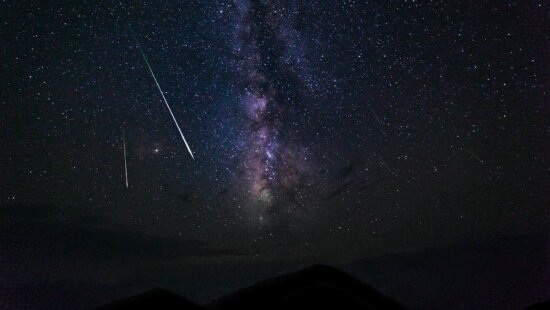
Later in October comes the Orionid meteor shower, created as Earth passes through debris left behind by Halley’s Comet.
NASA says the Orionids are active from Oct. 2 through Nov. 7 this year and peak overnight Oct. 21-22. The meteors are known for their speed, entering Earth’s atmosphere at about 41 miles per second, or 66 kilometers per second. Under dark conditions, observers can typically see about 10 to 20 Orionids per hour.
Viewing conditions will not be ideal this year, however. The Old Farmer’s Almanac says a bright waxing gibbous moon will wash out many of the fainter meteors during the Orionids’ peak, leaving the brightest streaks most likely to be visible. The best chance comes during the predawn hours.
October also offers a fittingly eerie target for Halloween-season stargazing.
NASA recommends looking toward the northeastern sky after about 9 p.m. for Algol, a star in the constellation Perseus historically nicknamed the “Demon Star” or “The Ghoul.” Cassiopeia and Andromeda can also be found in the same general portion of the autumn sky.
For those learning their way around the stars, The Old Farmer’s Almanac’s October sky map is designed for mid-northern latitudes, including the contiguous United States, and highlights constellations and recognizable star patterns visible during the month. The Almanac notes that the modern night sky is divided into 88 officially recognized constellations.
The month finishes with its brightest lunar event.
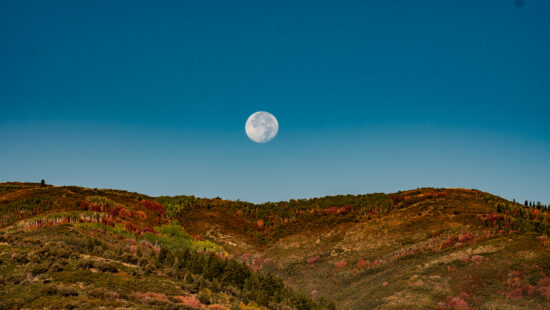
October’s full Hunter’s Moon reaches peak illumination in Park City at approximately 10:13 p.m. Mountain Time on Sunday, Oct. 25, according to The Old Farmer’s Almanac’s location-specific moon data.
The Hunter’s Moon is the full moon that follows the Harvest Moon. The Old Farmer’s Almanac says the traditional name reflects the time of year when harvested fields had been cleared and the bright moonlight offered additional evening light as people prepared for winter.
No telescope is required for the month’s easiest sights. Saturn, the moon, bright meteors and major constellations can all be seen with the unaided eye, though darker skies away from streetlights provide the best conditions.
For October, that means the simplest viewing equipment may be the most useful: warm layers, a dark patch of sky and a reason to stay outside a little longer.


4251 E Lipizzan Jump
Moab, UT 84532