September night sky brings a Harvest Moon and the start of fall

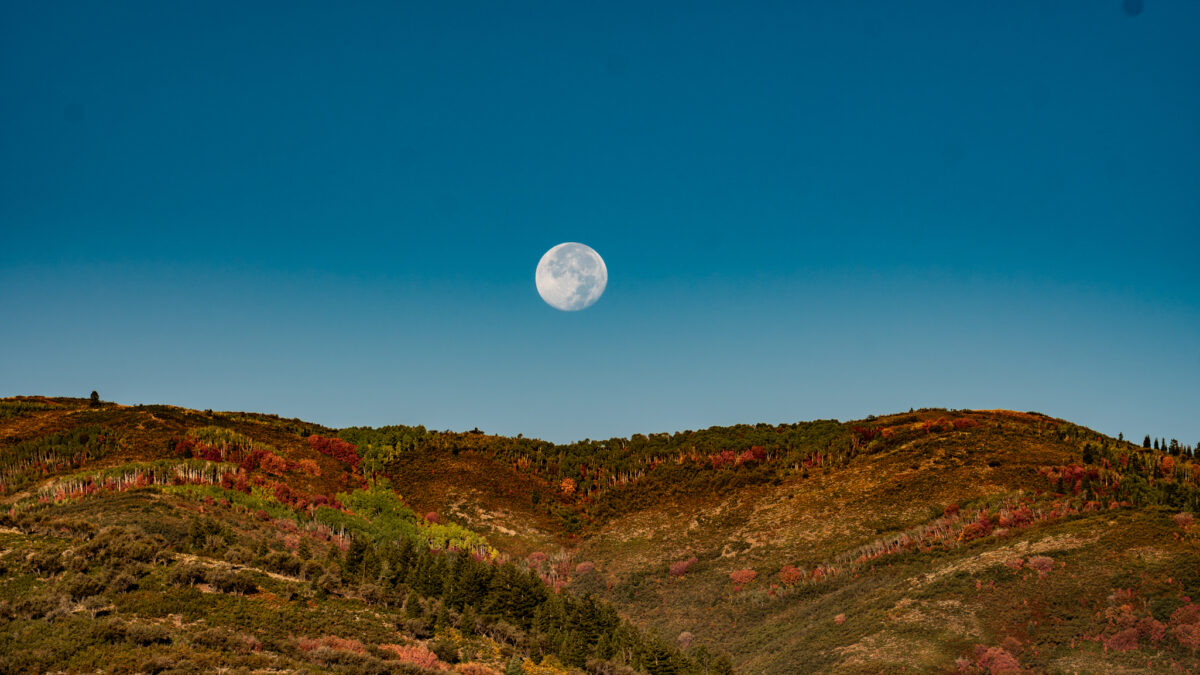
A nearly moonless stretch early in the month will offer darker skies, while the full Harvest Moon will illuminate Park City at the end of September
PARK CITY, Utah — September brings darker nights, the start of astronomical fall and a full Harvest Moon to the skies above the Wasatch Back.
The month begins with the moon waning toward its last-quarter phase on Sept. 4, and the new moon arrives late Sept. 10. Together, those dates create some of the month’s darkest conditions for viewing stars and other faint objects, according to The Old Farmer’s Almanac.
With no bright moonlight washing out the sky, the nights surrounding the new moon could offer September’s best window for stargazing, weather permitting.
NASA’s Hubble Night Sky Challenge identifies several deep-sky objects visible from the Northern Hemisphere during September. The easiest target on its list is M15, also known as the Great Pegasus Cluster, a dense, spherical collection of stars associated with the constellation Pegasus.
Other September targets include the Dumbbell Nebula, North America Nebula, Crescent Nebula, and Saturn Nebula. Most require binoculars or a telescope and a location away from artificial light, and NASA rates the Dumbbell, North America, Crescent and Saturn nebulae as moderately difficult to locate.
Fall arrives Sept. 22
Astronomical fall begins in Park City on Sept. 22, when the autumnal equinox occurs.
The autumnal equinox occurs at 8:04 p.m. Eastern time, or 6:04 p.m. Mountain time, according to The Old Farmer’s Almanac. At that moment, the sun crosses the celestial equator heading south, marking the beginning of fall in the Northern Hemisphere.
Day and night are not precisely equal on the equinox, despite the event’s name. The word “equinox” comes from Latin terms meaning “equal” and “night,” but the way sunlight bends through Earth’s atmosphere and how sunrise and sunset are measured creates slightly more daylight than darkness.
Days will continue to grow shorter until the winter solstice in December.
Neptune reaches opposition
Neptune reaches opposition Sept. 25, according to NASA’s guide to notable astronomical events in 2026.
Opposition occurs when Earth passes between the Sun and an outer planet. The alignment places the planet opposite the Sun in Earth’s sky, generally making it visible through most of the night.
Neptune cannot be seen with the unaided eye. Observers will need optical equipment to find the distant planet.
Harvest Moon rises
September’s main event arrives Sept. 26, when the moon reaches full illumination at 10:49 a.m. Mountain time.
Because the moon will be below the local horizon then, viewers should look east after sunset that evening. It should also appear nearly full on the nights before and after Sept. 26.
This year’s September full moon is the Harvest Moon, the name given to the full moon occurring closest to the autumnal equinox. It is not a supermoon, according to the Almanac, and unlike most full moons, it rises at nearly the same time for several consecutive nights.
Unlike most full moons, which rise an average of about 50 minutes later each evening, the Harvest Moon rises at nearly the same time for several consecutive nights. Across much of the northern United States, the difference can narrow to roughly 25 to 30 minutes.
The pattern once gave farmers additional evening light during the harvest season, leading to the moon’s familiar name.
When it appears near the horizon, the moon may look unusually large and golden. The apparent size is an optical effect known as the moon illusion, while its warmer color results from moonlight passing through more of Earth’s atmosphere.
September closes with the moon waning again, and fall’s longer nights gradually expand the hours available for looking up.


2266 E Garfield Avenue
Salt Lake City, UT 84108