Remembering Alan Siddoway: A lifetime of service to Summit County

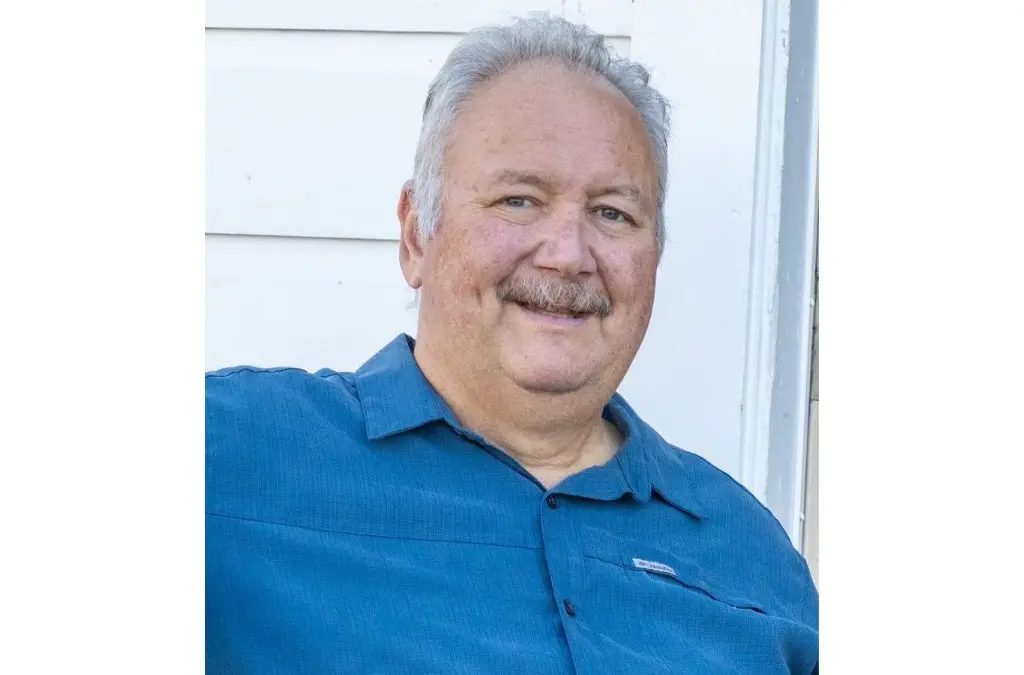
For nearly 42 years, the Summit County law enforcement officer and Search and Rescue leader showed up for people on their worst days, bringing preparation, humility and an uncommon reverence for the people in his care.
SUMMIT COUNTY, Utah — Years ago, a Summit County Search and Rescue team was called to Lake Powell after a 3-year-old girl fell from a boat and drowned.
Using an underwater recovery vehicle, the team was able to bring her body to the surface.
Kevan Todd remembers what happened next.
Alan Siddoway told Search and Rescue Commander Kory Vernon to go to his truck. Inside was a quilt.
“He wrapped this little girl in this quilt,” Todd said. “It was really reverent.”
Todd, now vice commander of Summit County Search and Rescue, still remembers being struck by the detail.
“Who has a baby quilt that he carries around with him?” he said.
Alan did.
For the men who worked beside Siddoway for decades, the story captures something fundamental about the way he approached his work. He prepared for what might be needed before anyone asked. When a rescue became a recovery, he understood the job had changed, but it hadn’t ended.
Someone still needed care. There was still a family waiting.
Siddoway died Oct. 11 at his home in Rockport after a brief battle with pancreatic cancer. He was 62. He spent nearly 42 years as a peace officer with the Summit County Sheriff’s Office, serving as captain and lieutenant, and spent three decades as a medical death investigator.
Among all of those roles, his obituary says Siddoway especially treasured serving as the sheriff’s liaison to Summit County Search and Rescue.
For those who worked with him, his impact is harder to summarize in a title.
“Alan was a very strong leader,” Vernon said. “I also looked up to him as my mentor.”
The two spent years together, often riding side by side in the cab of a pickup on their way to calls. Vernon remembers most how Siddoway treated people when the outcome wasn’t what anyone had hoped for.
“He was very respectful of the deceased,” Vernon said. “He always made sure that the family was treated really well if they came on site.”
Even on a mountainside, where privacy and comfort could be difficult to provide, Vernon said Siddoway found ways to do both.
He was deliberate in choosing the person to serve as liaison between a family and the Sheriff’s Office. He taught Vernon that a team could execute a technically perfect search and still fail the people it was serving if it forgot the family.
“Take care of the family, no matter what,” Vernon remembers him saying.
‘Leading from behind’
Canice Harte saw that same quality early in his Search and Rescue career.
Harte, who became Summit County Search and Rescue director after Siddoway retired, remembered spending four days searching the Kings Peak area for a missing young man. The search ended when rescuers found that the man had fallen and died.
During the search, Harte said Siddoway arranged for an RV-style trailer and food for the family waiting at command.
Afterward, he did something else.
Siddoway found a nursery near the family’s home in Idaho and arranged to have a tree purchased and planted in their yard in memory of their son.
“That was just the first time it struck me,” Harte said.
Over the years, he said, he watched Siddoway extend that kind of care again and again.
Harte described Siddoway’s approach as “servant leadership” and “leading from behind.”
Harte said Siddoway had ideas about how Search and Rescue could improve, but he respected the volunteers and how they wanted their team to operate.
“He would sort of just guide the ship with tiny little moves,” Harte said.
Siddoway used to say the team did not need someone who arrived knowing every technical skill. It needed “the right person,” someone with the character to fit the team.
If an employee made a mistake and owned it, Harte said Siddoway was extraordinarily forgiving.
“He’s just a good, hardworking, honest person,” Harte said. “A really smart, very tactical, capable person who had a great sense of humor and loved his family, loved his grandkids.”
Ready for what came next
Compassion was only one side of Siddoway’s work.
The other was preparation.
Todd remembers a call for an injured young man who had fallen near Anderson Pass in the Kings Peak area, deep in the Uinta Mountains.
Getting there by road could take hours. The Utah Department of Public Safety dispatched a helicopter, along with a medical helicopter. But while teams were still traveling toward the trailhead, Todd heard Siddoway on the radio pushing to get the Utah National Guard moving too.
Questions arose about approvals and costs.
Todd recalled Siddoway’s response was essentially to figure that out later. Start moving the resource now.
Weather and conditions ultimately prevented the first helicopter from extracting the injured man. The National Guard aircraft Siddoway had put into motion was able to make the hoist.
The patient had a ruptured spleen and, Todd said, rescuers were later told, was critically close to running out of time.
“What would have happened if Alan hadn’t had the forward thinking of saying, ‘We’re going to throw everything at this until we get it done’?” Todd said.
That preparedness became a running joke on the team.
If Siddoway called, Todd said, they might as well empty the equipment shed and bring everything.
“He was not going to waste time saying, ‘Oh, I wish I had brought this or this,’” Todd said. “If we have the manpower to bring it, we’re bringing it.”
Preparation also meant knowing when not to go.
Todd recalled an avalanche search for a local man near Hoyts Peak. The team located the man’s snow bike and believed he was likely caught in the avalanche. Still, darkness and poor visibility made it impossible to determine whether more snow could release above rescuers.
Siddoway and Todd made the decision not to send the team farther into the avalanche terrain that night.
It was difficult, Todd said, precisely because turning away ran against the instincts of people trained to go when others need help.
The team returned the next morning and recovered the man.
For Siddoway, taking care of the people searching mattered too.
Vernon remembers Siddoway checking in after traumatic calls, sometimes with a text, sometimes with a phone call, and sometimes later, in person.
“Are you handling that last incident OK?” Vernon remembers him asking.
After decades around serious injuries and death, Vernon said Siddoway understood the toll the work could take.
“He knows what it does to a person,” Vernon said.
And he made sure people ate.
Vernon said Siddoway remembered his early years as a patrol deputy, when officers could spend long hours on assignments without a warm meal. As a leader, he made sure Search and Rescue volunteers had food, water, equipment, and what they needed to stay in the field.
“Alan never let us miss a meal,” Vernon said.
Service far beyond Summit County
Siddoway joined the Summit County Sheriff’s Office in January 1985.
County records show he worked in corrections and patrol, served as a K-9 handler, became a patrol sergeant, and later rose to captain. In 2008, he left the Sheriff’s Office to become chief investigator at the Utah State Medical Examiner’s Office before eventually returning to Summit County.
His work also took him far outside the county.
As a member of the federal Disaster Mortuary Operational Response Team, Siddoway helped identify victims and return remains to families following Korean Air Flight 801 in Guam, the Sept. 11 terrorist attacks at the World Trade Center and Hurricane Katrina, according to his obituary.
Harte said even that work seemed connected to the same instinct colleagues saw at home.
“He just had this genuine care for understanding what had happened to the person and trying to get the family closure,” Harte said.
His career eventually brought him back to the mountains and people of Summit County again and again.
Whether a call came at 1 a.m. or 6 a.m., in sunshine or in a blizzard, Vernon said Siddoway went.
“If somebody called and needed help, we always went,” Vernon said.
Before his death, the Search and Rescue building in Kamas was dedicated as the Alan Siddoway Mountain Rescue Center. His obituary says Siddoway, who preferred to remain out of the spotlight, was overwhelmed by the recognition.
For the people who served beside him, his legacy may be found less in a building than in habits they now realize they learned from him.
Vernon remembers the team teasing Siddoway because he seemed to have two of everything.
“We just need one,” they would tell him.
Now Vernon catches himself doing the same thing, buying two of something when one would probably do.
It is one of the small habits he realizes he picked up from Alan.
Todd notices the absence differently.
When dispatch called with a new mission, Todd said he and Siddoway had developed a rhythm over the years. Whether Siddoway could respond in person or not, Todd could pick up the phone.
“Here’s what I’m thinking,” he would tell him.
What do you think?
“That’s the one thing I’m going to miss,” Todd said. “Just his years of experience and just the way he thought about things logistically.”
Then Todd paused and said it more simply.
“He was just a really good friend,” he said. “Somebody that you could just confide in.”
Nearly 42 years of service can’t be measured only in calls answered, searches completed, positions held, and disasters responded to.
The people who knew Alan Siddoway seem to measure it differently.
A phone call.
A hot meal.
A tree planted for a grieving family.
Two of everything, just in case.
And somewhere in his truck, when a family needed it most, a small quilt.


2266 E Garfield Avenue
Salt Lake City, UT 84108