Utah’s 2026 wildfire year ranks among the state’s most severe in decades

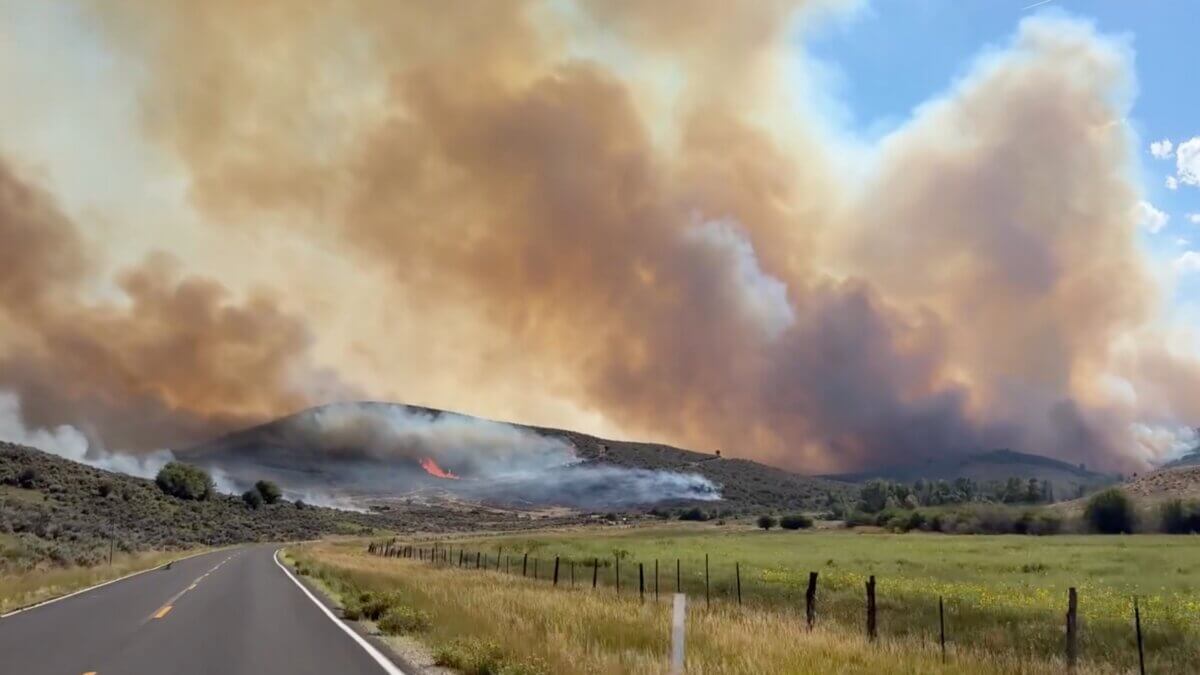
State officials and experts warned early on that Utah’s record-low snowpack could set the stage for an intense wildfire season. Now, with fire activity winding down, the numbers show just how severe the year was.
Utah’s 2026 wildfire season has burned more than half a million acres across the state, making it the most severe fire season since 2007. The season also saw an unusual number of large fires starting in and spreading to higher-elevation forests.
That’s according to J. Bradley Washa, a Utah State University Extension assistant professor of wildland fire science, who reviewed the state’s 2026 wildfire season.
Washa noted that this year’s fire activity began unusually early. On Jan. 22, the Beaver Canyon Fire started near Strawberry Reservoir in Wasatch County, an area that would typically have been covered by several feet of snow at that time of year.
In Summit County, the Rocky Canyon Fire raged dangerously close to Henefer, calling for town-wide evacuation.
Three fires from this year also rank among Utah’s 10 largest wildfires since 2002. The Widemouth 2 Fire burned 129,741 acres on the Fishlake National Forest, ranking No. 3. The Babylon Fire burned 107,189 acres on the Manti-La Sal National Forest, ranking No. 5. And the Cottonwood Fire burned 97,464 acres on the Fishlake National Forest, ranking No. 7.
The state’s largest wildfire since 2002 remains the 2007 Milford Flat Fire, which burned 363,052 acres.
A shift toward higher-elevation fires
Washa said one notable characteristic of the 2026 season was where some of the largest fires occurred.
Historically, some of Utah’s largest fires mostly occurred in lower-elevation rangelands and on Bureau of Land Management lands.
This year, larger fires shifted toward mid- and higher-elevation areas, particularly timbered landscapes.
These high-elevation fires also create flood risks for communities living downhill.
The burn scar from the Cottonwood Fire caused flooding and debris that affected Beaver beginning July 19, with additional flooding continuing through the summer.
The Utah Division of Water Resources reported in late August that the state had recorded 1,028 wildfires and more than 553,000 acres burned.
Lightning played a major role
Lightning has also been responsible for a larger share of Utah’s fires this year than the recent historical average.
Over the past decade, about 41% of Utah wildfires have been caused by lightning. So far in 2026, that figure is 54%, based on Great Basin Coordination Center data.
That could change as the fire year continues, but lightning typically decreases as the monsoonal season winds down, while human-caused ignitions can become more common during the fall.
Firefighters, pilots and communities suffered losses
The scale of the fire year also came with significant losses.
On June 27, four wildland firefighters died after being overtaken by extreme fire behavior while responding to fires near the Utah-Colorado border. The incident marked the first wildland firefighter fatalities associated with a Utah wildfire since 2006.
On Aug. 7, two pilots were killed when a Skycrane helicopter crashed while supporting the Widemouth 2 Fire.
Wildfires also destroyed at least 206 structures across six fires. The Cottonwood Fire accounted for 185 of those structures and caused significant damage to Eagle Point Ski Resort.
The fires are also expected to affect Utah’s ranching communities. Washa estimates that burned grazing allotments could affect approximately 11,575 cattle and 10,851 sheep over the next two years as vegetation recovers and some areas are rested from grazing.
What comes next?
The worst of Utah’s 2026 fire activity may be winding down, but the fire year is not technically over.
The Great Basin Coordination Center’s Significant Wildland Fire Potential Outlook calls for normal fire potential through the end of the year.
That does not eliminate the possibility of additional fire danger, however. A handful of Red Flag Warning days could temporarily elevate risk, while an early snowfall would further reduce fire potential.
Looking toward next year, Washa points to a strengthening El Niño pattern that some forecasters have called a “Super El Niño.” He said increased snowpack, particularly in southern Utah and potentially statewide, could help reduce drought conditions.
More moisture would not eliminate wildfire risk, however. Accumulated dead and downed vegetation would remain on the landscape, while development near wildlands continues to shape the potential consequences of future fires.


2266 E Garfield Avenue
Salt Lake City, UT 84108