Get ready for ski season: what your training is missing

PARK CITY, Utah — Most skiers know the feeling: legs burning by lunchtime; stability that holds up fine on a groomer but disappears the moment the terrain turns to chop or moguls; a body that felt strong in October and wrecked by 2 p.m. on a powder day.
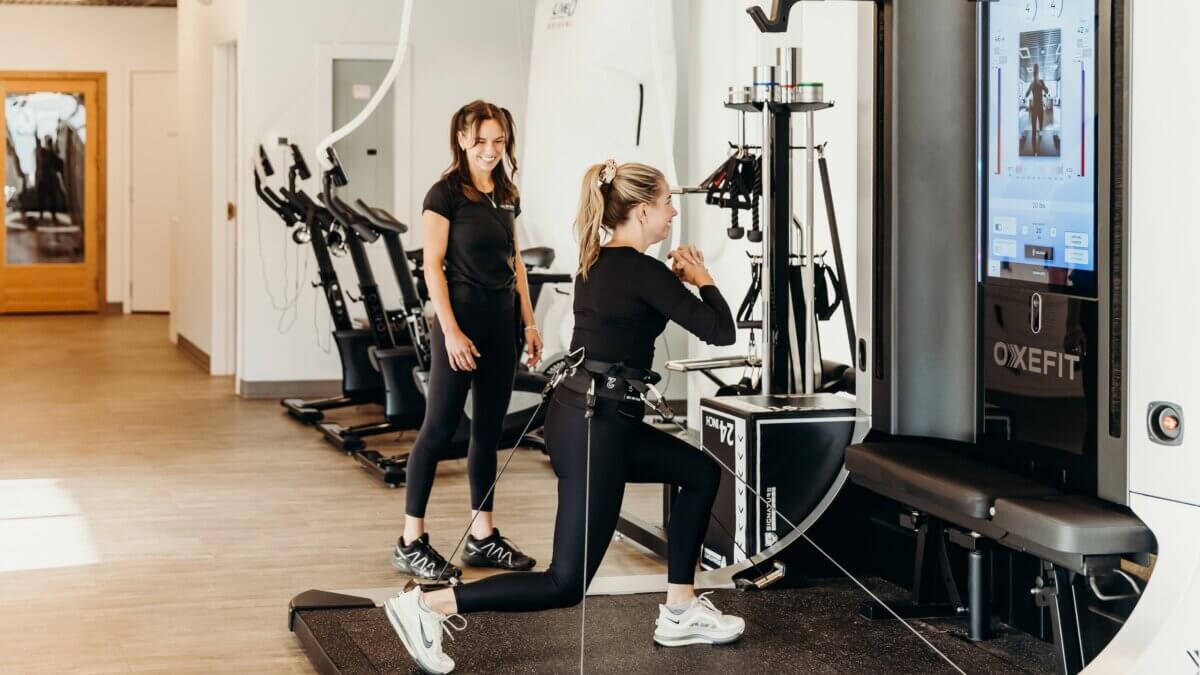
Kathy knows it too, or she used to. Now 70, she did Smart Fit Method’s ski-training program last year with one goal: staying strong enough to keep skiing as she gets older. When she started, she moved about 655 pounds on the studio’s OxeFit machine. She’s since progressed to more than 4,000 pounds.
The real test came last season, when Kathy skied three days in a row in a new pair of boots, something she said she hadn’t done in at least a decade. By the third day, she was tired. But she didn’t feel the complete exhaustion that used to follow her after back-to-back days on the mountain.
“A lot of people tend to do very similar things to get ready for ski season each year,” said co-owner Connor Darnbrough. Back squats, lunges, some jumps, maybe a few months of hiking or biking. It helps, he said, but it won’t address the burning legs or the fading stability, the way Kathy’s training did.
The missing piece: eccentric strength
The gap, Darnbrough said, comes down to eccentric strength, the body’s ability to resist force rather than just generate it. It’s what lets a skier’s legs absorb a mogul or hold a hard carve without folding.
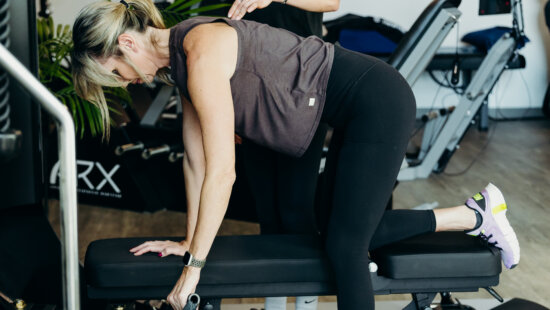
Most gym training loads the pushing and pulling phase of a lift well, but not the resisting phase, since traditional weights don’t get heavier on the way down. Specialized equipment, including the OxeFit, can adjust that balance directly, closer to how skiing actually stresses the legs.
The same machine also allows for perturbation training, small impulses in the weight that force the body to balance while under load. That mirrors real snow conditions far better than flat gym floors do, Darnbrough said, which is why a skier can hold up fine on a groomer for hours but feel fried after the same time in chop or off-piste terrain.
Stability, control and staying fresh
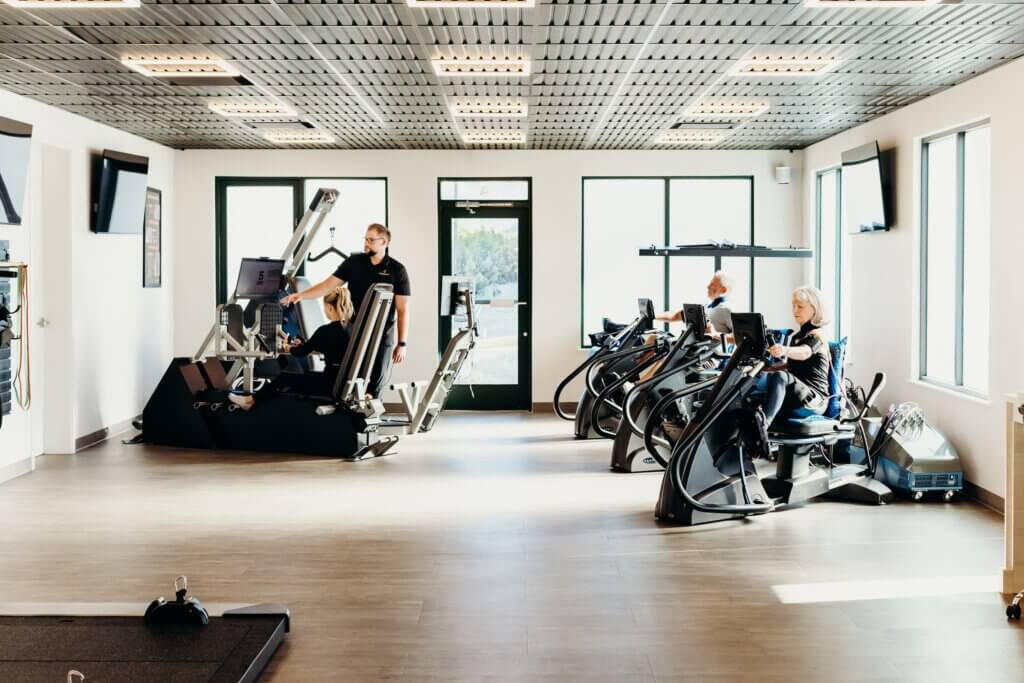
The ski-training program also builds single-leg stability, since skiing puts the bulk of a skier’s weight on one leg through most of a turn, along with rotational control, the ability to keep the chest facing downhill while the legs work independently underneath. Losing that separation late in the day is a common cause of falls, he said.
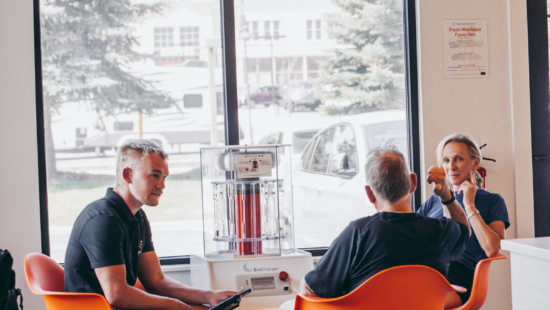
Fatigue itself factors into the plan, too. Darnbrough’s studio uses a machine called the Vasper, developed by NASA, to help improve lactate threshold and delay the leg burn that builds on a long powder day.
“That is, I won’t say impossible to replicate at a gym, but very, very time-consuming,” Darnbrough said of trying to train all of these factors on your own. A session that might otherwise take hours can be condensed into 30 minutes to an hour with the right tools, he said.
Programs are built around each skier’s ability level and injury history, and all include a mobility component, since pliable joints and muscles hold up better when a skier does take a fall.
Getting started
Skiers interested in a ski-specific program can book a complimentary session, where a trainer will walk through range-of-motion, balance and strength assessments before building a personalized plan. Anyone who wants to learn more before committing to a session is welcome to call the studio directly at (435) 500-6154 and talk it through with a trainer.


4251 E Lipizzan Jump
Moab, UT 84532