Epic pass sales fall 12% as Vail Resorts looks for rebound after historic low-snow winter

Vail Resorts is heading into the 2026-27 ski season with Epic pass product unit sales down 12% as the company looks for improved snowfall and stronger in-season visitation to help drive a rebound.
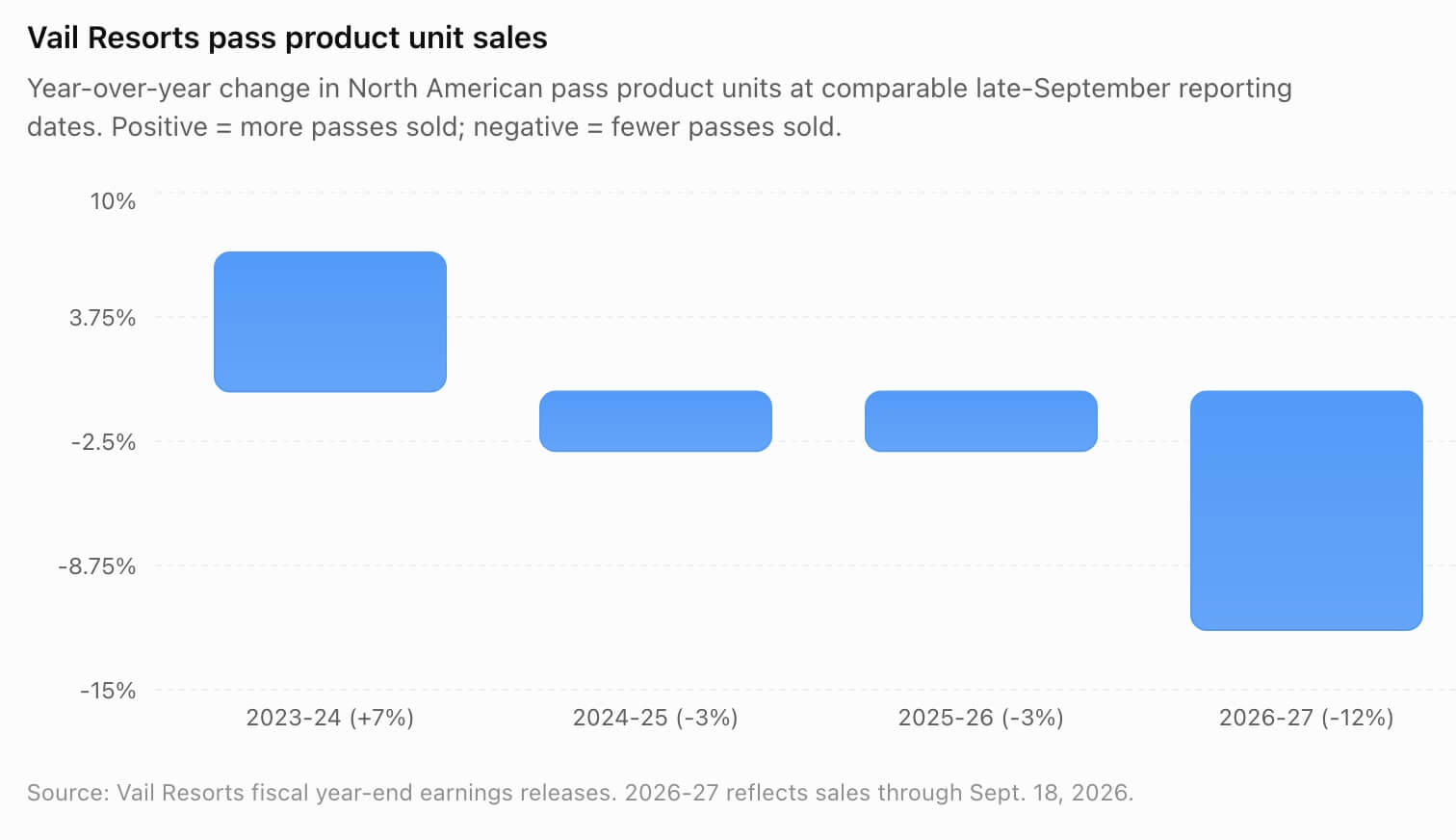
PARK CITY, Utah — Vail Resorts (NYSE: MTN) reported Monday that pass product units sold through Sept. 18 for the upcoming North American ski season were down approximately 12% from the same period last year. Estimated ski days sold were down 10%, while sales dollars declined 6%.
| Ski Season | Pass Unit Sales Change | Reporting Date | Source |
|---|---|---|---|
| 2023-24 | +7% | Sept. 22, 2023 | FY2023 |
| 2024-25 | -3% | Sept. 20, 2024 | FY2024 |
| 2025-26 | -3% | Sept. 19, 2025 | FY2025 |
| 2026-27 | -12% | Sept. 18, 2026 | FY2026 |
The decline has worsened since June, when Vail reported pass units down 10%.
The latest figure also marks a sharp departure from recent years. At comparable late-September checkpoints, Vail reported pass units down approximately 3% heading into both the 2024-25 and 2025-26 seasons, after increasing 7% for 2023-24.
Vail does not disclose pass sales specifically for Park City Mountain, meaning the figures represent its broader pass portfolio.
Utah coming off historic skier-visit decline
The weaker advance sales follow Utah’s worst snow year on record. Statewide skier days fell 26.5% to 4.8 million during the 2025-26 season, while skier spending declined 17.8% to $2.1 billion.
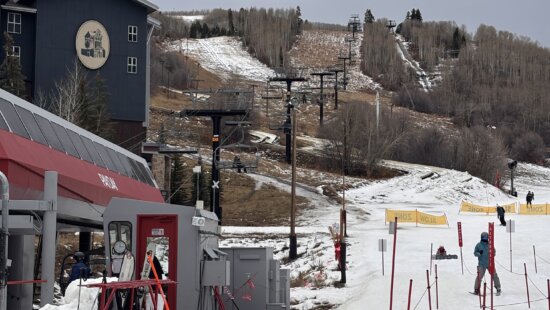
Park City Mountain ended its season April 5 amid warm and dry conditions. Vail Resorts said total visitation across its resorts fell 13.4% during fiscal 2026, with CEO Rob Katz describing conditions in the Rockies as among the most difficult the company has experienced.
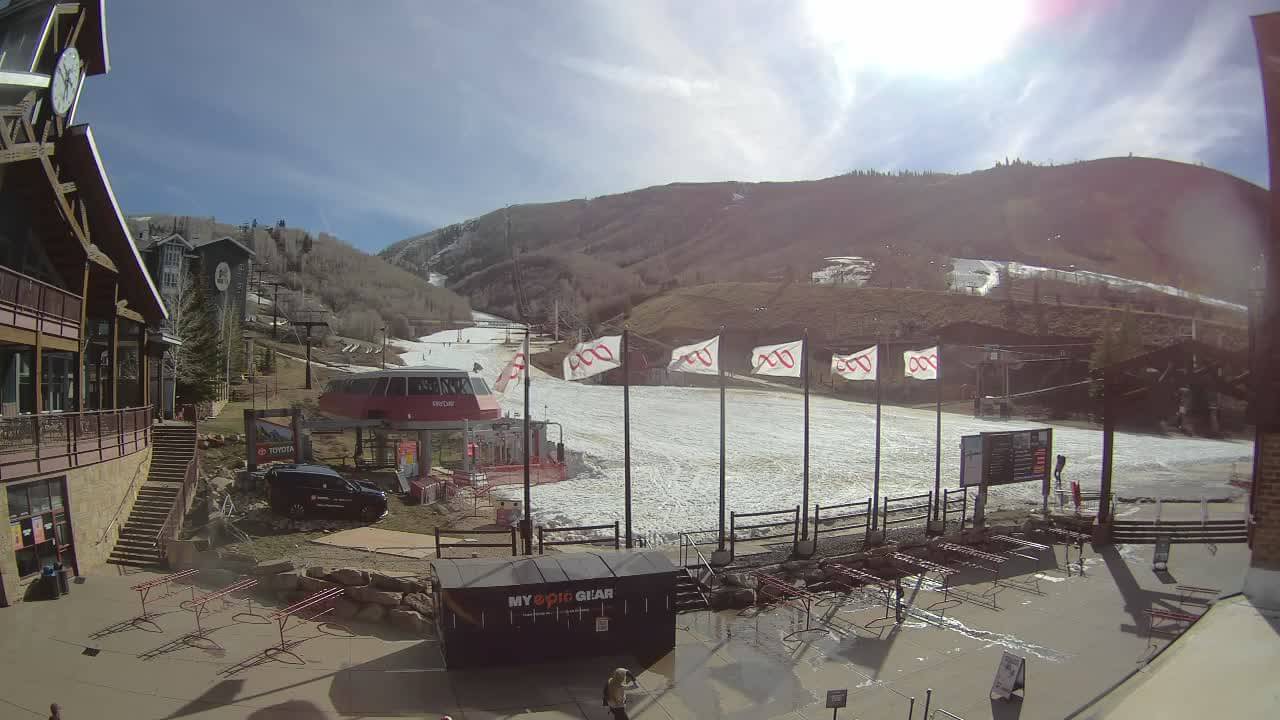
The company believes some customers may be delaying purchases after last winter rather than abandoning trips altogether, creating an opportunity to recapture visitation through later pass purchases or daily lift tickets.
Vail’s fiscal 2027 outlook assumes a meaningful recovery in visitation, though not a complete return to prior levels. The company projects Resort Reported EBITDA of $805 million to $865 million, compared with $745.7 million in fiscal 2026.
Weather remains a major variable
The outlook comes as a strengthening El Niño adds uncertainty to the upcoming winter.
NOAA’s Climate Prediction Center said Sept. 10 that El Niño is strengthening and has a greater than 90% chance of becoming a very strong event during fall and winter 2026-27.
Ultimately, snowfall remains the biggest driver of ski resort visitation and a strengthening El Niño adds another layer of uncertainty to Park City’s winter.
TownLift previously examined what a strong El Niño could mean for Utah’s winter.


2266 E Garfield Avenue
Salt Lake City, UT 84108