Town & County
Heber Valley bypass decision delayed to 2027 as UDOT revisits route

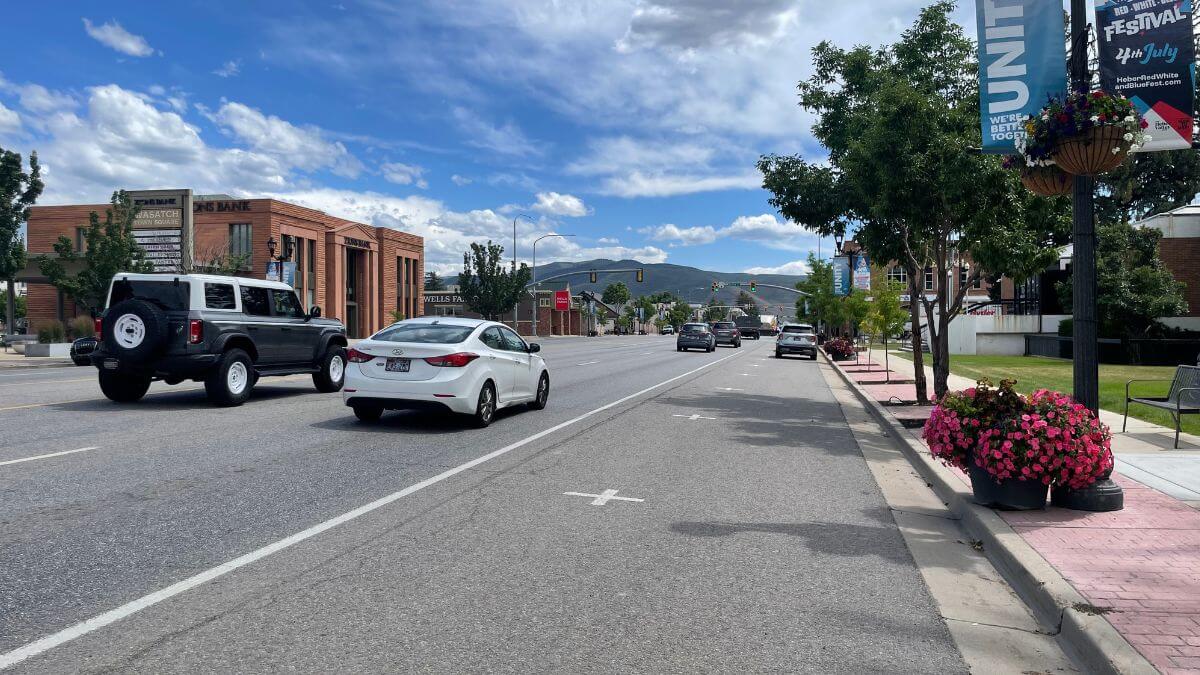
US 40 through Heber City. Photo: TownLift // Heather Bergeson
HEBER CITY, Utah — The long-awaited Heber Valley bypass will take longer than expected to reach a final decision after the Utah Department of Transportation secured an additional $1 million to study potential changes to the project in response to public feedback.
During Tuesday’s Heber City Council meeting, UDOT Project Manager Craig Hancock said the agency is extending its environmental review process to evaluate several possible design refinements before publishing the project’s Final Environmental Impact Statement (FEIS) and Record of Decision.
The additional work pushes the anticipated completion of the federal review process to spring 2027, several months later than previously expected.
The Heber Valley Corridor Environmental Impact Statement is evaluating alternatives to address growing traffic congestion in the Heber Valley, including proposed bypass routes around Heber City. The project has generated significant public interest, with residents, local governments and irrigation companies weighing in during this year’s public comment period.
According to Hancock, UDOT has spent the past several months reviewing public comments, meeting with stakeholders, and identifying areas where the preferred alternatives could potentially be refined.
Among the changes now under consideration are shifting the proposed 1300 South alignment farther south, moving a portion of Alternative B farther east through the North Fields, and improving bicycle and pedestrian crossings near the proposed SR-113 interchange.
To evaluate those possibilities, UDOT requested approximately $1 million from the Utah Transportation Commission. The funding will pay for additional wetlands and cultural resource field studies, updated engineering design work, and traffic analysis associated with the potential route adjustments, Hancock said.
Mayor Heidi Franco welcomed UDOT’s willingness to study several of the city’s requests, particularly the possibility of shifting the 1300 South alignment farther south and reconsidering access at Southfield Road.
One issue that remains unresolved is traffic modeling along U.S. 40 north of Heber City. Franco questioned whether UDOT would update its traffic model to account for congestion along the corridor if Alternative B is selected, expressing concern that vehicle queues could continue through multiple intersections into town.
Hancock responded that UDOT does not plan to create a new traffic model. Instead, engineers will use the existing model to analyze how any alignment shifts would affect traffic operations.
Before any changes are adopted, Hancock said the revised alignments will undergo the same screening process used earlier in the environmental review to determine whether they should be incorporated into the Final EIS.
Once complete, the Final Environmental Impact Statement and Record of Decision will identify UDOT’s selected corridor alternative, marking the conclusion of the federal environmental review process before final design and construction can move forward.
By: Heather Bergeson


2266 E Garfield Avenue
Salt Lake City, UT 84108
4251 E Lipizzan Jump
Moab, UT 84532
733 Summit Way
Alpine, UT 84004
5758 Cobalt Circle
Park City, UT 84098Talk of the Town


Park City Jobs

Line Servers, Aubergine Kitchen
1 day ago Full time $16.00 hourly

Hiring Barista Assistants and Baristas, Silver King Coffee
6 days ago Part time $17.00 - $30.00 hourly

HOA On-Site Supervisor, All Seasons HOA Management
8 days ago Full time $65,000 - $70,000 yearly

Buildings and Grounds Maintenance Technician, National Ability Center
9 days ago Full time $23.00 - $27.00 hourly
Lodge and Hospitality Coordinator, National Ability Center
9 days ago Full time $22.00 hourly