Summit County weighs how much access is too much at the 910

Residents urged the county to move slowly on recreation plans for the protected ranch, while others said limited public access is part of the promise of public land.
SUMMIT COUNTY, Utah — Summit County’s plan for public access at the 910 Ranch is beginning to take shape, but residents and longtime stewards urged county officials Wednesday to move slowly, protect wildlife, and avoid turning the property into another high-use trail destination.
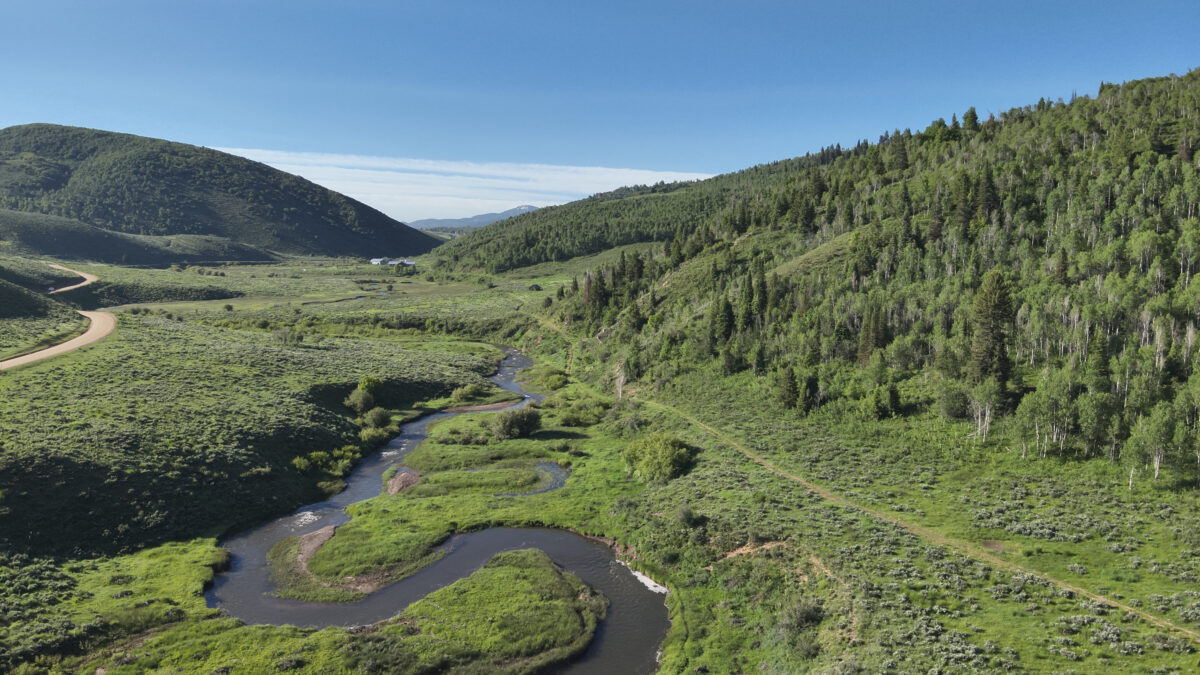
The Summit County Council held a public hearing on the draft recreation management plan for the nearly 8,600-acre ranch near Jeremy Ranch. The property has become one of the county’s most closely watched conservation efforts as residents weigh how much public access should be allowed on land protected for its open-space, habitat, and watershed values.
County staff said the recreation plan is still being drafted and will be incorporated into a broader resource management plan for the property. That plan must be approved by the Utah Department of Natural Resources Division of Forestry, Fire, and State Lands before implementation.
The hearing formally closed the public comment period for recreation planning. Staff said a May 20 council work session was intended to include public comment but was not properly noticed for that purpose.
Over nearly three years, the county has gathered input through council work sessions, practitioner roundtables, stakeholder meetings, open houses, a community survey, Jeremy Ranch HOA meetings, Rotary presentations, and a public hearing.
The draft plan attempts to balance required public access with the property’s conservation purpose. Staff said it does not promote high-impact development, motorized use, paved roads or parking areas, broad unrestricted recreation, or uncontrolled trail development. Instead, the proposal calls for limited, phased access, natural-surface infrastructure, strict use policies, monitoring, and enforcement.
The plan divides the ranch into three management zones. The Community Zone, about 15% of the property, would accommodate the highest level of public use, with primary access points, visitor amenities, parking, and trails. It would be the only zone where leashed dogs are permitted.
The Exploration Zone, about 30% of the ranch, would allow low- to moderate-intensity recreation with fewer facilities and more limited infrastructure. Dogs would not be permitted there to reduce wildlife disturbance.
The Conservation Core/Research Zone, covering about 55% of the ranch, would be dedicated to sensitive ecological systems, wildlife habitat, research, and long-term stewardship. Public access would be highly limited, controlled, or prohibited, with use generally restricted to permitted activities, research, stewardship, and low-intensity guided or permit-based access.
Allowed recreation under the draft plan — depending on zone — includes walking, hiking, trail running, snowshoeing, Nordic skiing, backcountry skiing, equestrian use, mountain biking, wildlife viewing, and scenic enjoyment. The plan would prohibit motorized vehicles, e-motos, e-bikes, drones, open flames, water recreation, off-trail travel, target shooting, and several other high-impact uses. Hunting and fishing would also be prohibited unless later allowed following restoration studies.
The plan caps parking at 240 spaces countywide — a firm upper limit staff said is meant to keep the ranch from being “loved to death.” The draft also contemplates a paid parking pilot program, phased development of trailheads and access points, and permits for large groups, special events, and commercial use.
The first phase, proposed for 2026-27, would include adoption of the resource management plan, signage and education, completion of the Mill Hollow trailhead and transportation path, a parking pilot, rehabilitation of the Big Bear bridge, and an initial trail concept within the Community Zone. It includes about three miles of repurposed two-track converted to natural-surface trail, one mile of new singletrack, and one mile of natural-surface transportation trail.
Staff said future phases would be evaluated only after the county reviews data from earlier phases, including visitor behavior, trail impacts, wildlife disturbance, vegetation conditions, erosion, user conflicts, and rule compliance.
Public comment focused largely on pace.
One speaker who lives near the 910 entrance in Jeremy Ranch said he supports conservation but also wants residents to be able to use the land.
“I’m hearing a lot of comments here about conservation, and I agree with conservation, but I think we don’t have enough comments from residents like me who are really looking forward to recreating on the ranch,” he said.
He said he walks his dog along the road, hopes to hike the property more often, and would welcome a carefully planned mountain bike trail. He called the draft plan “minimal” and said it strikes a thoughtful balance.
“I feel like we’re touching a part of it in a really thoughtful way,” he said.
Others urged the county to keep recreation limited. One man who said he has been associated with the 910 for more than 35 years described the property as a rare ecosystem, said he has seen cougars and other wildlife there, and called on the county to honor its conservation intent.
“Limit, limit, limit,” he said.
He said guided hikes and educational access could help people learn to be good stewards, but warned that some activities, including mountain biking, could disturb wildlife.
Another speaker urged the county to ensure stewardship funding, staffing, and management systems are in place before expanding public use.
“This is a big piece of property, and you need to fund the stewardship of it, whatever you choose,” he said. “If you open it up, it’s going to be hard to claw it back.”
The staff report identifies long-term costs including staffing, trail and infrastructure construction, maintenance, monitoring, and enforcement. Possible revenue sources include paid parking, concessions, permit fees, grants, partnerships, and donations.
Wednesday’s hearing did not result in final approval of the recreation management plan. Staff said feedback will be considered alongside other public input gathered over the past three years before the county finalizes the full resource management plan.
The central question at the 910 Ranch remains unanswered: how to honor the public investment that protected the land while ensuring that use does not damage the very landscape the county set out to preserve.


2266 E Garfield Avenue
Salt Lake City, UT 84108