Neighbors Magazines
Speaking for Nature
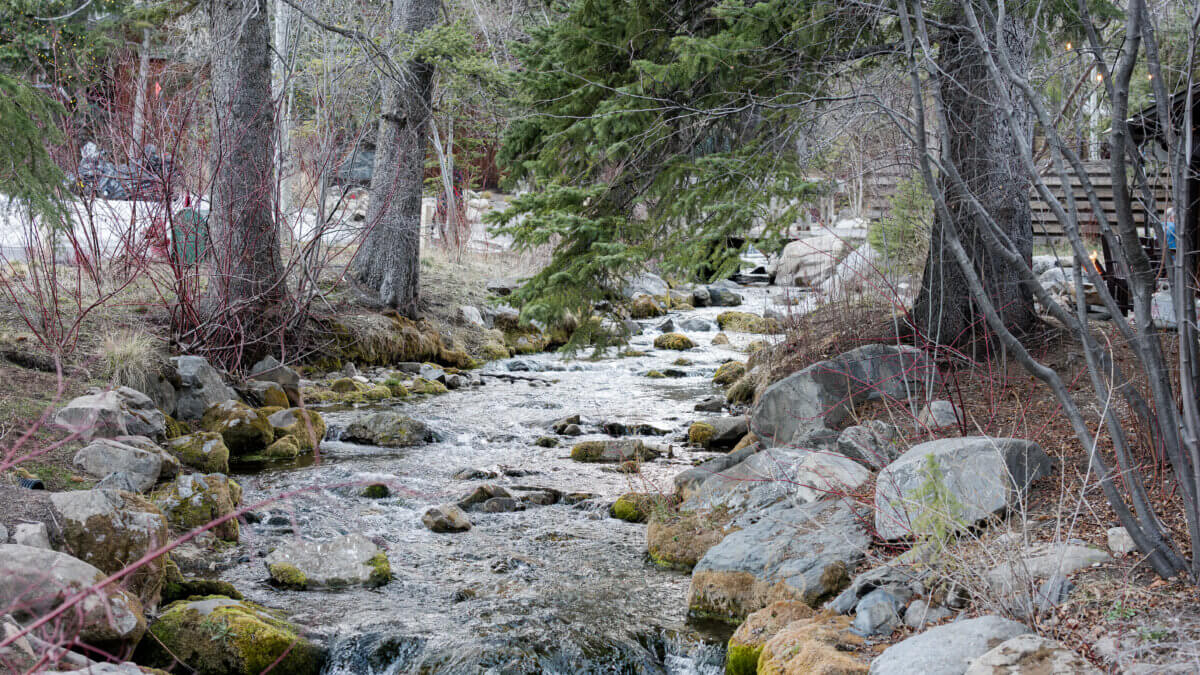
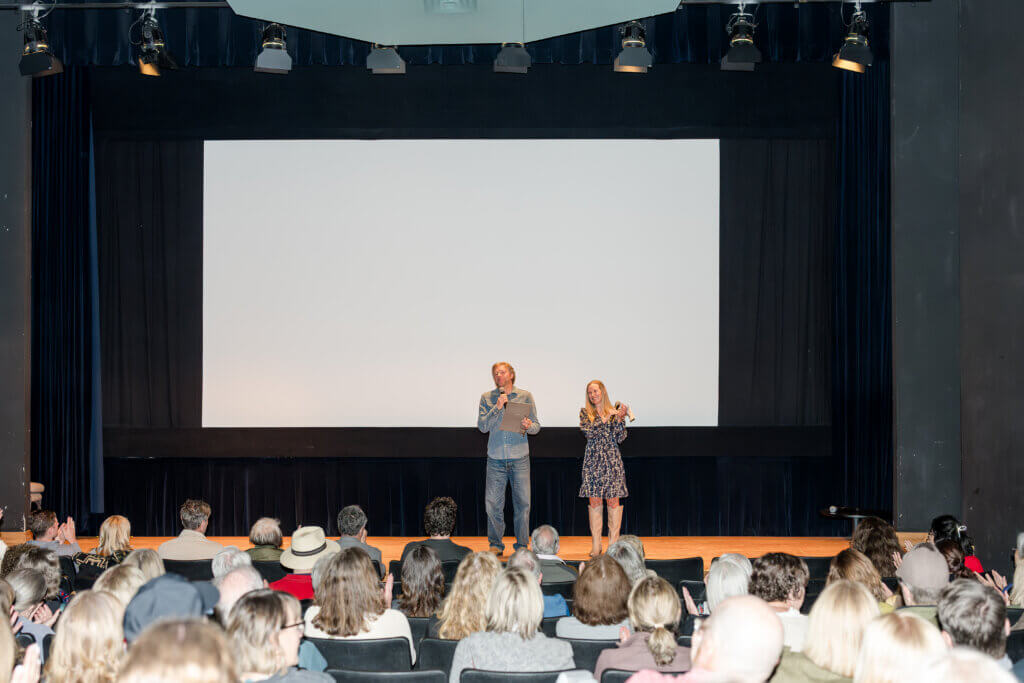
Photo: Sarah Severson // Neighbors of the Wasatch Back.
Robert Redford was in his late teens when he first laid eyes on the near-pristine meadows, the aspen stands, and the conifer forests of Provo Canyon’s North Fork. He came upon that high-alpine Shangri-La in the mid-1950s by happenstance, taking a wrong turn and ending up there while commuting between his parents’ home in Los Angeles and college in Boulder, Colorado. In 1961, he purchased two acres in the canyon, where he built an A-frame cabin. Eight years later, Redford leveraged himself heavily to buy the canyon’s then-rickety ski resort, Timp Haven, and renamed it “Sundance.”
Rather than embarking on a construction blitz to exploit every inch within Sundance’s boundary, as ski resort operators are known to do, Redford instead promised to, as he put it, “develop a little and conserve a great deal.” He made good on that promise by placing more than 1,400 acres of the canyon in conservation easement with Utah Open Lands, including the 864-acre Redford Family Nature & Wildlife Preserve and the Elk Meadows Preserve, a 316-acre area that spans the public hiking trail from the Aspen Grove trailhead to the iconic Stewart Falls. Though Redford passed away in September 2025, his vision for stewarding North Fork Canyon lives on largely through Sundance Nature Alliance.
Despite Sundance Nature Alliance having been officially formed in 2023, its roots reach back much further. “It was 1987, and I was working on air quality in Provo when I got a call from one of Robert Redford’s people about coming up the canyon to talk to him about working on some of his environmental projects,” recalls Julie Mack, Sundance Nature Alliance’s original executive director, during an interview recorded on Sundance Mountain Resort’s podcast, Outlaws & Outtakes, in October 2025. Soon after that first meeting, Julie would begin a 30-plus-year career representing Redford’s environmental interests in projects, ranging from the widening of Provo Canyon Highway and the Central Utah Project to advocating for Utah’s public lands and hosting an annual meeting of mayors from across the country to discuss how to combat climate change within their respective communities. “I would always walk out of meetings with Bob so inspired,” Julie remembers.
A project she recounts as one of the most fulfilling she took part in while working with Redford was the reintroduction of bighorn sheep in North Fork Canyon. “They’d been hunted to extinction and had been absent from the canyon for more than 50 years, and Bob decided he wanted to get them back,” Julie shares. The decade-long project culminated in the release of more than a dozen bighorn sheep in the canyon in 2000, a herd that has thrived to this day.
Another occurred in 2003 when Utah Open Lands, North Fork Preservation Alliance (precursor organization to Sundance Nature Alliance), and The Nature Conservancy purchased 17 acres of vital Columbia Spotted Frog habitat along the Upper Provo River. “The land was being eyed for development, but the coalition’s persistence was successful after educating landowners, anglers, and adjacent communities about how rivers, like the Provo River, are vital to the economic, ecological, and cultural health of the region,” Julie wrote in an article titled “A Home for Frogs,” published on sundancenaturealliance.org.
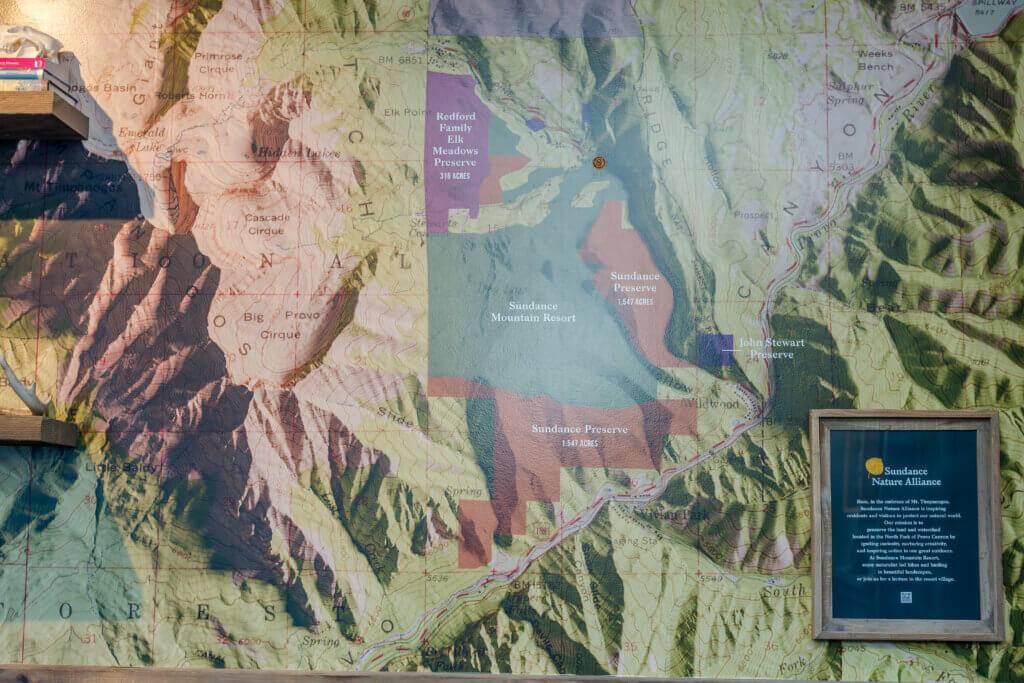
In 2020, Redford sold Sundance Mountain Resort to Broadreach Capital Partners and Cedar Capital Partners, owners whose ideals of conservation and stewardship align with that of the Redford family. In fact, when the real estate investment firms purchased the resort from the Redfords, they protected an additional 1,547 acres in and around the resort through a restrictive covenant held by Sundance Nature Alliance. “With Bob, I always felt very comfortable bringing up issues that I felt were problematic regarding development at Sundance, and we would find a workaround most of the time,” Julie says. “It’s the same kind of relationship with the current owners—I can voice my concerns, and we work together to find a solution for those concerns.”
Soon after Sundance Mountain Resort was sold, a major multiyear expansion was launched there, beginning with the opening of the Mountain Camp Day Lodge and a 60-acre terrain expansion. Earlier this year, the beautiful 63-room Sundance Inn opened to rave reviews. Next season, the resort will feature 105 additional acres of skiing and snowboarding terrain, along with the Electric Horseman high-speed quad chairlift. Each project was—and continues to be—completed with input from Sundance Nature Alliance. “We maintain a very healthy and robust relationship with Sundance Mountain Resort,” Julie explains. “I’ve worked very closely with resort staff to eliminate runoff concerns and reseed areas disturbed by the construction. We regularly check the native grasses and pollinators we planted to ensure they continue to get established. These native plants feed wildlife and are vital to the canyon’s ecosystem. I feel very proud of the work we’re doing there.”
Community engagement and education is another way that Sundance Nature Alliance functions. Voices of Nature, a filmmaker, author, and guest-speaker series, is the organization’s signature storytelling program—curated by the Redford Center, a nonprofit that Redford and his son, Jamie, created in 2005—which uses film, video, and new media to ignite action on environmental issues.
As part of Voices of Nature, on Saturday, May 9, author and filmmaker Pete McBride screened his film, Into the Canyon, and read from his new book, Witness to Water: One Photographer’s Mission to Defend the Colorado River. In 2016, McBride and writer Kevin Fedarko hiked the entire 705-mile length of the Grand Canyon to call attention to the unprecedented environmental threats facing this national treasure.
Other ways the nonprofit is engaging both the local community in North Fork Canyon, as well as visitors, is through its hiking guides. Before hitting the trail, hikers can grab one of these self-guided maps and local nature primers from the Sundance Resort Activity Center (or you can download one from sundancenaturealliance.org/hiking). Each offers a historic, cultural, and ecological perspective of the canyon’s hiking trails. Signs along each trail correspond with numbers and written content within each guide, covering topics like local flora and fauna, Mt. Timpanogos geology, and ecosystem threats like wildfire and the bark beetle.
Volunteer invasive-weed pulls, guided hikes with a naturalist, and its annual fall fundraising gala are some of the other events hosted annually by Sundance Nature Alliance. For more details, as well as to keep up with Mother Nature’s schedule in North Fork Canyon—for example, when moose-calving season begins, or the best time to view wildflowers and butterflies in the canyon—visit the organization’s online calendar, sundancenaturealliance.org/programs-1.
Last fall, Julie ended more than 30 years stewarding the land in North Fork Canyon when she stepped down from Sundance Nature Alliance to retire. She passed the baton, and the commitment to maintain Redford’s promise, to Emily Moench, the organization’s acting executive director. This spring and summer, Emily will launch a water-conservation campaign aimed at learning more about the canyon’s water sources—information that will help Sundance Nature Alliance work in partnership with North Fork Special Service District and the Central Utah Conservancy District to create a long-term strategy for water conservation in the canyon. “This campaign will also include a community native and waterwise plant sale. We’ll also use Sundance Mountain Resort as a touchpoint for visitors to learn more about how we’re conserving water in the canyon and how they can do the same in their own communities,” Emily says.
A part of Sundance Nature Alliance’s vision statement reads, “We will foster deep relationships between people and nature and cultivate a community artfully inspired to protect our natural world.” As Emily is shaping the next chapter of stewardship in North Fork Canyon, these words resonate particularly strongly with her. “When I began working with the Sundance Nature Alliance, I thought of the work as two separate efforts,” she says. “One part, the on-the-ground watershed and ecosystem protection work, and the other, highlighting the artists who are inspired by the land to create. Now I think of it as all-encompassing. Redford understood this instinctively. Sundance Nature Alliance is at the intersection of these two things, interweaving action to protect the land and inspiring people to do the same in a way that you can’t tell where one ends and the other begins.”
The Un-Change Agent
Utah Open Lands’ mission of land preservation officially began in Park City in 1990. But it’s fair to say that the seeds for the land trust, which now protects more than 60,000 acres across Utah—including 1,180 acres at Sundance Mountain Resort—were planted much earlier than that in North Fork Canyon. “I lived [in North Fork Canyon] with my family for about four years when I was growing up, and learned how to ski Utah powder at Sundance,” says Wendy Fisher, founder and executive director of Utah Open Lands and board chair of the Sundance Nature Alliance. “When I was a child, Sundance was a place that held amazing magic and was a refuge for me. And the landscape there has not really changed in large part since then because of the vision of the Redford family.”
“We’re here about the future,” said Redford on a crisp day in October 1998, at the dedication ceremony celebrating placement of 864 acres into a conservation easement with Utah Open Lands as the Redford Family Nature & Wildlife Preserve. Now, almost 30 years later, that corner of North Fork Canyon remains rich with biodiversity, spanning mountain wetland meadows, spruce/fir forests, aspen groves, scrub oak, perennial streams, and ponds that provide habitat for elk, mule deer, moose, cougars, black bears, songbirds, and raptors. It’s also where the Redford children—James, Shauna, and Amy—spent countless hours of their childhood exploring, both together and alone, using the land as an escape from the confines of their father’s celebrity and learning resilience and self-reliance along the way. “I was a feral child,” says Redford’s youngest daughter, Amy, in a 2022 Salt Lake Magazine article titled “For the Love of the Land.” “Most of the wisdom I have is a byproduct of what I learned in those mountains.”
Though the Redford family could have chosen a more well-known national land trust, like The Nature Conservancy, to protect those 864 acres they care for so deeply—and, later, the 316-acre Elk Meadows Preserve—they instead chose to partner with the then-fledgling Utah Open Lands. “I think that Julie [Mack] and [Robert] Redford saw that we were this small Utah nonprofit that was working hard to raise awareness for conservation,” Wendy says. “I am hopeful that Sundance Nature Alliance can do its part to identify pathways for greater conservation awareness as well, so that no matter what canyon you’re in, you’re mindful of the flowers and bees, and understand that we have a duty to tread as lightly as we can.”
By: Neighbors of Park City // Melissa Fields


19 East 100 North
Spring City, UT 84662
24 South 600 East
Salt Lake City, UT 84102
10584 Basin Canyon Road
Park City, UT 84098
965 Goshen Canyon Road
Mona, UT 84645Talk of the Town


Park City Jobs


Ski Instructor / Snowboard Instructor, National Ability Center
1 day ago Seasonal $20.00 - $23.00 hourly

Social Media Videographer & Editor, Well Plated
3 days ago Contractor $3,000 - $5,000 monthly

Showroom Specialist, Tanner Glass & Hardware
3 days ago Full time $25.00 - $30.00 hourly
Head of Maintenance, Ptarmigan Property Services
3 days ago Full time $70,000 - $85,000 yearly