Police & Fire
As Utah wildfires surpass 455,000 acres, USU urges residents to prepare homes now

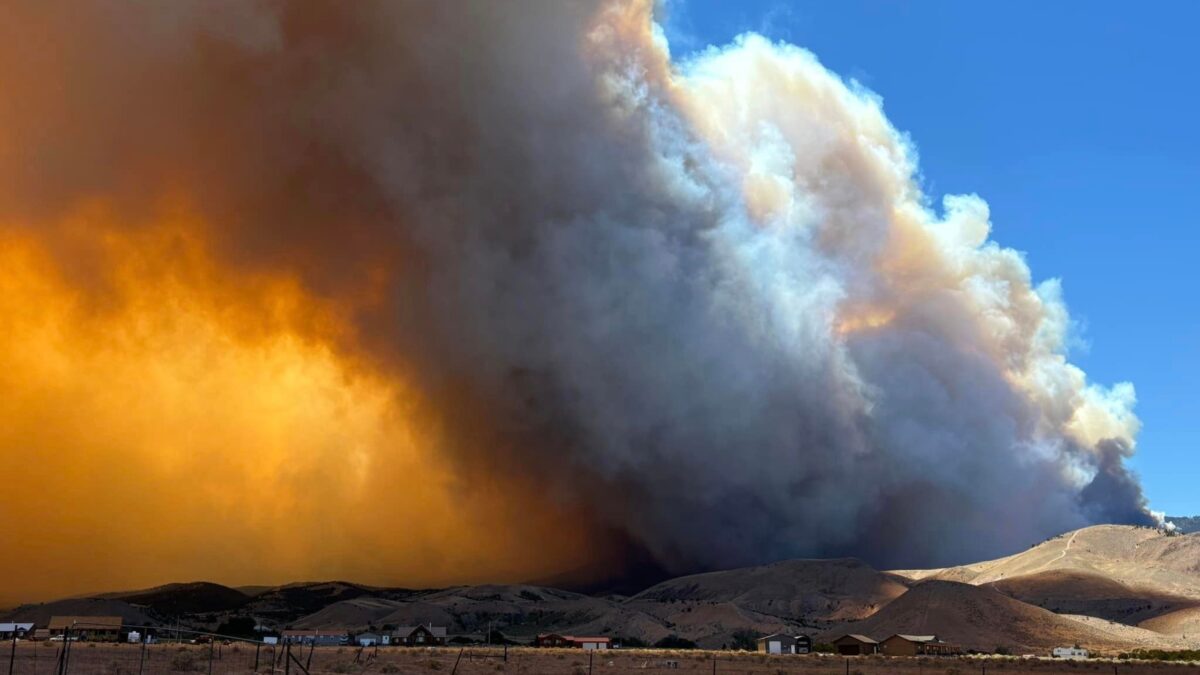
Smoke rises from a wildfire in Utah during the 2026 fire season, which has burned more than 455,000 acres statewide as of early August. Photo: Utah Fire Info
More than half of the state’s 747 fires this year were caused by people
SALT LAKE CITY — With wildfires burning across Utah and firefighting resources stretched thin, Utah State University Extension is urging residents to take steps now to protect their homes, families and communities.
As of early August, 747 wildfires had burned 455,741 acres across the state, according to information released Tuesday by USU Extension. Of those fires, 374 were human-caused, 317 were sparked by lightning, and 56 remained under investigation.
The figures place Utah among the states experiencing an especially active fire season following a winter with record-low snowpack and an unusually warm, dry start to summer.
Although monsoonal moisture briefly reduced fire danger during the second half of July, USU Extension said fire activity remains high at middle and upper elevations and is expected to continue across most of Utah, with the exception of the state’s southernmost counties.
Conditions worsened again as August began. The Widemouth 2 Fire east of Fillmore grew to more than 68,000 acres by Monday, prompting evacuations and threatening hundreds of structures. State officials said firefighting resources were in high demand across the Great Basin, which includes most of Utah, Nevada and Idaho and a portion of Wyoming.
Utah Gov. Spencer Cox warned residents Sunday that conditions were “extremely dangerous” and urged people to avoid activities that could create a spark, secure dragging trailer chains, avoid parking on dry grass and follow all fire restrictions and evacuation orders.
USU Extension officials said residents should not wait until a fire is nearby to begin preparing.
The agency recommends creating household evacuation and communication plans, assembling emergency kits and monitoring official information about fire movement and evacuation orders. Residents should also remove combustible materials near their homes and consider fire-resistant landscaping and construction materials.
Vegetation immediately surrounding a house can play a significant role in whether it survives a wildfire. USU Extension recommends clearing dead leaves, pine needles and other debris from roofs and gutters, pruning vegetation and moving firewood and other flammable materials away from structures.
Homeowners should also consider how wind-driven embers could reach decks, vents, fences, eaves and other vulnerable parts of a building. Embers can travel ahead of a fire and ignite homes even when flames never directly reach the structure.
USU Extension’s wildfire preparedness website includes evacuation guidance, smoke safety information, landscaping recommendations, homeowner checklists and publications addressing post-fire erosion and threats to reservoirs.
The site also links residents to real-time fire information and air-quality monitoring. Wildfire smoke can be particularly harmful to children, older adults and people with respiratory or other underlying health conditions, according to the agency.
Summit County remains under Stage 2 fire restrictions on unincorporated and state lands. County resources include information about defensible space, home and lot assessments, wildfire-resistant landscaping and its residential wood-chipping program.
Residents can find USU Extension’s preparedness materials at extension.usu.edu/preparedness/wildfires. Current wildfire conditions and incident updates are available through Utah Fire Info.
By: Rebecca Brenner


2266 E Garfield Avenue
Salt Lake City, UT 84108
4251 E Lipizzan Jump
Moab, UT 84532Talk of the Town


Park City Jobs

Compounding Pharmacy Technician, Alpine Apothecary
3 days ago Full time $19.00 - $24.00 hourly

Ski Instructor and Snowboard Instructor, National Ability Center
3 days ago Seasonal $20.00 - $23.00 hourly

Custom picture framer and art sales, Park City Frame & Gallery
4 days ago Full time $21.00 - $24.00 hourly

Hospitality and Operations Specialist, InvitedHome
6 days ago Full time $60,000 - $68,000 yearly
Payroll Specialist – Ski Industry – Full-Time, Surefoot LC
6 days ago Full time