No quick finish for Olympic Park Amendment as Council presses for clarity

Rental rules, Bear Hollow gate, and ridgeline development are still being reworked
SUMMIT COUNTY, Utah — Summit County Council on Wednesday narrowed debate over a proposed amended development agreement for the Utah Olympic Park to a handful of unresolved questions: where nightly, short-term, and long-term rentals would be allowed, who could use them, and how much traffic should be permitted through the park’s secondary access gate. County staff told council the revised packet reflected member-requested redlines focused on short-term rentals, gross floor area, hotel ownership, the master conceptual site plan, and ridgeline development.
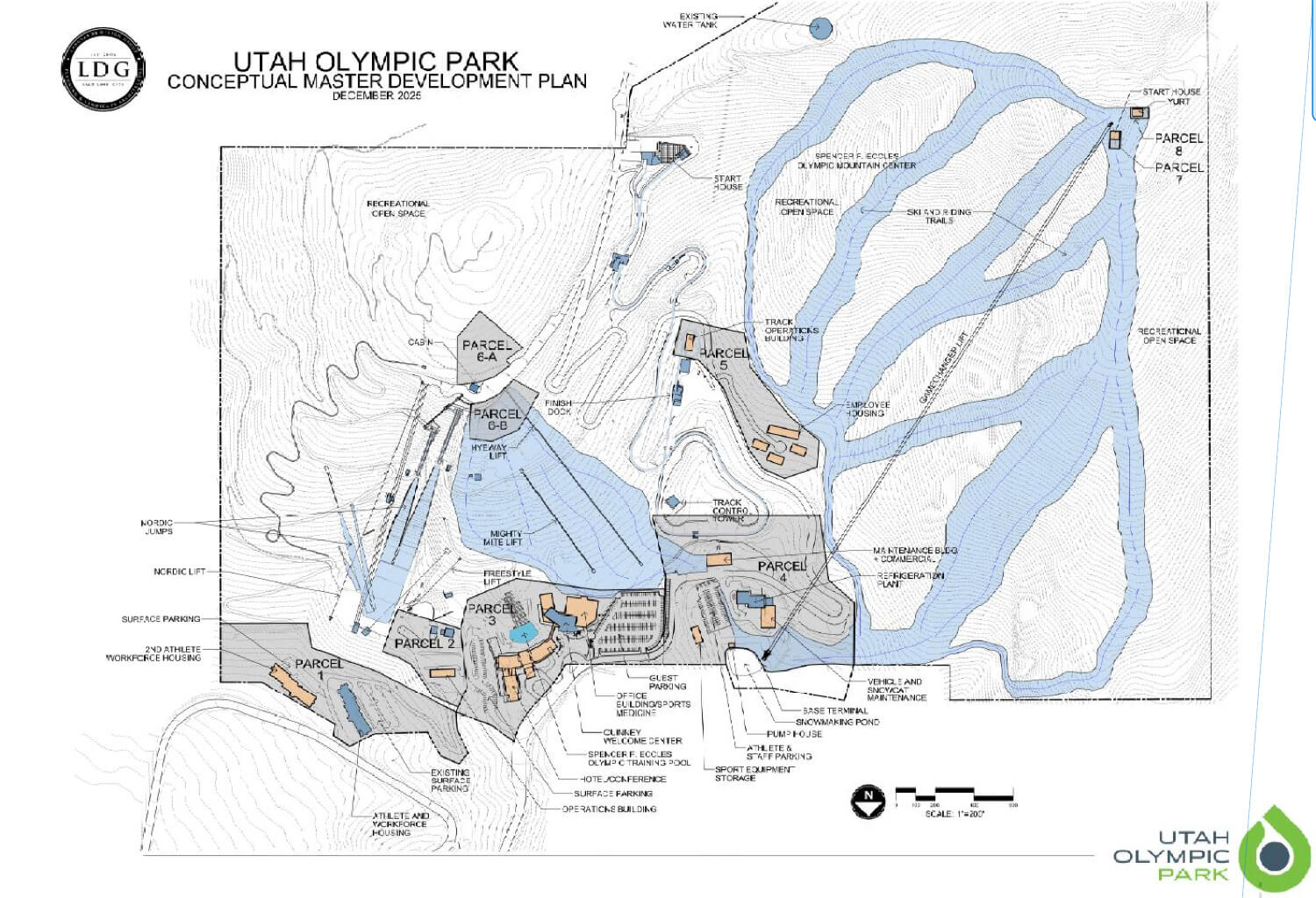
The most concrete discussion centered on parcel-by-parcel rental rules. Under the framework outlined on Wednesday, Parcel 1 would allow nightly, short-term, and long-term rentals; Parcel 5 would allow short-term rentals only for athletes and coaches; and Parcels 6A and 6B would be limited to long-term leases. Project representatives for the Utah Olympic Legacy Foundation said that the approach is meant to preserve flexibility for the park’s core users while limiting broader public nightly rentals to Parcel 1 near the hotel area.
A second flashpoint was the park’s Bear Hollow back gate. Councilmember Roger Armstrong pushed for tighter language requiring primary access through Olympic Parkway unless a use could not reasonably be accommodated there, especially for construction traffic, operations, and major events. Armstrong said primary access should remain on Olympic Parkway and pressed staff and the applicant to tighten what he described as open-ended language governing which groups could use the gate and under what circumstances.
The council’s focus reflected months of tension over whether the amendment is a simple update or a broader expansion of flexibility at a high-profile Olympic venue bordered by residential neighborhoods. The debate has been shaped by sustained pressure from Sun Peak residents and HOA leaders, who have argued the original approvals treated the Bear Hollow connection as emergency access and have warned against any drift toward broader cut-through traffic. The council delayed action in January after residents and HOA leaders said the amendment was not a routine cleanup but a sweeping rewrite with implications for traffic, access, open space, and future public review, as TownLift has previously reported.
The financial backdrop has also become part of the story. Utah Olympic Legacy Foundation CEO Colin Hilton has said the park runs at an annual operating loss of roughly $2 million to $3 million, arguing that revenue-generating uses — a hotel, restaurant, conference space, and related development — are needed to sustain the venue through and beyond the 2034 Winter Games.
Wednesday’s discussion suggested the council is trying to draw a harder line around that flexibility. Rather than debating the amendment as a single package, members worked through it in narrower pieces — rental rules, access routes, and ridgeline treatment — with an eye toward spelling out what the park can and cannot do before any final approval.
The discussion ended with the council still working through redlined language, indicating the amended agreement will likely need additional revision before returning in a form ready for a final vote.


2266 E Garfield Avenue
Salt Lake City, UT 84108