Summit County delays Utah Olympic Park agreement vote after residents raise 2034 safety, access concerns

SUMMIT COUNTY, Utah — Summit County council members on Wednesday pressed pause on proposed changes to the Utah Olympic Park development agreement, signaling they want tighter language and a clearer roadmap before approving amendments that residents say could reshape neighborhood safety, public oversight, and youth sports access as Utah ramps up toward the 2034 Winter Games.
The public hearing drew over a dozen commenters, with many speakers focused on what happens when Olympic-scale planning collides with everyday realities in Snyderville Basin: traffic and cut-through driving near Sun Peak, wildfire evacuation routes, and whether local athletes will keep reliable access to training facilities during future construction.
The proposed amendments would update a long-standing agreement, first adopted in 2011, that governs what can be built at the park and how projects move through county review. The Snyderville Basin Planning Commission previously recommended approval, but council members said Wednesday they were not ready to vote and directed staff to bring the item back as a work session for deeper review.
Safety and access dominated public comment
Several Sun Peak residents returned to the same pressure point that has surfaced repeatedly during the county’s review: Bear Hollow Drive and the park’s back gate.
Residents questioned whether revised language would be enough to prevent the back gate from functioning as a public entrance during large events and asked the county to require enforceable commitments—not just assurances—as development and event activity increase.
Speakers also raised concerns about the cumulative effects of more building in an already-congested corridor, arguing that additional traffic and event surges would be felt first in adjacent neighborhoods and on local roads used daily by families, school buses, and emergency services.
Youth pipeline concerns as 2034 approaches
Public comment also emphasized the park’s role as a training hub — not just for elite athletes, but for local kids who practice year-round.
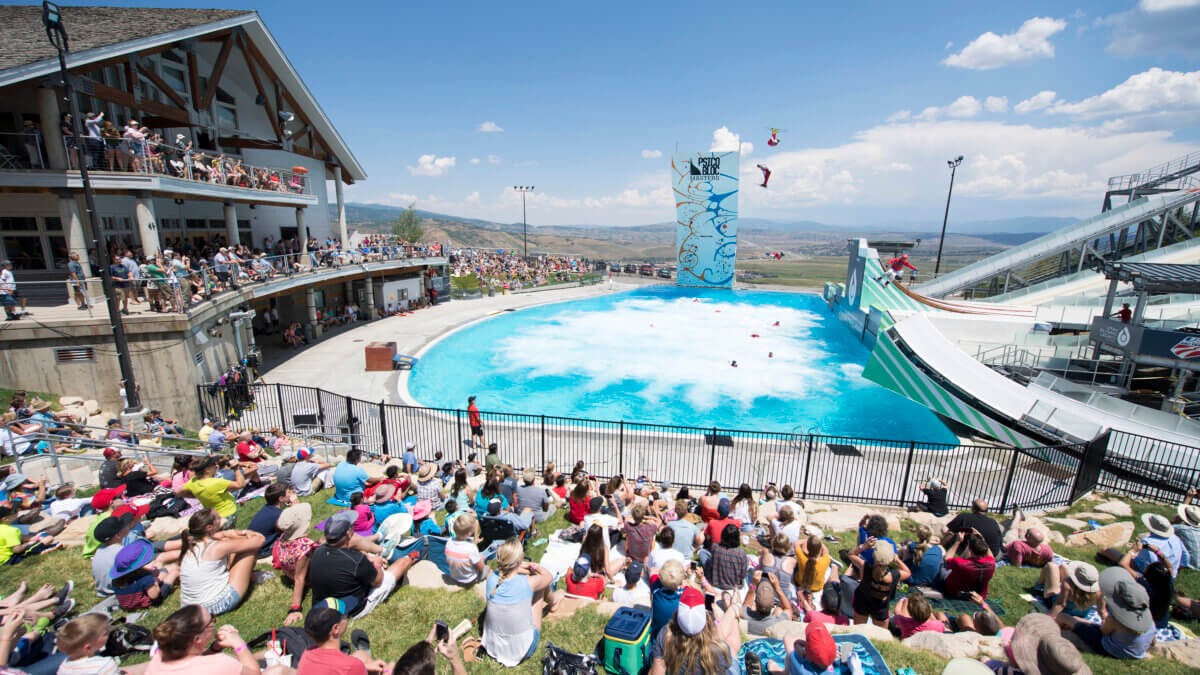
One commentator told council members that construction-related closures or reduced access to the Spence Eccles Freestyle Pool would disrupt training at a time when demand is growing, and the region is preparing for another Olympics.
Others echoed that concern more broadly, urging the county to ensure that Olympic-era expansion does not come at the expense of local programs that have helped build Utah’s winter sports pipeline.
Worries about less public review
A separate flashpoint was a proposed change that would allow certain future projects to be processed under a “low-impact” permit pathway without a public hearing.
County staff have described the provision as a way to streamline approvals, but multiple residents argued that scaling back public process would erode trust — especially in a high-profile, long-horizon development where details matter and impacts extend beyond the property line.
Council questions after comment: “How does this work in practice?”
After the public hearing, council members pressed Utah Olympic Legacy Foundation CEO Colin Hilton on how the amended agreement would function day-to-day — including which decisions would return to the Planning Commission or County Council and which could move forward administratively.
Council members also drilled into the Bear Hollow Drive language, asking specifically what would prevent public cut-through traffic and how access would be managed during events and emergencies. In response, staff described the back gate as a controlled access point used for operations and emergency needs — but council members indicated they want the written agreement to better reflect that intent.
Hilton also addressed questions about proposed language tied to the park’s long-term event planning and development framework, including references to major sporting events — a topic council members suggested needs to be explained plainly to the public, given the scale of the 2034 Olympics and the scrutiny that comes with it.
What’s in the master plan
The park’s updated master plan envisions a mix of commercial, housing, and operational uses, including a large hotel component, workforce/attainable housing, and facilities to support ongoing park operations.
Two housing parcels near the Sun Peak ridgeline were moved downslope after resident feedback during the planning process. They remain designated for possible housing, though specific building plans have not been finalized.
Next steps
Councilmembers did not set a date for the work session, but indicated the item would return before any final vote.
For residents, the delay was a signal that the county heard the underlying message: the agreement is no longer being debated as a routine land-use update. Utah Olympic Park’s future — and its role in 2034 — carries consequences that will be felt far beyond the venue boundaries.


2266 E Garfield Avenue
Salt Lake City, UT 84108