Utah’s national parks offer some of the darkest skies in the U.S. for 2026 celestial events

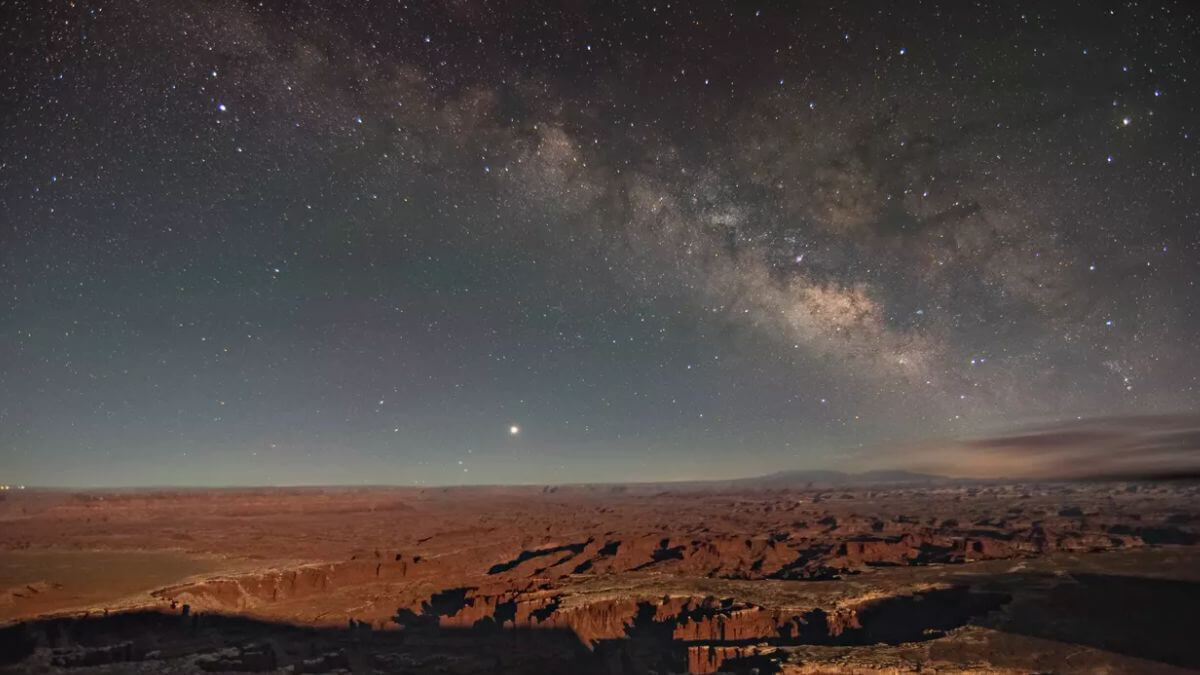
UTAH — Utah’s Mighty Five national parks are known for their red rock vistas and sweeping desert landscapes, but after sunset, they offer some of the darkest, clearest night skies in the country.
Parks like Canyonlands National Park and Capitol Reef National Park boast a Class 1 rating on the Bortle Scale, a nine-level system used to measure night sky brightness and visibility of celestial objects. A Class 1 designation represents the darkest skies possible, free from light pollution, while Class 9 reflects heavily lit urban environments. Arches, Zion, and Bryce Canyon National Park are a Class 2.
Utah has emerged as a national leader in protecting dark skies, with more than two dozen designated International Dark Sky Places across the state — including five national parks and nine state parks.
That commitment has helped fuel growing interest in astro-tourism, drawing visitors from around the world to experience Utah’s night skies.
Canyonlands ranks among best in the nation
For stargazing enthusiasts, Canyonlands stands out as one of the premier destinations in the U.S.
With minimal light pollution and a Bortle Class 1 sky, visitors can see up to 15,000 stars on a clear night. The Milky Way is often visible in striking detail, stretching across the sky. It is also designated as a Gold-Tier International Dark Sky Park by the International Dark-Sky Association.
At an elevation of about 6,100 feet and with relatively cool average temperatures, the park offers crisp, clear viewing conditions that make celestial objects easier to spot.
Meteor shower to light up spring skies
One of the most anticipated celestial events visible from Canyonlands is the Eta Aquarids meteor shower. Peaking around May 4, the meteor shower can produce more than 50 meteors per hour under ideal conditions, giving stargazers a chance to see frequent “shooting stars” streak across the sky.
Stargazers in Utah can also catch the Lyrids meteor shower in late April, which typically produces around 10–20 meteors per hour, and the ever-popular Perseids meteor shower in mid-August, which is one of the most reliable and vibrant meteor showers of the year, sometimes delivering up to 90 meteors per hour.
A second partial lunar eclipse is expected later in the summer, adding to a year filled with skywatching highlights.


2266 E Garfield Avenue
Salt Lake City, UT 84108