The rezone Summit County called unconstitutional is now hailed as a ‘landmark moment’

"This is a landmark moment for Kimball Junction. The HTRZ represents a key piece of the proactive, forward-thinking planning underway in this part of our community." – Summit County Manager Shayne Scott
SUMMIT COUNTY, Utah — The Utah Governor’s Office of Economic Opportunity (UGOEO) has approved a Housing and Transit Reinvestment Zone in Kimball Junction, advancing a controversial development known locally as the Dakota Pacific project — and marking a sharp turn in tone from Summit County leaders who once fought the state over the plan.
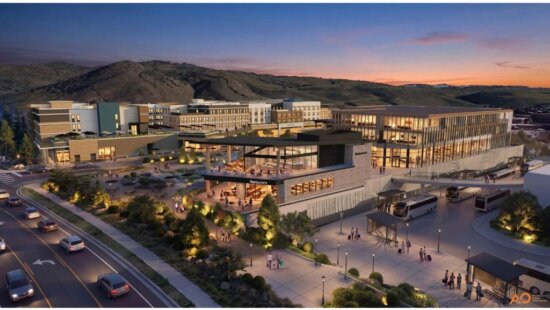
The approval clears the way for a roughly 60-acre mixed-use development near the Kimball Junction transit center, including more than 800 housing units, about 500 of them deed-restricted as workforce housing.
“This is a landmark moment for Kimball Junction,” Summit County Manager Shayne Scott said in a state press release Monday. He praised collaboration with state officials calling the development “forward-thinking.”
In July of 2025, Scott approved the revised development agreement under Senate Bill 26 (SB26). The law, passed last year, gives final decision-making authority to the county manager if a project meets specific criteria.

State officials framed the Dakota Pacific project as a model for addressing Utah’s housing shortage, with Jefferson Moss, Executive Director of the UGOEO saying the zone is intended to promote affordability, transit use and more efficient land use.
But the announcement also underscores a notable reversal by both Scott and Summit County, which previously sued the state over Senate Bill 84 (SB84) – being used prior to SB26 to gain approval of the Dakota Pacific project. At the time, county officials denounced SB84 as a “state-mandated rezone” and argued it violated the Utah Constitution by infringing on local zoning authority and the separation of powers.
In 2023, a release from Summit County slammed legislators saying SB84 was “a clear case of legislative cronyism, special purpose legislation meant to financially benefit only Dakota Pacific was pushed forward with the intent of impairing and interfering with the existing Development Agreement.”
In April 2025, shortly after SB26 was passed, Scott lamented the county was losing local control over development.
“I don’t like any bill that takes a process we should be in charge of and removes us from it,” he said. “Local control is important—whether we’re making good decisions or bad decisions, they should be ours to make.”
Months later in July of 2025, Scott told TownLift laws are made at the state level.
“‘Local control’ is a problem throughout the state, with every jurisdiction susceptible to the state taking control away from local decision makers,” Scott said. “Summit County will not sue the legislature on a regular basis as it passes laws that affect the county—especially when the law passed looks to uphold decisions made by local officials.”

No statements from any of Summit County’s elected officials were included in the press release.
Sen. Wayne Harper, R-Salt Lake said he was “extremely impressed” with the product and the responsiveness brought back. “… it is a needed project up there, and it’s really focused on transit and maximizing resources.”
The Dakota Pacific project has drawn sustained scrutiny from residents and watchdog groups, including allegations that a state lobbyist worked on behalf of both the developer and local government interests during the legislative process.
At the time Scott told the public “there is no conflict” and that lobbyists can take on clients as they wish.
The newly approved plan includes a mix of housing types, with units ranging from “deeply” affordable to market rate, as well as commercial space, civic uses and a large structured parking component. The site is located within walking distance of transit and is intended to anchor future growth in the Snyderville Basin.
Supporters, including state lawmakers, have pointed to the scale of deed-restricted housing exceeding minimum requirements as a key benefit in Summit County where affordability has become a central issue.
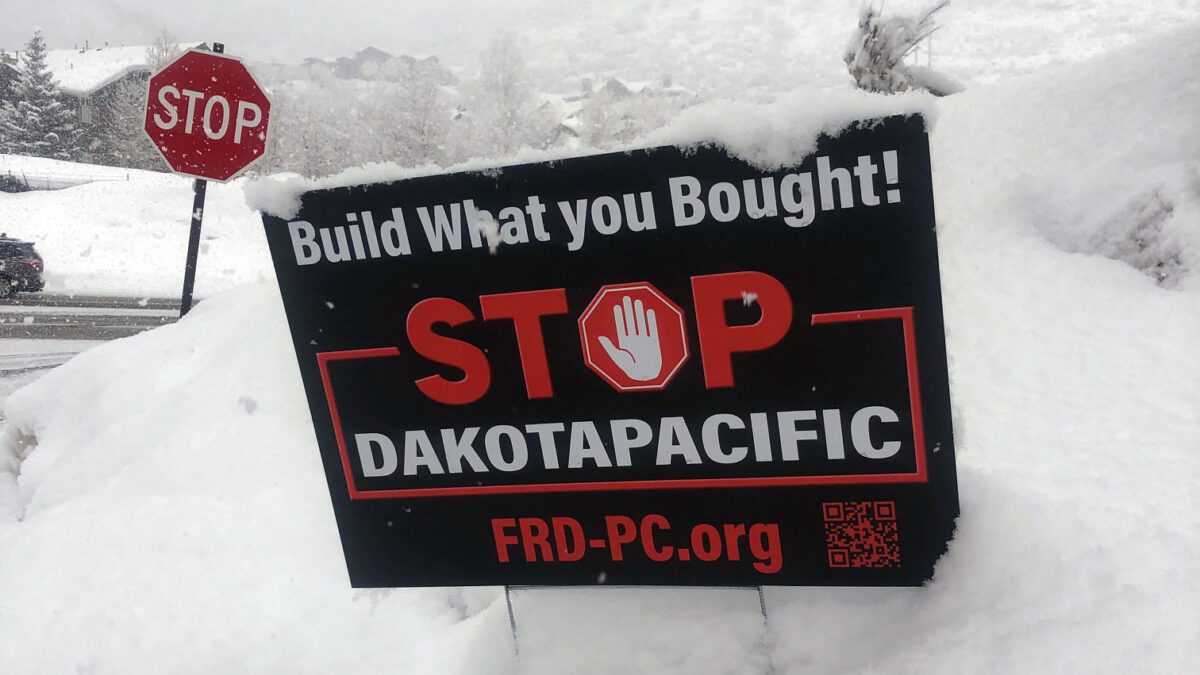
The approval comes after a prolonged effort by residents to put the development to a public vote. A grassroots group, Protect Summit County, gathered signatures for a referendum on Ordinance 987, the measure that first cleared the revised development agreement. Summit County Clerk Eve Furse’s handling of the signature validation was contested in court, but the dispute was ultimately overtaken by the Legislature itself.
In March 2025, lawmakers passed SB26, which granted Dakota Pacific the same zoning and land uses contemplated under Ordinance 987. In August, Third District Court Judge Richard Mrazik ruled the referendum petition moot, finding that SB26 had already settled what would happen on the property regardless of any vote.


2266 E Garfield Avenue
Salt Lake City, UT 84108