Wildlife
Utah DWR unveils 30-year plan to guide fish production and stocking as population grows, climate warms

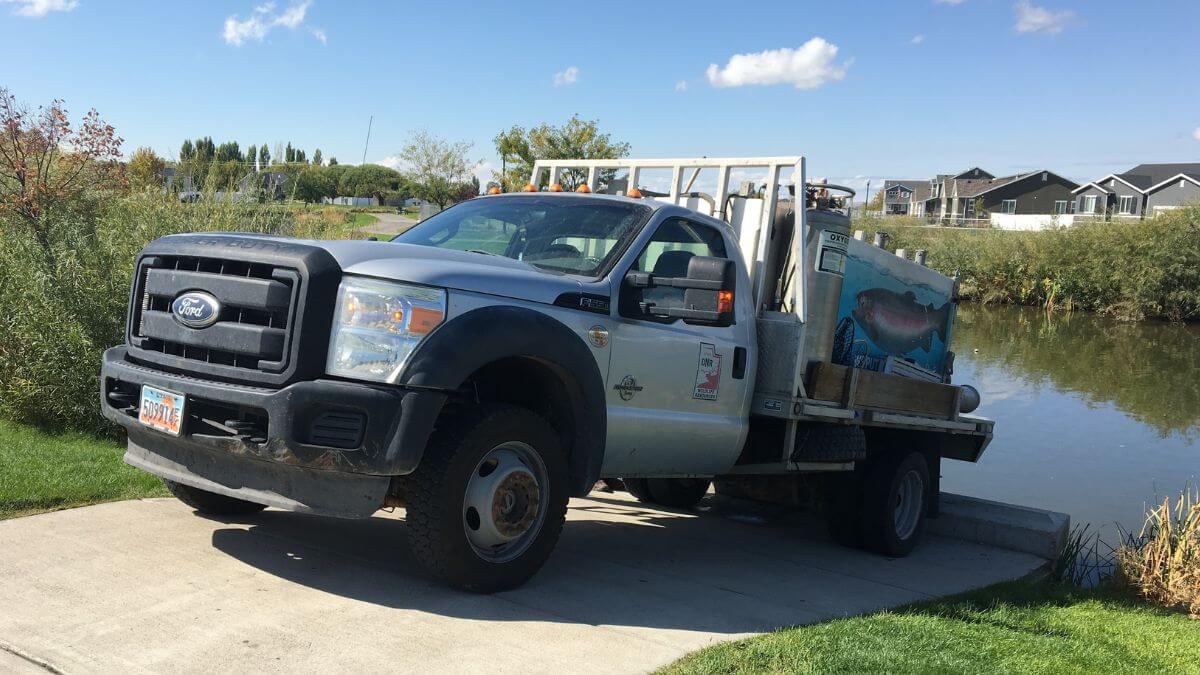
DWR fish hatchery vehicle stocks a Utah pond. Photo: Courtesy of Utah Division of Wildlife Resources
UTAH — With Utah’s population rising and water supplies becoming more strained, the Utah Division of Wildlife Resources has released a new 30-year plan aimed at improving fish production and stocking across the state.
Utah currently operates 12 state fish hatcheries, with another under construction in Loa that is expected to open in 2027. Wildlife officials say the added capacity will help reduce overcrowding at existing hatcheries and improve fish health statewide.
“The reconstruction of the Loa Fish Hatchery has provided the necessary capacity to make meaningful changes in our production methods and hatchery maintenance,” said DWR Fish Culture Coordinator Roger Mellenthin. “It will allow us to raise healthier fish and operate more efficiently.”
The plan comes as Utah’s population is projected to nearly double between 2020 and 2050, according to the Kem C. Gardner Policy Institute. More residents are expected to mean more anglers, even though hatchery capacity and available water sources will remain limited.
Fish production and stocking
To prepare, the DWR reviewed how and where fish are raised and stocked throughout the state and identified several adjustments.
One key change is increasing production of native species to help support conservation efforts. The DWR plans to raise and stock more fish such as green sucker, northern leatherside chub, roundtail chub, and woundfin to help maintain healthy populations and reduce the risk of federal endangered species listings.
In addition, the DWR plans to adjust the number and size of fish stocked in some waters. Locations with high survival rates and frequent catch-and-release fishing may receive fewer stocked fish, allowing hatcheries to redirect those fish to waters where anglers are more likely to harvest them.
Rising water temperatures
The agency will also shift some stocking toward fish that tolerate warmer water. As temperatures rise, certain mid- and low-elevation lakes and reservoirs that once relied on cold-water trout may receive more warmwater species such as bass, walleye, and other sportfish.
The agency is analyzing which strains of trout perform best at different hatcheries based on water temperatures, infrastructure, and disease resistance, with similar evaluations planned for warmwater species in the future.
DWR Sportfish Coordinator Trina Hedrick said angler feedback will be important as the changes are implemented.
“We face a number of challenges for effective fish conservation and management in the coming years,” Hedrick said. “Public satisfaction is a key component of our sportfish management, and we’ll be asking anglers for feedback as these stocking changes move forward.”
Officials say the long-term plan is designed to ensure Utah’s fisheries remain healthy while continuing to provide fishing opportunities for a growing population.
By: Heather Bergeson


597 Deer Valley Loop Road
Park City, UT 84060
2475 W White Pine Lane
Park City, UT 84060
2154 S Rio Verde
Moab, UT 84532
2400 E Walker Lane
Holladay, UT 84117
137 W Bridlewood Lane
Midway, UT 84049Talk of the Town


Park City Jobs

Chef de Cuisine at The Washington School House Hotel, Washington School House Hotel
Today Full time $50,000 - $60,000 yearly
Housekeeper at The Washington School House Hotel, Washington School House Hotel
Today Full time $20.00 - $22.00 hourly
Line Cook at The Washington School House Hotel, Washington School House Hotel
Today Full time $20.00 - $22.00 hourly

Ski Patrol Medical & Rescue Technician, Utah Olympic Park
1 day ago Full time $22.00 hourly

Full or Part Time Dishwasher/Prep Cook, Rebekah's Kitchen
3 days ago Part time $13.00 - $18.00 hourly