Kathy Donnell: Naturally speaking for nature

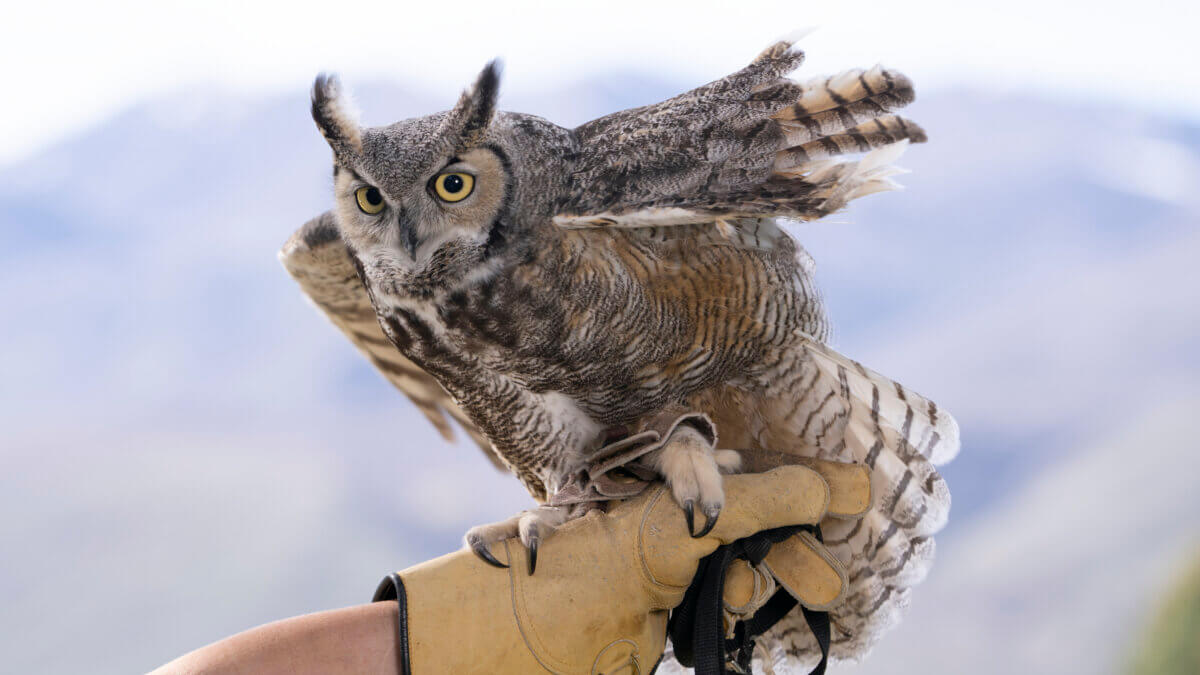
Few faces in Heber Valley are as familiar as Kathy Donnell’s. In two years’ time, she will hang up her park ranger hat from Wasatch Mountain State Park (WMSP). Since 2011, she has filled the naturalist role there, and, as a result, she has attended nearly every community event that involves outdoor activity. She has hosted and innovated the Division of Wildlife Resources youth fishing program each summer, attended trail-dig days, and brought great horned owls to educational programs across the Wasatch Back. Her near three-decades-long mission to inform communities on environmental stewardship has made her one of the foremost figures in the local outdoor community, a lasting social impact that can be traced to her naturalist roots.
Officially, Kathy has been a full-time park ranger with Utah’s Department of Natural Resources, Division of State Parks, since 1998. Her goal has always been to get folks out to public land, learn and enjoy, and absorb how our decisions impact wildlife and ecology.
During her formative years, Kathy was influenced by her family to appreciate the beauty and magic of being outside, and not necessarily at playgrounds, but in the woods of Colorado. “We did a lot of fishing and camping. I enjoyed being outside. As a teenager, I decided to participate in a two-week program with Colorado Outward Bound. It was challenging, but [it] taught me to appreciate the outdoors.
“At age 18, I went to school in Kansas to play basketball,” Kathy explains. But the draw to be outside led her to pursue an education at Slippery Rock University in Pennsylvania, studying resource management and environmental education. There, she learned from the Wilderness Education Association and eventually led hiking and canoeing courses in Shenandoah and the Adirondack Mountains. “Later, I worked for Outward Bound. I really enjoyed people. I enjoyed being out there and being still,” says Kathy.
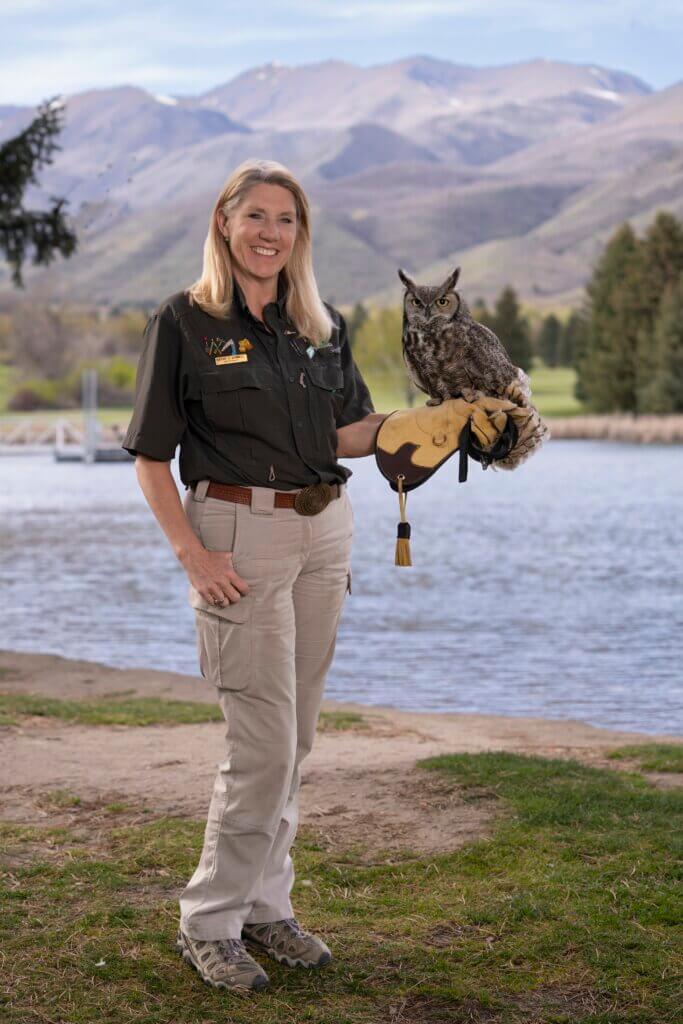
It was while attending a Park Ranger class at Slippery Rock that she met a fellow student named Joe Donnell. In time, they started dating.
“I graduated from college in ’90 and brought Joe out west. He loved it,” Kathy recalls. They married in 1993, and he started applying to be a park ranger. Joe nearly took a position as a backcountry ranger for Rocky Mountain National Park in Colorado. Then, Utah State Parks offered him a full-time job.
They moved to Utah, and Kathy began looking for park ranger openings. Joe put on his uniform and commenced his ranger career at This Is the Place Heritage Park, which was a state park at the time.
“We had just moved to the [Wasatch Back], and I was driving by Rock Cliff. I thought, ‘What’s this nature center? I want to work there.’ I pulled in and talked to a guy that happened to know Joe. He showed me around. I applied and got the job. I started seasonally in 1995,” Kathy shares.
She eventually went full-time at the nature center, after having her second child in 1998. She had a vision for what could be done there—and because her managers granted her autonomy, she was able to implement educational programs throughout her entire career.
The nature center’s demonstration tables, the preserved animals, the track and scat samples, and the touchable displays—encompassing the simple interactive nature of the facility—were all a product of Kathy’s influence or direct work. She shaped the facility to match her community education programs.
“At Rock Cliff, I started the tracking program, which I still do,” she says. “It’s a winter program for anybody interested. Back then, I also offered a preschool program called ‘T.R.A.C.K.S.’ That one was probably 15 years ago.”
Kathy continues, “It’s really cool for kids to learn about the animals and how many toes they have on the ground, or that they eat their poop, and how they survive. I still get feedback from people that attended a presentation when they were kids.” Sometimes, there were a hundred kids, and this presented Kathy its own challenges—but fond memories as well. Those huge field trips and groups are no longer booked; however, folks still attend her other enriching programs in smaller groups.
“The animal-tracking program has always been in winter because you can see tracks better in the snow,” Kathy explains, the first part taking place indoors, followed by a brief lesson about tracking. “We talk about animals and what they leave behind, then we go outside and see if we can use our detective skills to find evidence of the animals.”
She also manages the Division of Wildlife Resources’ Youth Fishing Club, which WMSP’s Visitor’s Center hosts one day per week during the summer for three weeks in June, then offers the same schedule in July. The program is big; Kathy says it brings in so many people that she has no need to advertise it.
Some kids will attend, and a few years later, their younger sibling enrolls. About 20 volunteers show up to help teach youth participants not just how to fish, but also what’s needed to become stewards of the outdoors, such as ethics and regulations. It is so successful that there are kids who return as instructors in the program.
Rock Cliff to Wasatch Mountain
In July 2011, Kathy transferred to WMSP, and shortly thereafter, the Rock Cliff Nature Center closed and remained dormant for 10 years, until the Wasatch Mountain Institute began revitalizing it in partnership with Utah State Parks. When the center is open, much of Kathy’s naturalist influence can be appreciated.
Kathy stepped into WMSP as Heber City’s and Midway’s populations began to swell. Change was upon the valley and, consequently, WMSP. “We began collecting fees, installed new campgrounds, and built new trails. I have been working with different organizations as well, so my time here has been exciting,” she shares. “Just look at the trails we have now–-thank goodness for the Wasatch Trails Foundation!”
For reference, the Wasatch-Over-Wasatch (WOW) Trail was cut during Kathy’s first years as a ranger in Heber Valley. Access to parking lots require a daily fee or a State Parks Pass.
However, WMSP was one of few state parks that had not previously collected day-use fees. WSMP is the second-largest state park in Utah, so the change was necessary to help fund maintenance and its staff.
Getting trails built in a state park is never easy. And because one role of a state park is to protect and preserve ecosystems, it is a little harder. Yet, the trail-going community has seen trail after trail built within WMSP, which actively accommodates human-powered recreation. Wasatch Trails Foundation collaborates with WMSP and hundreds of volunteers to continue trail expansion and maintenance, something the park simply could not do on its own.
“With Deer Creek and Jordanelle State Parks to the north and south, the water brings boaters. WMSP has land, trails, and campgrounds,” Kathy explains. One group might go out on the lake, another might take OHVs or bikes up the different trails in WMSP.
“Everybody wants that same opportunity, right?” she continues. “Different recreation, but same opportunity to get outside.”
The Naturalist: The “So What” of Things
“We need to be aware of the resources, because the earth is what we have. My big thing is being outside, being aware, taking care of the resource, because if we don’t have it, then we don’t have anything,” Kathy asserts. “Where do we get all this stuff we use? We get it from the earth. And the more we can interact with it, the more likely we are to be concerned about its well-being.”
My question: How do we educate people to understand that being in the trees or having a completely dark sky is an essential human need? “Maybe we have to go back to educating parents on how to get kids into the woods,” Kathy replies. “How are they going to get their kids outside when they live in the city?”
This might be one reason why groups book time, or why schools take field trips with WMSP and meet Kathy. “Typically, my ending thought when I work with groups or when I bring my owl to a classroom [is] I ask about the ‘So what?’ of things.
“Are you going to clean up garbage or go fishing? So what? Why does it matter so much? Who cares that we have animals, who cares that we have plants and trees? Well, they’re important to our health and our well-being,” Kathy emphasizes. “What happens the next time you go to Walmart? Are you going to think of the owl and how it survives in the wild?” Her questions encourage all participants to think forward, to include more factors in their daily decisions.
While those individual, nuanced actions might seem trivial, they add up to those of an entire town, a city, or a region and have an effect. We might be detached from what the natural world is and what it needs, and consequently what we need as a species.
“The studies show that the night sky is getting brighter, about 10 percent a year. Even the darkness of a night sky is a resource that we need,” says Kathy. WMSP has a Dark Sky Initiative, and Kathy discusses it with visitors. The Milky Way, even now, is less visible in Heber Valley’s night sky than it was a decade ago.
Hands-On Experience
“I have noticed when you educate somebody, then do a service project with them, they’re way more present and involved because they know what they’re doing. They recognize the [extended] impact of the action,” Kathy explains.
However, it does not end there. Often just in the beginning, especially for kids, people can learn in other ways that teach them to be mindful of living things.
“When you take care of an animal, you learn what it needs. You see horses all over the place, but when you start taking care of a horse, you start acknowledging things you didn’t before. Are they cold or hungry?” Kathy muses.
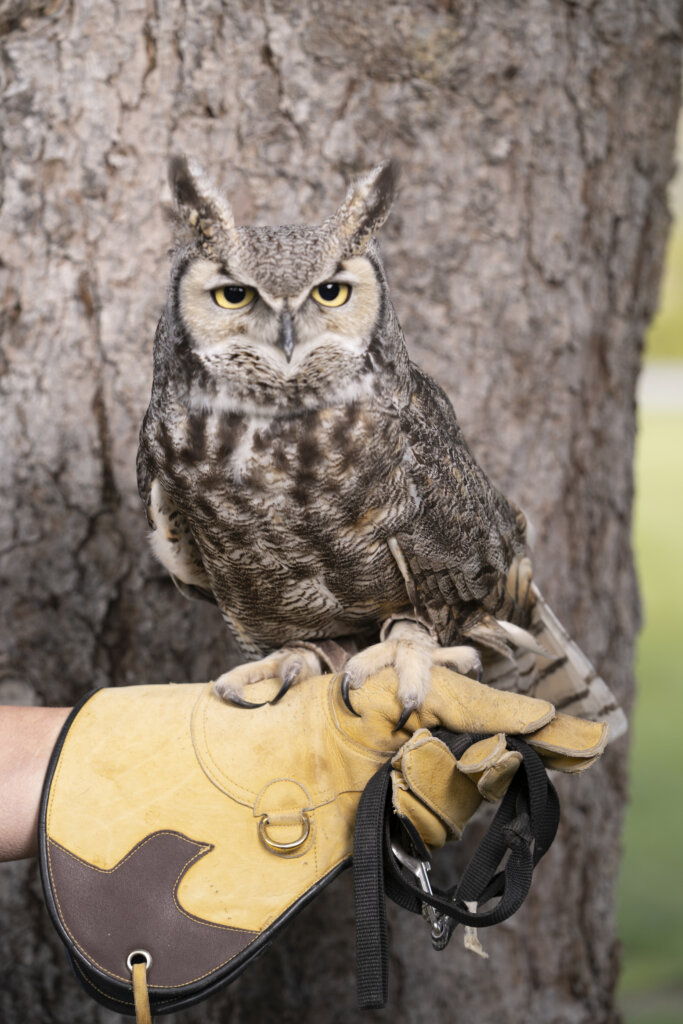
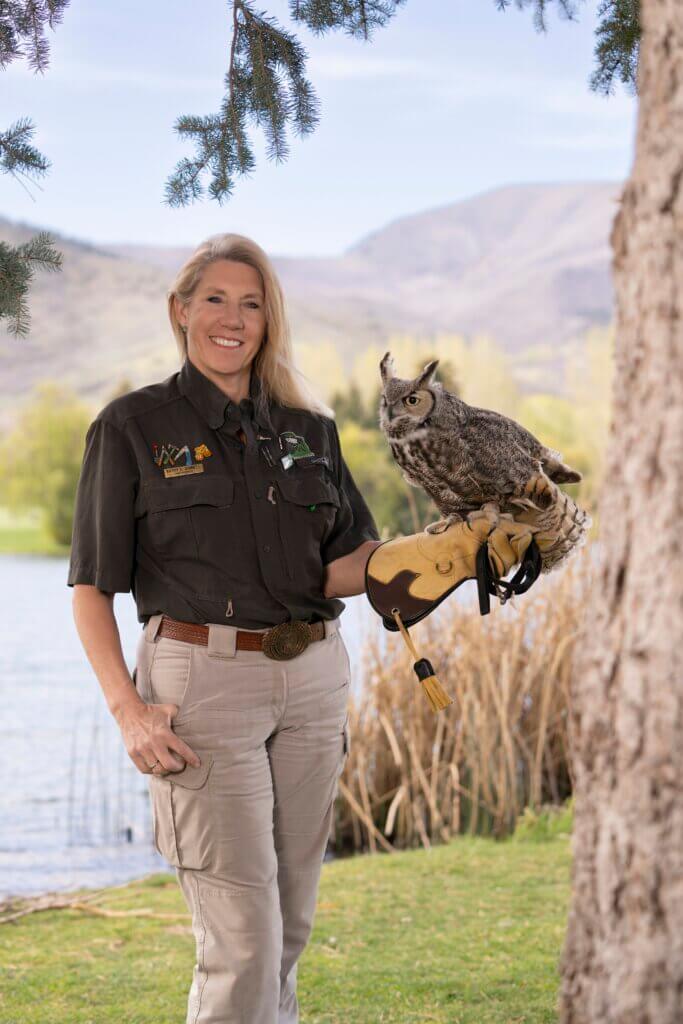
Swoops, her great horned owl, or Zephyr, the redtail hawk, are sometimes present in certain presentations. “Many kids have never been that close to an owl,” notes Kathy. “Then they understand its place in the world, and you can see the shift when they internalize it.”
She hopes the message will stay with them and inform their goals, along with how they define their place in the world. “When you educate kids in skiing, they’re going to be skiers. Or scientists, or a naturalist, or even a golfer. It’s whatever you’re teaching them.”
Sometimes, that simple exposure is all they need.
Falconry Education and Rehabilitation
A ranger’s stewardship-based career often leads to unique opportunities, furthering the goal. “I got involved with Hawk Watch International back in 2000. I took a class on bird education and rehabilitation. It’s a separate permit from ‘Falconer,’” Kathy recalls, during a time when she had little kids at home. So, caring for a bird of prey was not realistic, at least not in 2000.
However, by 2008, Kathy had adopted a falcon full-time. It became part of her teaching. She was holding education programs at Rock Port, at Jordanelle, in schools, and with church groups, and the falcon brought new interest and excitement to the students. In 2012, she adopted the first of two owls. Anyone who has seen Kathy at a community event has likely met Swoops.
Kathy brings one of her birds when the occasion fits, which helps convey the message. A redtail hawk or great horned owl perched on Kathy’s wrist piques an interest most have not recognized. Introduce a bit of wild, and everyone gets involved. These birds may never fly again, but their presence may contribute to the longevity and well-being of their species through simple awareness.
Every ranger may have a different goal for their career. While they must obtain certain certifications and meet requirements, they can define the direction of their path. Kathy’s mission is special, and society has needed her voice during her tenure. Her hope is that the person who fills her position when she retires takes advantage of all the resources, relationships, and tools she has amassed for educating visitors.
For Kathy Donnell, teaching across 28 years has been rewarding. Maybe you have listened to one of her presentations. And maybe it stuck with you.


2266 E Garfield Avenue
Salt Lake City, UT 84108