Reasons to look up this April

From the Pink Moon to the Lyrid meteor shower, the month offers some of the year's best skywatching
SUMMIT COUNTY, Utah — As April settles over Park City, the night sky offers a few clear reasons to look up. The month brings Mercury at its best visibility of the year, the annual Lyrid meteor shower, and a bright comet that may be visible with binoculars, according to NASA’s April 2026 skywatching guide. The Old Farmer’s Almanac notes that April opens with the full Pink Moon, giving skywatchers an early-month lunar marker before darker skies return later in the month.
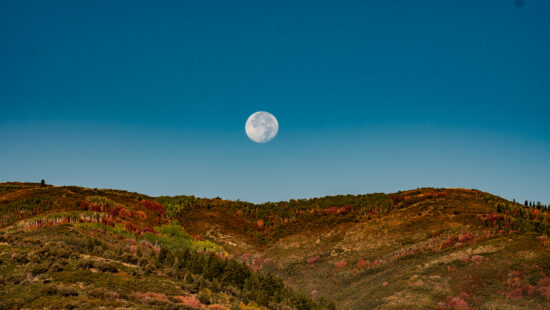
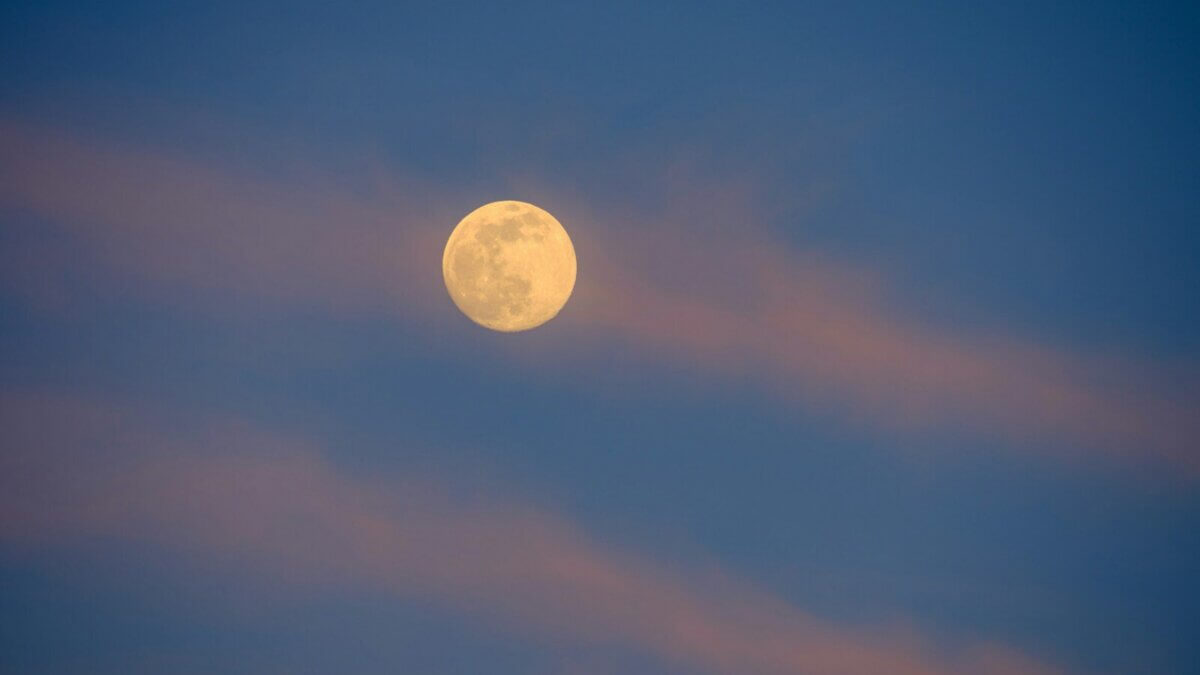
The month begins with that full Pink Moon on April 1. The moon reaches peak illumination at 10:12 p.m. Eastern, according to the Old Farmer’s Almanac, which notes the name comes from the early spring bloom of moss pink, or wild ground phlox — not the moon’s color.
Early risers should look up April 3, when Mercury reaches greatest elongation — its farthest apparent distance from the sun as seen from Earth — making the elusive planet easier to spot than usual. NASA advises looking low in the eastern sky before sunrise, where Mercury will sit just above Mars near the horizon.
The sky turns darker later in the month. NASA’s April guide lists the new moon on April 17, with the first quarter arriving on April 23. That darker window sets up one of April’s best-known events: the Lyrid meteor shower, which both NASA and the Old Farmer’s Almanac list as peaking the night of April 21 into April 22.
To catch the Lyrids, NASA recommends looking east beginning around 10 p.m. on April 21 and watching through the night. The meteors appear near Vega in the constellation Lyra, though skywatchers typically see more by scanning as much of the sky as possible rather than fixing on a single point. NASA describes the Lyrids as one of the oldest known meteor showers, with records going back about 2,700 years, and says observers can expect roughly 10 to 20 meteors per hour at peak under dark skies.
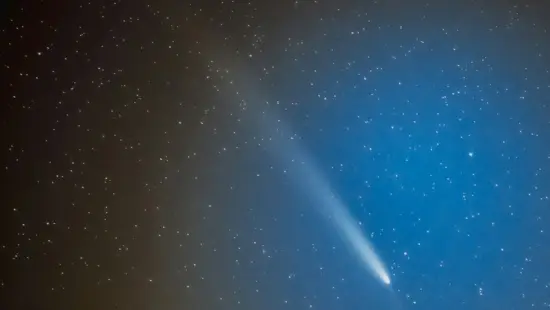
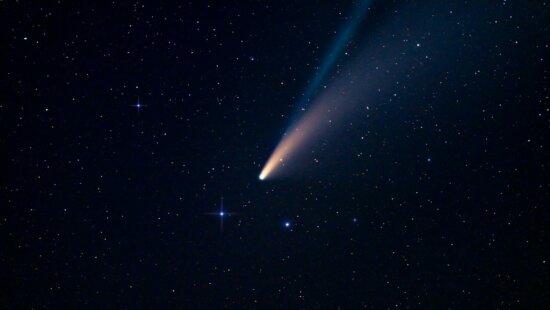
April may also offer a bonus for binocular users. NASA says Comet C/2025 R3 could become one of the brightest comets of the year. April 17 may offer the best viewing opportunity, and April 27 marks its closest approach to Earth at about 44 million miles. Viewers in the Northern Hemisphere should look for it in the predawn eastern sky from mid-April through the month’s end, near Pegasus and above Pisces, though binoculars or a telescope will likely be needed.
Moon watchers have one quieter pleasure this month, too. Earthshine — the faint glow on the dark portion of a slim crescent moon, caused by sunlight reflected from Earth back onto the lunar surface — tends to be brightest between April and June, according to NASA Earth Observatory. The nights around the April 17 new moon and the crescent that follows are a good time to watch for that ghostly glow low in the western sky after sunset.
For Summit County skywatchers, the basic advice is simple: get away from porch lights, give your eyes time to adjust, and dress for the cold. April’s best shows will favor patience over equipment. A bright moon opens the month, a hard-to-catch planet makes a rare, strong appearance, and by late April, the sky should be dark enough for meteors to streak across it before dawn. It is, by most measures, a good month to step outside and look up.


2266 E Garfield Avenue
Salt Lake City, UT 84108