Park City Mountain’s lift upgrades return without addressing the capacity issue that killed them before

A TownLift review of the submitted documents found no analysis of the resort's comfortable carrying capacity in either application or the city staff report.
PARK CITY, Utah — The Park City Planning Commission is set to review proposed lift upgrades at Park City Mountain Resort on Wednesday, with the city’s staff report containing no analysis of the resort’s Comfortable Carrying Capacity, the same omission that led courts to uphold the commission’s rejection of nearly identical applications in 2022.
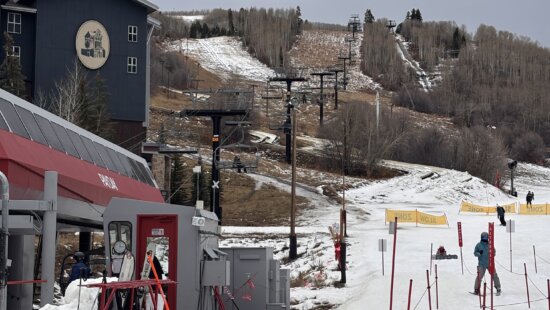
Park City Mountain, owned by Vail Resorts, filed two applications in January seeking to upgrade the Silverlode Express and replace the aging Eagle and Eaglet chairlifts.
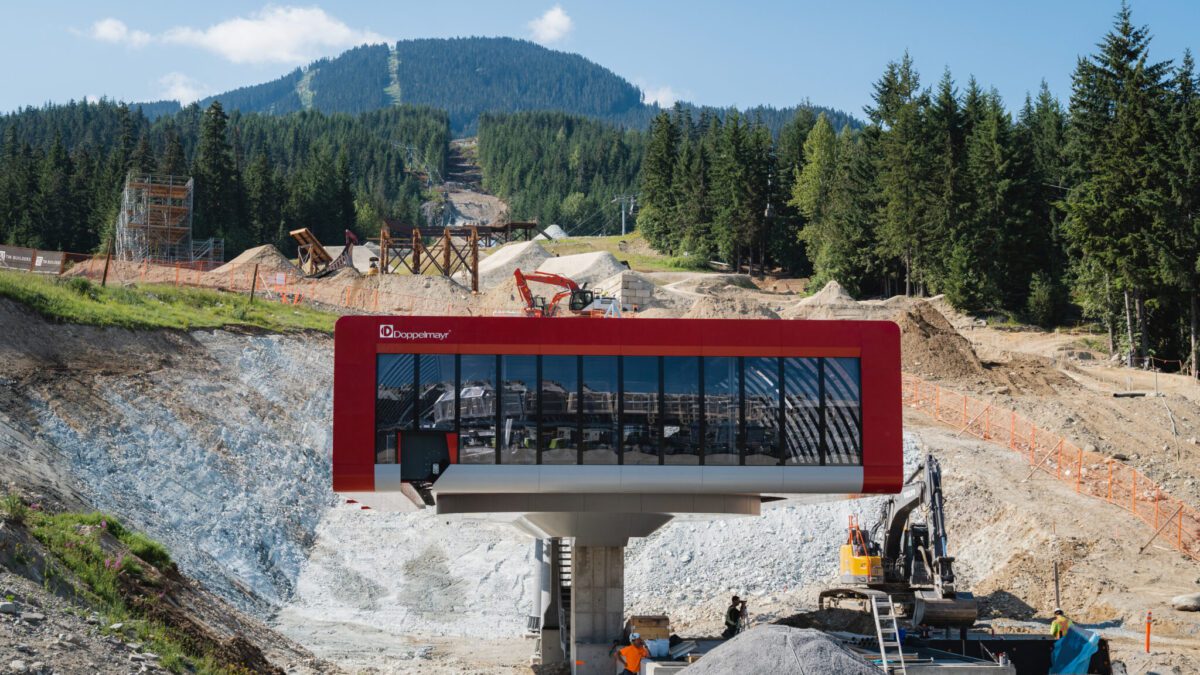
One proposal would replace the existing six-person Silverlode Express with an eight-person detachable lift along a similar alignment. A second application calls for replacing the roughly 30-year-old Eagle and Eaglet lifts with a new six-person detachable chairlift and a mid-mountain station. Both projects would include new terminal structures at the top and bottom.
City staff say the applications include environmental analysis, including impacts to wildlife, erosion and vegetation.
A notable procedural choice
Both applications acknowledge that the proposed lift is “eligible for administrative review under the 1998 Development Agreement as a project identified in the Mountain Upgrade Plan,” but states the resort is instead “seeking a conditional use permit approval under the City’s Land Management Code.”
The significance of that framing is this: by voluntarily routing the application through the Land Management Code rather than the Development Agreement pathway, the resort positions the review as a pure code compliance exercise. That framing excludes, at least by implication, the DA’s capacity requirements, including the CCC thresholds and downhill terrain limits that were at the center of the 2022 dispute. The staff report appears to accept this framing without examining its implications.
Past lift upgrades halted based on CCC disclosure
The proposals revive similar plans submitted during the 2021–22 ski season that were ultimately halted after a legal challenge from local residents. A court later affirmed that the commission must independently verify key inputs and ensure compliance with governing agreements to ensure upgrades do not push the resort over it’s Comfortable Carrying Capacity, or CCC, a metric defined by the number of skiers a resort can handle on its 10th busiest day.
Capacity questions remain
While the applications focus on infrastructure upgrades, questions have surfaced about whether the projects adequately address skier capacity limits outlined in the resort’s development framework.
According to planning documents, the Silverlode upgrade is being treated largely as a replacement project, with analysis centered on code compliance. The Silverlode application opens by describing the project as one that will improve guest circulation and reduce lift-line wait times “without increasing resort capacity or creating new base portals.” That assertion is not supported by any capacity analysis, reference to a CCC figure, or methodology for reaching that conclusion.
Metrics such as CCC and downhill terrain limits are specified in the resort’s development agreement and Mountain Upgrade Plan.
By contrast, materials tied to the Eagle lift proposal acknowledge that the project triggers review under those governing documents, but primarily frame that review in terms of compliance with the city’s Land Management Code.
Supporting materials submitted by the applicant include detailed code analysis, but do not directly address CCC or downhill capacity standards, which are intended to limit overcrowding on peak days.
The issue is significant in Park City, where the development agreement — a legally binding document dating back decades — sets thresholds for skier visits and defines “peak ski days” that are not intended to become routine. Local officials have previously reported the resort now experiences dozens of peak days each season.
The discussion comes on the heels of Vail Resorts CEO Rob Katz saying crowding has not worsened at Vail-owned resorts.
Wednesday’s meeting is expected to be a preliminary review. The meeting is scheduled to begin at 5:30 p.m. Zoom Link: https://us02web.zoom.us/j/86137534714


4251 E Lipizzan Jump
Moab, UT 84532