EPA selects phased cleanup plan for Richardson Flat mine tailings near Park City

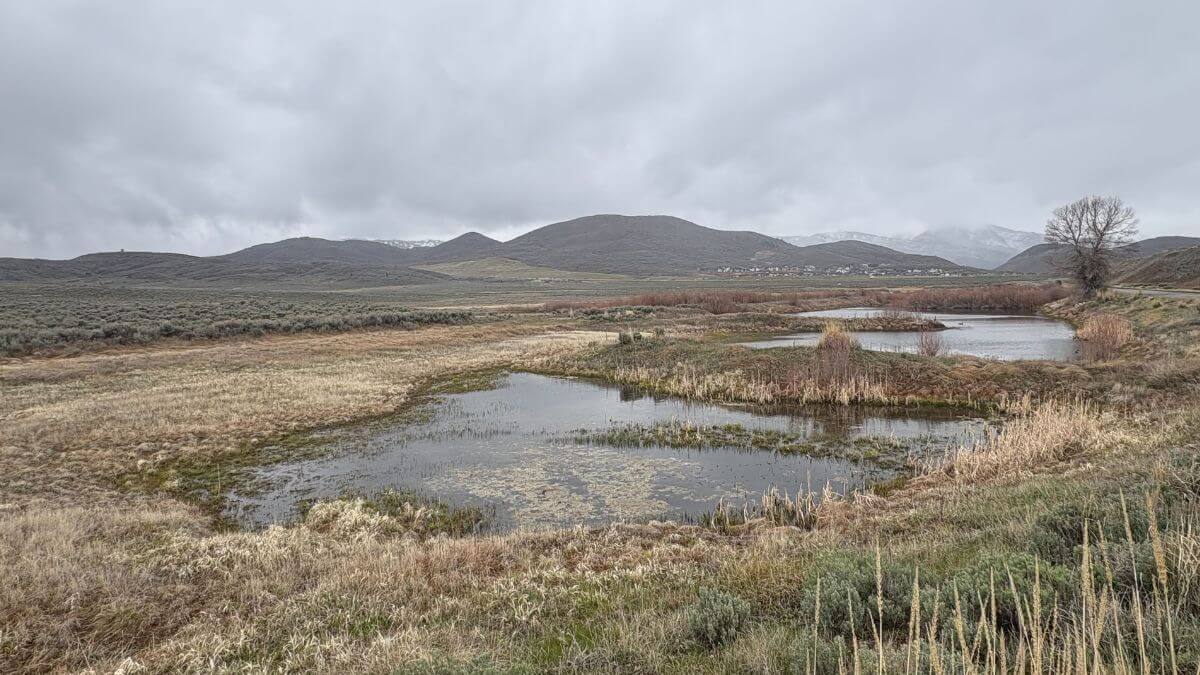
PARK CITY, Utah — The U.S. Environmental Protection Agency recently announced their official cleanup approach for historic mine tailings along Silver Creek, setting the stage for a multiyear effort to remove contaminated material from portions of the corridor.
The EPA’s Action Memorandum establishes a plan to excavate targeted mine tailings containing heavy metals and transport them to an existing repository at the Richardson Flat Tailings site. The work will focus on areas along Silver Creek and the Historic Union Pacific Rail Trail, where decades of mining waste remain exposed to the elements.
The cleanup will be conducted in phases as funding allows. EPA acknowledged that available resources will not be sufficient to remove all the mine tailings in the area.
Design and removal work plans are expected to be developed through spring 2027, with field work anticipated to begin in fall 2027 and continue through fall 2030.
History of the site
As with much of Park City’s dirty dirt, the contamination along the creek corridor dates back to Park City’s mining era, when operations produced millions of tons of ore.
After valuable minerals were extracted, the remaining material, or tailings, was deposited in and around Richardson Flat and along Silver Creek.
These fine-grained materials contain heavy metals, including arsenic, lead, cadmium, and zinc. Over time, water spread the metals into and along Silver Creek while other deposits remain exposed at the surface, particularly along portions of the creek and the Union Pacific Rail Trail.
The new cleanup plan addresses approximately six miles of the creek corridor, including portions of the rail trail.
The EPA’s April 2026 Engineering Evaluation and Cost Analysis examined several approaches to addressing contamination in the creek corridor.
The agency’s analysis estimated that removing all the tailings from the affected area would cost approximately $69 million in capital costs, which is substantially more than the roughly $17 million to $18 million currently available through settlement funds recovered from parties responsible for the contamination.
As a result, EPA developed a phased approach intended to make the most effective use of the available money.
The technical evaluation identified approximately 3.3 consecutive miles of the six-mile creek corridor and 81 acres of the 313 acres covered by tailings for the initial removal effort. The selected approach prioritizes areas with exposed contamination and portions of the corridor that receive significant recreational use.
Areas not included in the initial removal work will be revegetated to help stabilize the ground, limit erosion, and reduce exposure to remaining tailings.
The EPA has described the work as iterative, meaning additional areas could be addressed if more funding becomes available.
What happens next?
The EPA expects to develop the detailed design and removal work plans through spring 2027. Field work is anticipated to begin in fall 2027, with completion targeted for fall 2030.
The agency also plans to hold additional public open houses in 2027 to discuss the cleanup decision and upcoming work.
Although the selected approach represents a significant step toward addressing decades of mining-related contamination, the work will not mark the end of cleanup efforts at Richardson Flat.
With more tailings remaining than current funding can address, the long-term effort will depend on future funding and resources.


2266 E Garfield Avenue
Salt Lake City, UT 84108
4251 E Lipizzan Jump
Moab, UT 84532You May Also Like