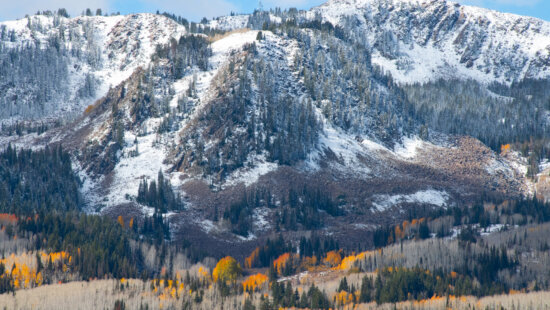
Utah’s water year swung from record-dry snowpack to summer downpours

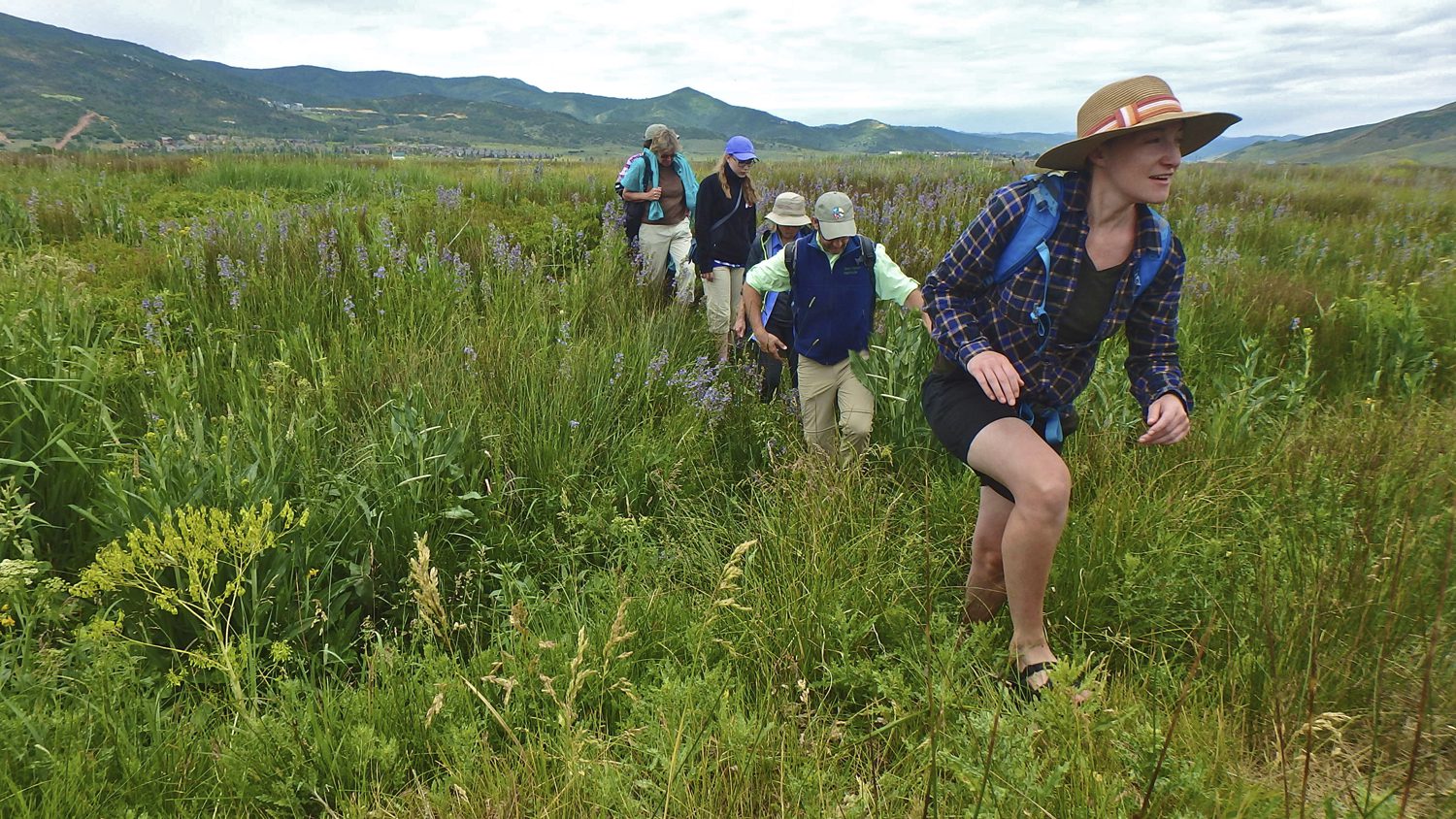
Utah’s 2026 water year brought record-low snowpack, early snowmelt, and record-low runoff before summer monsoon rains helped restore mountain soil moisture. But despite the wet summer, reservoirs remain well below capacity as the state enters a new water year.
PARK CITY, Utah — Utah’s 2026 water year was a study in extremes.
Water years run from the start of October to the end of September the following year, meaning the 2026 water year was off and running after record-breaking precipitation in Oct. 2025. But the months that followed saw the lowest snowpack on record. Already-thin snow disappeared weeks earlier than usual, and snowmelt runoff reached record-low levels across dozens of streams.
The dry conditions contributed to an early and severe fire season, including three of the six largest fires in Utah history.
After months of poor precipitation, Utah’s summer monsoon brought a significant shift in conditions. Central Utah received more than 150% of normal precipitation during the summer, while other parts of the state also received above-normal precipitation.
Some high-elevation monitoring stations saw particularly unusual amounts of rain. Nine SNOTEL sites recorded their highest or second-highest monthly precipitation totals on record in July, according to the Natural Resources Conservation Service. In August, that happened at 17 sites.
The summer rainfall also helped bring moisture back into dry mountain soil. Mountain sites received 2.4 inches of rain in September, or 138% of the median, bringing their water-year precipitation total to 96% of normal.
The late-summer and early-fall rain, however, could not erase the effects of the winter’s poor snowpack.
Utah’s statewide reservoir storage ended the 2026 water year at 45% of capacity, down 14% from the previous year. Most of the state’s basins also continue to have Water Availability Indexes below the 20th percentile.
“While the end of year numbers are positive overall, our precipitation has been a wild ride,” the NRCS said in its Oct. 1 Utah Water Availability Update.
The 2027 water year began Oct. 1, 2026, with a complicated array of condition. Soil moisture is strong, but reservoirs remain well below capacity.
Downstream water bodies also continue to reflect the deficit. The Great Salt Lake ended September at 4,189.7 feet, which is 1.2 feet above its historic low recorded in November 2022. And Lake Powell received just 1.14 million acre-feet of runoff during the 2026 season, compared with an average of 6.34 million acre-feet.
Now, Utahns are watching the mountains for the first signs of the new season’s snowpack, with hopes that a forecasted “Super” El Niño could bring more favorable winter conditions.


4251 E Lipizzan Jump
Moab, UT 84532