Cloud-seeding startup plans drone-based operations in the Wasatch Back this winter

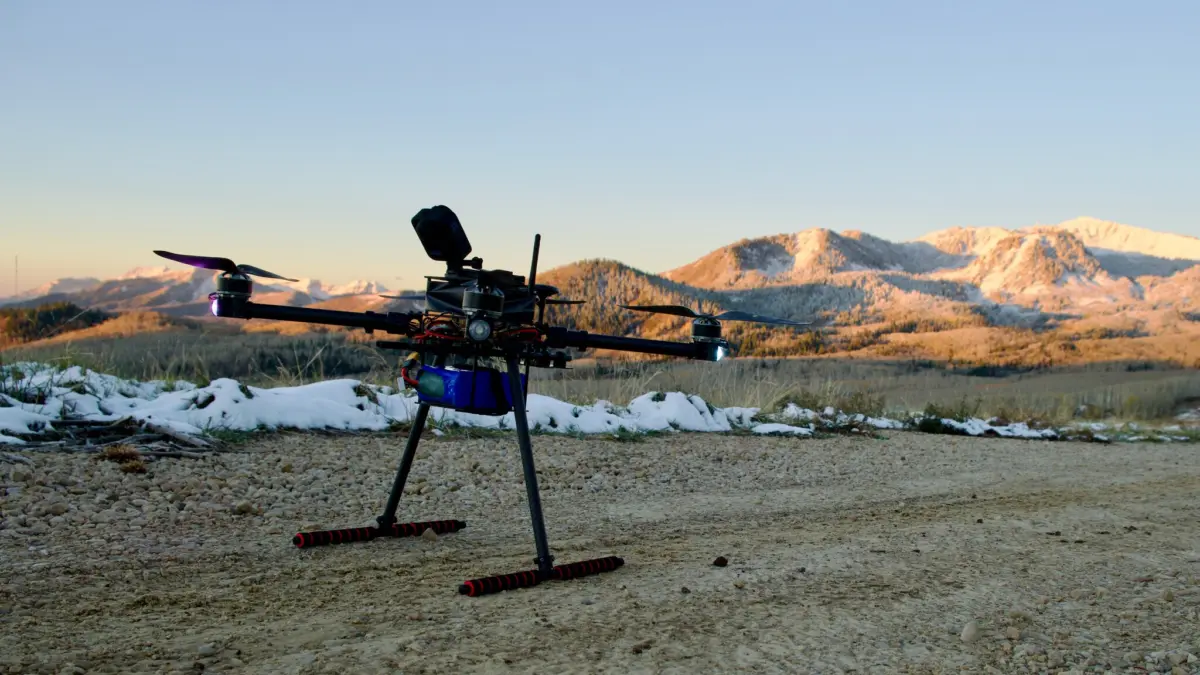
WASATCH BACK, Utah — A new startup plans to use drones to perform cloud-seeding operations over the Wasatch Back this winter, bringing innovative technology to a decades-old effort to increase snowfall and supplement Utah’s water supply.
Alto Cirra, co-founded by Andrew Verda and Ethan Friedman, intends to conduct drone-based cloud-seeding in Summit, Wasatch, and Cache counties from Nov. 1 through April 30, 2027, according to a public notice published in the Deseret News. The company’s plans are subject to approval of its cloud-seeding permit application by the Utah Division of Water Resources.
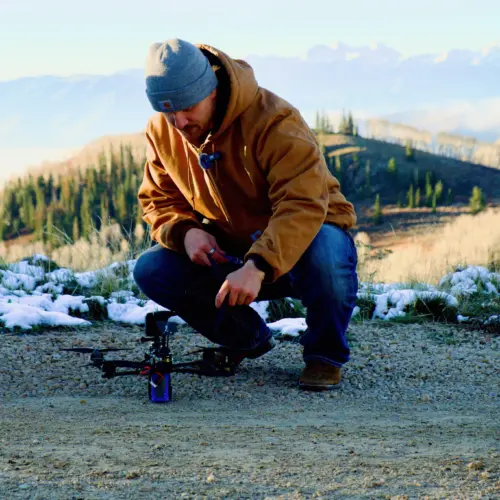
The company plans to fly drones equipped with silver iodide flares into suitable clouds to release the particles, with the goal of increasing the amount of precipitation dropped by the storm.
Utah has used cloud seeding since the early 1950s, primarily as a way to augment water supplies. While the state has historically relied on ground-based generators, it has also explored using manned aircraft. Now, the state division of water resources is contracted with established cloud-seeding company Rainmaker Technology Corporation, which is also developing cloud-seeding drones, as it looks for ways to better target suitable clouds.
Alto Cirra is entering the cloud seeding field with a focus on using drones and weather data to determine where and when to seed.
What is cloud seeding?
Cloud seeding does not create clouds or produce snow out of clear skies. The technique aims to encourage additional precipitation from clouds that already have the right atmospheric conditions.
During winter cloud seeding, silver iodide serves as an ice-nucleating agent. Its crystalline structure helps ice crystals form in clouds containing supercooled liquid water.
“We’re not creating storms. We’re not creating anything out of nothing,” Verda explained. “We’re taking a building block structure up into that supercooled liquid.”
Those ice crystals can grow as they interact with moisture in the cloud and eventually become large enough to fall as snow. The process only works when temperature, moisture, and other atmospheric conditions are just right.
Cloud seeding drones
Rather than relying solely on ground-based generators, Alto Cirra and Rainmaker are both developing drones that can withstand extreme cold to fly directly into clouds to disperse silver iodide.
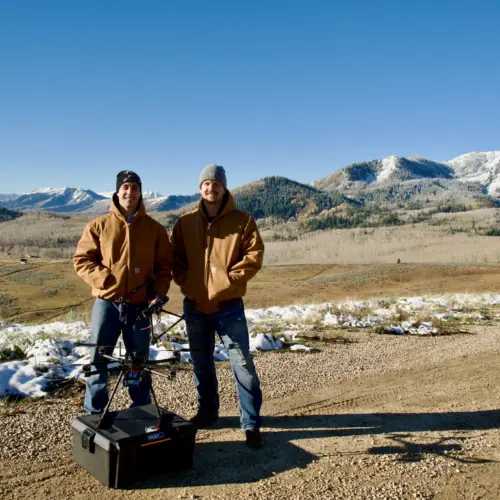
Alto Cirra’s founders say their aircraft can be directed based on weather forecasts and atmospheric measurements taken by smaller fleets of drones, allowing operators to target specific portions of a storm. The company is also developing its ability to collect weather data during flights, which it says could help meteorologists make decisions about the timing and location of seeding.
In an interview, the founders described the technology as a way to make cloud seeding more targeted and potentially more cost-effective than existing approaches. Verda is also hoping that their operation can become boundary specific, dropping extra snow in specified areas.
Those are company claims that will need to be assessed through operations and measurement over time.
Resort partnerships
Snowbird Resort is Rainmakers’s first ski area partnership, according to reporting by Outside. And the company is in talks with other resorts in Utah and beyond, according to Rainmaker CEO Augustus Doricko.
Verda said Alto Cirra has also discussed potential work with other ski-industry operators, though the status of those discussions wasn’t able to be verified.
Woodward Park City Chief Operating Officer Gar Traynar said the organization is considering participating in a study focused on measuring cloud-seeding effectiveness.
“We believe decisions about water resources should be informed by sound science and credible data,” Traynar said in a statement. “The purpose of this project is to better understand and measure the efficacy of cloud seeding under real-world conditions.”
Traynar said Woodward’s interest is in supporting research that can advance understanding of the technology, regardless of the outcome.
Alto Cirra has also announced plans to work with researchers at local universities and use radar to look for measurable changes in precipitation. The specific scope of its research efforts and how results will be independently evaluated remain important questions as the company prepares for its first winter season.
Ground-based generator
View this post on Instagram


2266 E Garfield Avenue
Salt Lake City, UT 84108