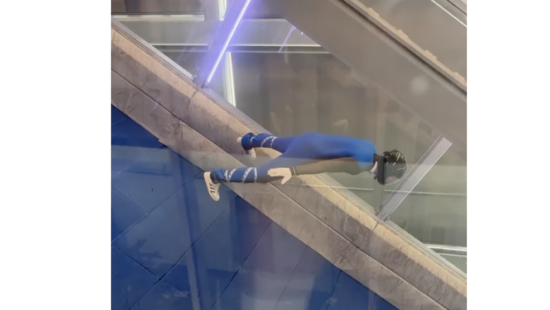
Park City Olympian Jessica Jerome, tightening-up protocols for international sport equipment

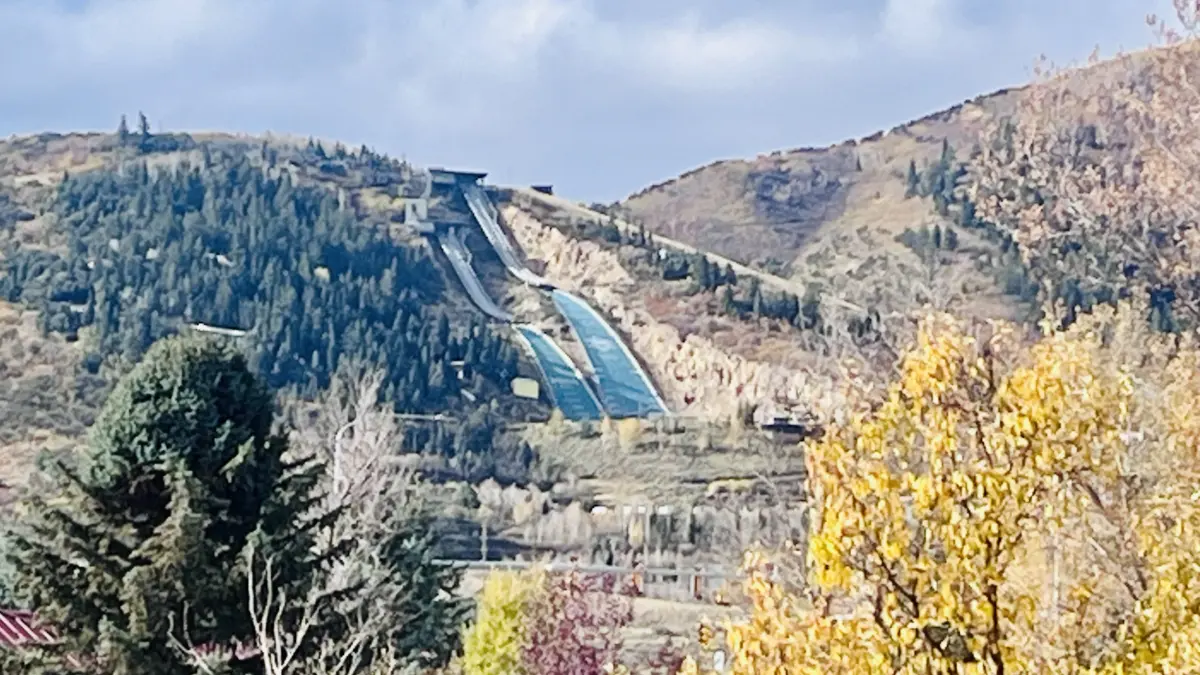
PARK CITY, Utah — Park City native Jessica Jerome, a former U.S. ski jumper who competed at the 2014 Winter Olympics in Sochi, was working as a Technical Delegate Assistant during the annual Springer Tournee at Utah Olympic Park when she realized there had to be a better way to track athletes’ measurements.
Jerome, who has seen equipment-control from both sides. She spent more than 20 years as a US ski jumper starting with Park City Ski & Snowboard before becoming a FIS Technical Delegate (TD), one of the officials responsible for ensuring a competition runs to the rules. She is one of fewer than ten women qualified to serve as a TD or assistant TD (TDA) in international ski jumping, and she was the first female Olympian TDA when she worked at the 2026 Milan Cortina Olympics.
When Jerome was officiating the Springer Tournee as a TDA, she needed to find the athletes’ inseam measurements to hand to equipment control. What she found instead was a public, editable spreadsheet with gaps in it, numbers written down on stray pieces of paper, and coaches to track down one by one.
“It was kind of a mess getting all of these numbers together,” says Jerome, in an interview with Inside FIS. “And I thought to myself, why don’t we have a single source of truth where all of this information lives?”
On the US Cup circuit, where America’s top athletes and juniors compete, officials uphold three checks to prepare jumpers for international FIS competition: the suit inseam measurement, the body mass index (BMI) rule linking ski length and weight, and binding placement.
The inseam matters because a lower crotch on the suit creates what Jerome describes as “kind of a wing,” extra surface area that can add lift in the air. The measurements shouldn’t change from event to event, but the way they were being recorded, Jerome realized, was anything but consistent.
When she was an elementary school student-athlete in Park City, Jerome wore what has become decades later an iconic, highly recognizable ski jumping suit designed with big black and white spots to look like a cow. That suit and countless others lend themselves, all pun intended, to the hand-me-down nature of expensive suits. However, the measurement systems can be so constrictive that typically only skis, boots, and bindings are able to be passed down to younger athletes. That said, when people see the famous cow suit still in rotation, it brings a smile to everyone’s faces.
At FIS-sanctioned competitions, a system already exists. “Measurements are captured by 3D scan, taken annually until an athlete turns 20 and stored in a FIS database that generates measurement lists for sanctioned Equipment Controllers,” FIS Nordic Operations Coordinator Madeline Nappey explained to Inside FIS. “Each nation holds a limited number of access points, allowing national federations to check an athlete’s ski length, inseam, or arm length in advance.”
Access to the scanner is a practical constraint, and at this year’s Springer Tournee, that lack of access became a logistical hindrance for many families.
“The scanner is large, expensive, and cumbersome to move, so FIS usually makes scanning available at selected events throughout the season,” says Jerome. “Ideally a team would arrive a day early for scanning, but it’s not always possible.”
Now, Jerome is developing a database to help coaches, equipment-control officials and competition organizers access the information they need to ensure athletes meet ski jumping equipment regulations and help young competitors avoid preventable disqualifications.
The project targets a gap in the U.S. domestic competition system, where many junior athletes have not yet competed internationally and may not have the measurements required by the international federation on file.
“I’m not trying to double what FIS already has,” she says. “I’m trying to build something that is useful for our club coaches and athletes in the US who aren’t competing internationally yet.” Where a measurement already exists on the FIS file, her system would use it rather than take its own.
Jerome is building the tool with her partner, a software developer. “I have the ski jumping knowledge and workflows, and he does the computer stuff,” says Jerome. The result is a database where every athlete’s information lives in one place, accessible to coaches, equipment control, and organizing committees, with permissions to match, meaning a coach in a given division can only see their own athletes’ data. “There’s no reason a coach from Alaska should be looking up an athlete’s information in Lake Placid,” Jerome says.
Also, the workflow is practical: built for the side of a ski jump, rather than an office. Organizers upload the start list as a simple file, and the next morning equipment control can match it against the athletes’ stored measurements from a computer. No clipboard, no manual copying. A process that takes 10 or 15 minutes of writing things out by hand becomes, in Jerome’s words, a matter of being able to “push a button and get all the information that they need.”
Behind the efficiency is a protective instinct. At international competitions, the inseam check happens at the top of the jump, and there are no second chances. “If you go in and you don’t pass, you’re not allowed to try again,” Jerome says. “A lot of these junior athletes, 14-, 15-year-olds, have never done this process. At the end of the day, we aren’t looking to disqualify people. We just want to teach them how the process works so that they know it and they’re prepared.”
The gap shows up in practice. Officiating US Nationals a few years ago, Jerome met young athletes with no inseam measurement on file. Taken to be measured, they had never seen the machine before and stood on it backwards. “They had never been tested and didn’t understand why their inseam measurement was important,” she says.
Teaching that protocol usually falls to coaches, but many lack the resources to do so. Jerome wants the database to serve them as much as the officials. “My hope is that this database can be not only a single source of truth, but a resource for them,” she says.
Transparency is key. With measurements visible to the right people, a coach can access the database the night before a competition and head off potential issues.
The same applies to the BMI rule, which assigns each athlete a maximum ski length for their height and a minimum weight to jump it. The rule aims to protect athlete health and maintain fairness. The database includes an auditable process for updating the numbers as young athletes grow.
What Jerome wants to prevent is the worst-case scenario: a young North American flying to Europe for their first major FIS competition and being disqualified over a detail nobody flagged. “It would be terrible. It’s like, I just wasted all this time and money to fly to Europe just to get disqualified,” she says. “We don’t want people to get scared. We just want them to know the process and to feel confident about it.”
For now, the project remains an independent labor of love. Jerome and her partner are building and demoing it with dummy data, and running costs sit around $ 50 a month. She has been picking the brains of the US national chairperson, fellow TDs, and event organizers, and hopes USA Ski Jumping will eventually adopt it.
The next step is sharing it with coaches for feedback and asking other countries how they handle the same challenge at domestic level, starting with contacts she’s made while working at events in Norway.
“I didn’t make this with the intent to distribute it, because I’m sure other countries have their own systems,” says Jerome, on whether or not the tool will ever travel beyond American ski jumping. “But I saw a need for it in the US, and I’m trying to come up with a solution.”
For coaches or National Ski Associations interested in the project, a demo and contact details are available at www.compday.io


2266 E Garfield Avenue
Salt Lake City, UT 84108