Trails for everyone: Mountain Trails gives update on adaptive trail assessment program
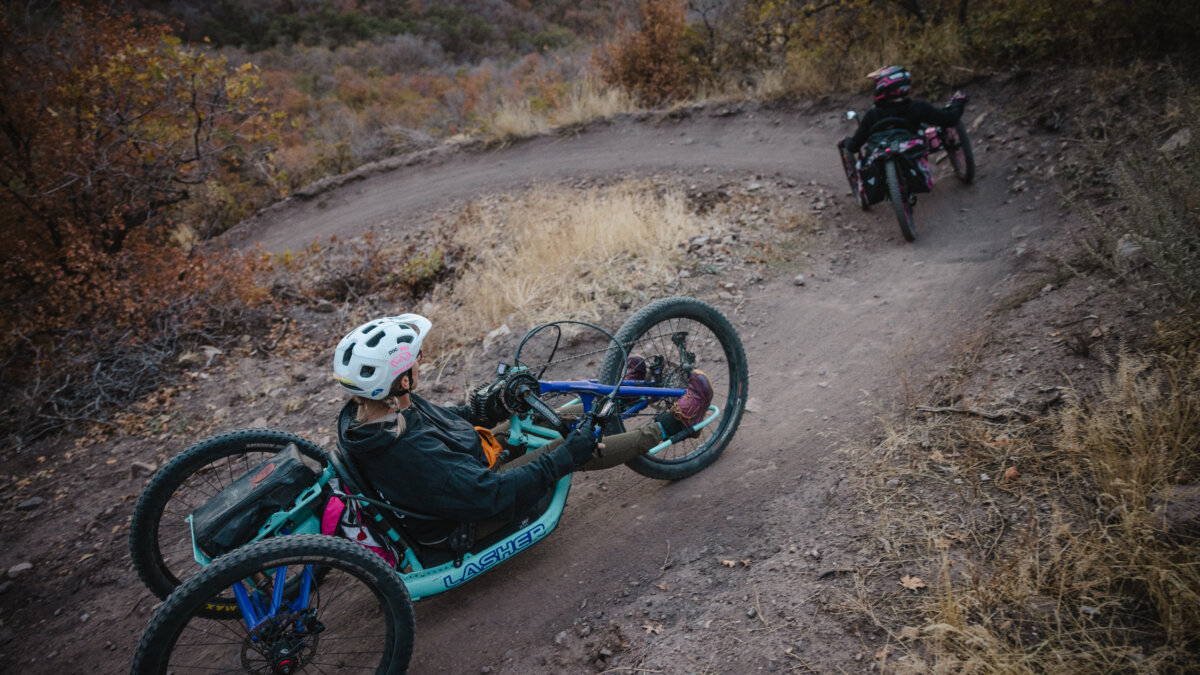
PARK CITY, Utah — Mountain Trails Foundation (MTF) is assessing routes across Park City as part of its Adaptive Trails Assessment Program (ATAP), an effort to expand trail access for adaptive mountain bikers and identify the physical and logistical barriers that keep them out.
Lora Anthony, Mountain Trails Foundation’s executive director, said the team has already assessed several routes and is now focused on lining up funding for the next phase. Assessors are prioritizing routes that offer meaningful ride options across a range of adaptive mountain bike, or aMTB, skill levels.
“Currently, Mountain Trails is performing assessments throughout Park City,” she said. “At this time, the team has assessed several routes, and we are in the process of finding donor and grant funding to perform universal trail upgrades in the coming years, starting in dirt season 2027.”
Two phases, running side by side
The program is structured in two phases. Phase one covers assessments of trailheads, signage, ratings and physical trail features. Phase two will focus on trail, trailhead and signage upgrades, along with a “know before you go” information system for the aMTB community.
Rather than running strictly one after the other, Anthony said the two phases overlap.
“Phase One will continue, concurrent with Phase Two, until its funding runs out, likely in 2027,” she said. “With Phase One funding, MTF will get as many trail systems assessed as possible.”
Of the categories under review, physical trail features are the hardest to evaluate because they’re shaped by soil conditions, environment, type of use, original design and wear and tear. But she said the most significant barriers to access tend to be simpler to spot, and human-made.
“Problematic trailheads without adequate parking, restroom facilities or trail access points, a curb cut or accessible gate, for example, are pretty easy to identify and fix,” Anthony said. “But unless those barriers get fixed, they’re a game stopper for aMTB access right in the parking lot.”
Other common barriers MTF pointed to include curbs without curb cuts, difficult gates, narrow bridges, cattle guards and chicanes, along with a lack of safe loading and unloading zones for aMTBs, which she said are large and heavy pieces of equipment.
A small team doing hands-on work
Resource manager Ian Hartley has taken the lead on the program day-to-day.
“Ian, MTF’s Resource Manager, has taken on responsibility for the ATAP,” she said. “It’s a huge commitment, so we’re all just rallying around his leadership.”
Hartley has hired two adaptive athletes, Emma Paden and Marshall Evans, who are working alongside the organization’s professional trail crew to identify trails and routes best suited for upgrades. Anthony said the team also hosted group rides for aMTB riders to gather a broad range of feedback, though the format had its limits.
“Group rides are very slow, so it has been most efficient to have Marshall, Emma, Ian and members of the trail crew take that feedback and roll out assessments as a team,” she said.
One thing that’s stood out during the process is the skill required to ride an aMTB during an assessment.
“It requires a pretty robust skill set to ride an aMTB, especially on an assessment,” she said. “Emma and Marshall are at different skill levels, with Emma fairly new to aMTB riding and Marshall a seasoned pro, but they’re both highly capable athletes and, with the help of a non-disabled companion rider, they’re creating the most meaningful assessments.”
Balancing access with trail character
The program’s aims extend beyond aMTB access. Trails built or upgraded to be more accessible tend to be more sustainable for all users, she said, pointing to Lower Spiro as an example. Before the trail was converted to uphill-only for bikes, brake bumps at tight hairpin turns had worn down its tread, and the foundation couldn’t maintain it for years despite repeated efforts. The solution was building a new, purpose-designed trail, Seldom Seen, with wider turns and better camber.
Anthony said that experience shapes how MTF decides where to use machine-built construction and where not to.
“There are some major artery trails that need upgrading so that they can attain highest and best use for the greatest number of trail users,” she said. “Generally, this means they can be upgraded using a machine to build a wide, consistent tread to allow for safe passing, accommodating high traffic and longer-lasting results of maintenance work.”
She pointed to sections of the Mid Mountain Trail as an example of a route in need of that kind of overhaul, noting that recent dry summers have accelerated the trail’s deterioration.
“Some sections are straight up dangerous for all users, but especially for our friends on aMTBs because accidents with aMTBs can be more consequential,” Anthony said. “With the past summers being extremely dry, trail treads have quite literally evaporated. With every roll of a tire or placing of a foot on the tread, that moon dust flies away and we’re left with a messy and extremely expensive trail maintenance job, if trail maintenance is even possible.”
At the same time, Anthony said hand-built, old-school trails, including John’s, Shadow Lake, Apex, Sweeney’s, Black Forest and Fat Lip, are generally off-limits to full machine overhauls, since that kind of work would erase what makes them distinct. She cited Stiff Upper Lip as an example of a newer trail purpose-built to preserve that same old-school feel.
What’s next
MTF said it’s too early to name specific trails or trailheads slated for phase two upgrades, since the foundation still needs to work with land managers and owners to determine what’s feasible. In general, the trails identified for upgrades are likely to be wider, machine-built routes with easy trailhead access that can accommodate aMTB riders.
For now, the foundation’s focus is on securing the grants and donor support needed to fund upgrades identified as most impactful for 2027 and 2028. Anthony said the foundation wants the aMTB community to know its input is welcome and valued.
“We hear you,” she said. “Feedback from the aMTB community is always appreciated.”
She also thanked Wasatch Adaptive Sports and the National Ability Center for their continued support.
“It is with gratitude and humble hearts that the MTF team has accepted the challenge of developing and implementing the Adaptive Trail Assessment Program,” Anthony said. “As the program progresses, we look forward to sharing it with communities throughout Utah and the nation.”
New program aims to expand adaptive access on Wasatch Back trails


4251 E Lipizzan Jump
Moab, UT 84532