Town & County
Summit County celebrates economic strength award while balancing conservation, development pressures

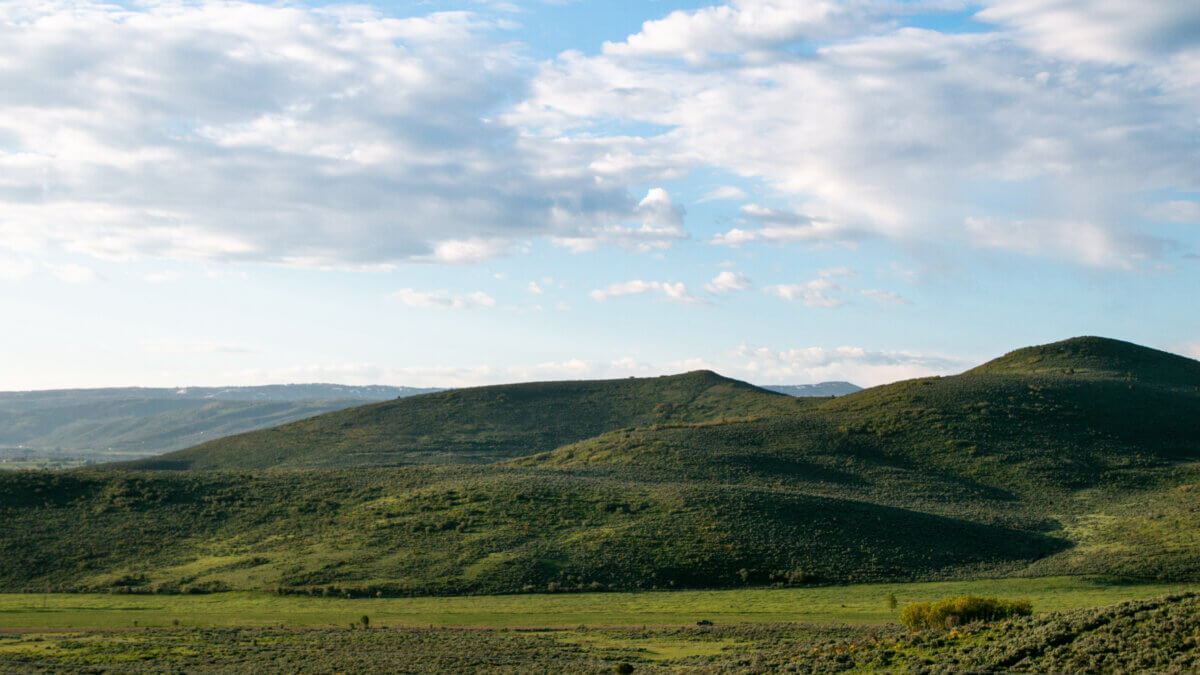
Summit County has been named one of Expansion Solutions Magazine’s Top 15 Rural Communities for 2026. The publication recognized 15 counties as an unranked group based on their economic development efforts. Photo: Summit County
Recognition from a publication aimed at companies and consultants evaluating potential business locations comes as the county balances business investment and conservation amid a dispute with state leaders over growth.
SUMMIT COUNTY, Utah — Summit County is celebrating national recognition for its ability to attract business investment and support long-term economic growth, even as local leaders wrestle with a more complicated question at home: what kind of growth the county wants, and who should control it.
Expansion Solutions Magazine named Summit County one of its Top 15 Rural Communities for 2026, an annual recognition honoring counties for economic development, business growth and a commitment to what the publication describes as sustainable economic growth.
The award is not a traditional quality-of-life ranking.
Expansion Solutions describes itself as an economic development publication that connects corporate decision-makers, site selectors and business leaders with communities and economic development organizations. The publication says its coverage and location intelligence are intended to help companies identify opportunities for expansion and investment.
The 15 recipients are presented as a group without individual rankings.
“This award really reflects the quality of our business community, our citizens and our visitors,” Summit County Economic Development and Housing Director Jeff Jones said in the county’s announcement. “We’re grateful for the support and partnership of other counties and the state, and we’re excited that our Wasatch Back communities continue to thrive.”
Summit County said it evaluated communities through an “extensive analysis” of economic performance, corporate investment activity, workforce strength, infrastructure readiness, and long-term competitiveness.
The distinction matters in Summit County, where growth has become increasingly complicated, especially as the county balances investment goals with local control.
Growth, but on whose terms?
Earlier this month, Steve Waldrip, Gov. Spencer Cox’s senior adviser and state housing coordinator, told the Heber City Council that state funding for counties that opposed Utah’s preliminary-municipality law was “at risk, meaning none.”
Waldrip specifically referenced B and C road funding and later said funding had been suspended.
Summit County Councilor Canice Harte subsequently told TownLift that the county’s finance officer was aware of no formal notification that state funding had been suspended. The Governor’s Office and Utah Department of Transportation did not respond to TownLift’s requests for clarification.
Summit County officials have said they support affordable and workforce housing but have raised concerns about the preliminary-municipality law and its effect on local land-use authority.
There is no indication that the state dispute and the Expansion Solutions award are related.
Together, however, they highlight two different conversations about growth in Summit County: one focused on attracting investment and economic opportunity, and another focused on who gets to make development decisions.
What does ‘sustainable growth’ mean?
Expansion Solutions cited a commitment to sustainable economic growth in announcing its rural-community awards.
In Summit County, that phrase carries particular weight because the county’s growth policies and conservation efforts add meaning.
The county identifies growth management and environmental stewardship as strategic objectives. Its stated policies call for managing and mitigating growth impacts while protecting land, water, and air quality.
The county has also invested significantly in land conservation.
In January, Summit County completed its acquisition of the 8,588-acre 910 Ranch, calling it the largest conservation acquisition in county history. The property protects forestland and wildlife habitat spanning Summit and Morgan counties and connects with other protected lands.
The acquisition included $15 million from Summit County’s 2021 general obligation bond for open space and a $40 million Forest Legacy Program grant.
In December 2025, Summit County also acquired the 835-acre Ure Ranch in the Kamas Valley. The county said it will protect the property for agriculture, wildlife habitat, and public recreational open space.
Climate policy adds another dimension.
Summit County has set a goal to reduce greenhouse gas emissions from county government operations to 80% below 2016 levels by 2040. Its countywide goal calls for emissions to fall 80% below 2014 levels by 2050.
The county’s strategic objectives also call for managing growth in coordination with neighboring jurisdictions and using development tools to protect quality of life and the region’s natural and economic environments.
That record makes Summit County’s inclusion on a list aimed at communities competing for corporate investment more nuanced than a simple endorsement of development, given its conservation and control priorities.
“Summit County, Utah, has demonstrated the visionary leadership and long-term commitment that create a truly competitive environment for business investment,” Expansion Solutions publisher Nicole Shakir said in the county announcement. “This national recognition validates the community’s accomplishments and the work being done to create new opportunities for businesses and residents.”
For Summit County, the larger question is how those opportunities fit alongside its conservation commitments and its push to maintain local authority over growth.
The award places Summit County before an audience of corporate executives, site selectors, and other professionals involved in business investment and expansion.
At the same time, the county continues to pursue land conservation, environmental goals, and policies intended to preserve local authority over development decisions.
By: Rebecca Brenner


4251 E Lipizzan Jump
Moab, UT 84532
2266 E Garfield Avenue
Salt Lake City, UT 84108Talk of the Town


Park City Jobs

Compounding Pharmacy Technician, Alpine Apothecary
2 days ago Full time $19.00 - $24.00 hourly

Ski Instructor and Snowboard Instructor, National Ability Center
3 days ago Seasonal $20.00 - $23.00 hourly

Custom picture framer and art sales, Park City Frame & Gallery
4 days ago Full time $21.00 - $24.00 hourly

Hospitality and Operations Specialist, InvitedHome
6 days ago Full time $60,000 - $68,000 yearly
Payroll Specialist – Ski Industry – Full-Time, Surefoot LC
6 days ago Full time