Vehicle fires pose wildfire risk as Summit County sees incidents increase

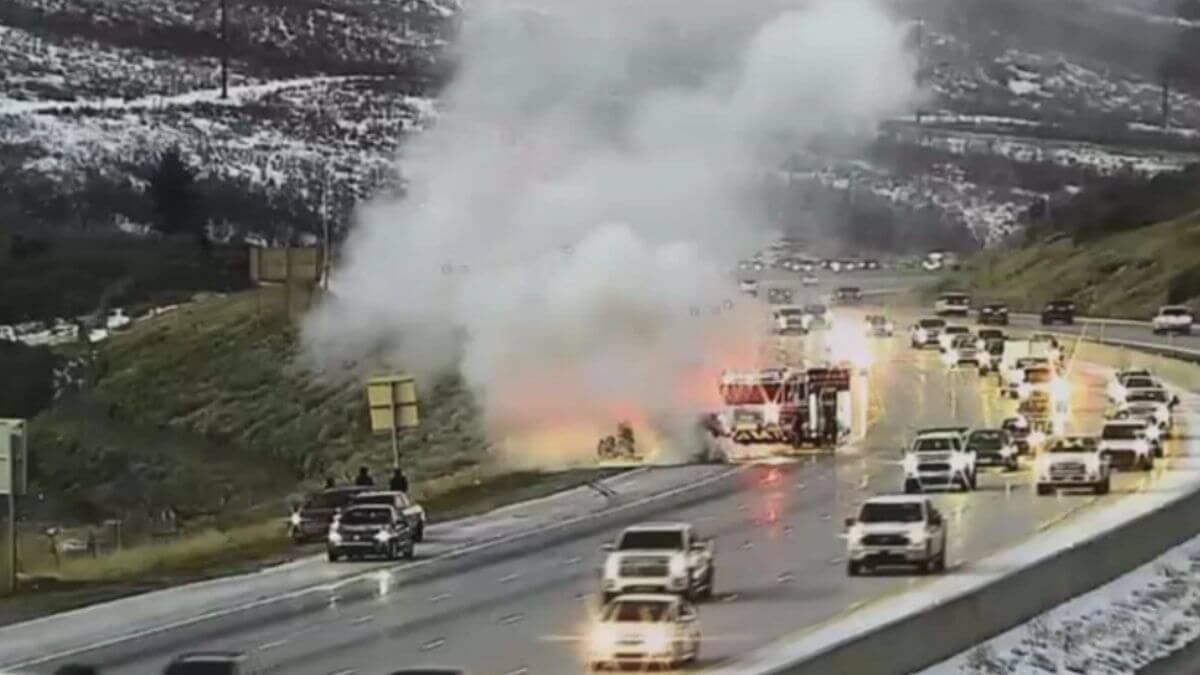
SUMMIT COUNTY, Utah — Vehicle fires in Summit County are occurring weekly, and during fire season, any one of them could ignite the surrounding landscape.
Summit County Sheriff’s Sgt. Skyler Talbot said the county sees vehicle fires nearly daily, with three reported countywide on the day he was interviewed.
“If not every day, at least every other day, at least once somewhere in the county,” Talbot said.
The concern is not just the vehicle fires themselves, but what they can become. Talbot pointed to the 2021 Parleys/Summit Park fire as an example of how a vehicle fire can ignite surrounding vegetation, particularly during periods of extreme heat.
“That’s how a lot of [brush fires] do start,” Talbot said. “When those [vehicle fires] are reported, getting those extinguished as soon as possible is the goal.”
On a recent morning, two separate vehicle fires were reported in the county. The first began when a garbage truck caught fire on Split Rail Road just before 10:30 a.m.
“It was a report of a garbage truck that had caught fire and was blocking both lanes of the road,” Talbot said. Crews extinguished the fire before it could spread. A second fire occurred near mile marker 138 on Interstate 80, close to the area where the Summit Park fire originally ignited.
“My heart kind of dropped, because it was right at 138 on I-80, right around the same area the Summit Park fire started,” Talbot said. Both fires were extinguished before spreading.
North Summit Fire District likely encounters more instances where vehicle fires escalate into brush fires than other county districts, given the volume of traffic along I-80 toward the state line. Fires on the Park City side, he said, are typically contained before they can grow.
Tracking exactly how often a vehicle fire becomes a wildland fire is difficult, Talbot said, because the county’s dispatch system logs them as separate incidents rather than a single linked category.
“If it’s a vehicle fire that then turns into a brush fire, there would be two separate calls,” Talbot said. “It’s either going to be a brush fire or a vehicle fire,” making cross-referencing individual reports the only way to capture the full picture.
Talbot encouraged residents to be proactive heading into summer, especially during high-heat periods.
“Making sure their car’s in good repair, if they’re having engine troubles and their vehicle’s prone to overheating, especially with the temperatures the way they are, get those things addressed before you’re out driving around,” Talbot said. “It is very easy to have a vehicle fire spread into a wildland fire. Those go hand in hand a lot of times.”
The U.S. Fire Administration recommends having your vehicle serviced regularly by a trained mechanic and driving safely to reduce crash risk. If you must transport gas cans or propane tanks, keep them away from passengers, seal them tightly and place them upright on a flat surface. Keep windows open to prevent fume buildup inside the vehicle.
Residents who own or are considering an electric vehicle should be aware of fire and electric shock risks associated with charging. The U.S. Fire Administration says EV charging is safe when done with certified equipment. Before charging at home, have a qualified electrician install a new, dedicated circuit for the charging device, as older home wiring may not be suitable. Those who prefer Level II charging should have that equipment professionally installed as well.
RV owners face a distinct set of hazards. From 2018 to 2020, an estimated average of 4,200 RV fires were reported to U.S. fire departments each year, resulting in an estimated 15 deaths, 125 injuries, and $60.3 million in property loss, according to the U.S. Fire Administration.
RV owners should check propane supply lines for kinks or damage and test the fittings with a gas leak detector. Generator exhaust should be directed away from and downwind of the RV. Never leave the cooking area unattended while a burner is on.
The agency also recommends keeping a portable fire extinguisher on board and taking a brief training course on how to use one. A helpful acronym: P.A.S.S., which stands for Pull, Aim, Squeeze and Sweep. Doors and windows should be kept clear for emergency escape, outlets should not be overloaded, and the RV should be inspected by a trained technician at least once a year.


2266 E Garfield Avenue
Salt Lake City, UT 84108