For UOP’s EMTs, helping extreme athletes is extremely athletic

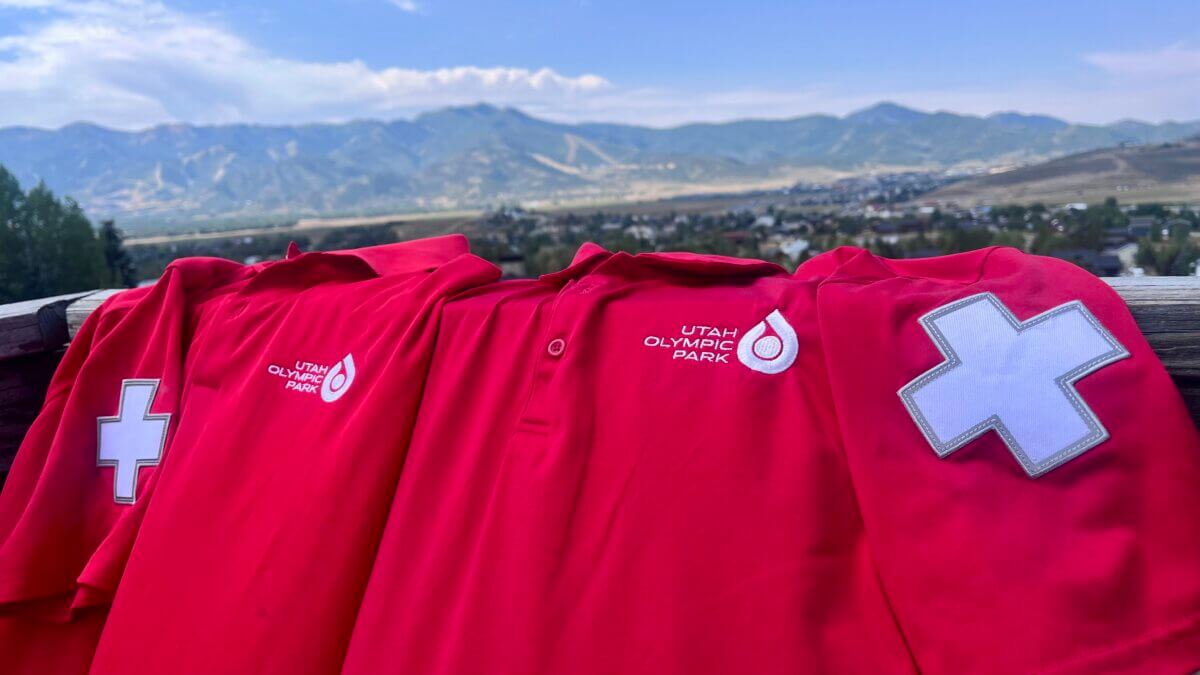
PARK CITY, Utah — The Utah Olympic Park’s (UOP) Emergency Medical Technicians (EMT) work at the only place in the world encompassing a freestyle ski pool, an iced sliding track, nordic ski jumps, and alpine skiing — making their jobs of helping extreme athletes, extremely athletic.
The professional personnel in the Safety Department, some of whom are paramedics, nurses, and/or EMTs a.k.a ski patrollers, get to interact with all of the sports. There are no athletes or coaches who can say the same thing. The comprehensive scope of their works allows them to befriend athletes and coaching staff form all the sports, a fact that contributes to them earning the rock-star status they enjoy.
Hosting world cups, world championships, the 2002 and 2034 Olympics means caring for athletes who may speak different languages and doing so on live television, factors that add layers of complexity.
One of the countless reasons the UOP has been consistently successful is its willingness to embrace the newest, most cutting-edge sports. When the Olympic Orbit sets its sights on an exciting trend, the UOP is ready to get in the game. The apparatus are designed, engineered, built, and maintained with safety, safety, safety in mind. That said, accidents happen.
From a physics standpoint, the injury rate is remarkably low, in part because the facilities are designed to allow crashes to end in a slide-to-a-stop rather than an impact with another object or the ground. Regardless, when elite athlete train or compete at the UOP, there will be an EMT on hand and prepared to respond.
Freestyle Skiing
Many visitors to the UOP have watched a summer freestyle ski show in the pool. Patrollers watch every move and if they need to help an athlete, it’s a unique process. For one thing, EMTs elsewhere rarely do their duties in front of a live audience.
The pool’s entertainment value is secondary to its purpose: giving athletes a place to train for the tricks and flips they will perform on snow, sometimes soaring as high as three stories above the ground.
Thousands of jumps take place in the pool each season, and if an athlete has a rough splash down, UOP EMTs use their lifeguard training to enter the pool and assist athletes. That can mean treading water while working to release a ski binding, with a high DIN setting, with your hands, underwater, while carefully stabilizing a skier who may have suffered a lower-leg injury, a highly specialized rescue that requires both medical and technical skill.
Not your everyday safety maneuver, to be sure.
Bobsled, Luge, and Skeleton
The track’s slider athletes start on the lowest section and gradually work their way up over weeks, months, or even years. In winter, the ice is designed so that a crash can, in a good way, send an athlete sliding down the track or penduluming into a low-point built into the course.
An elite athlete can become separated from a sled during a crash. The EMT’s priority is to reach, protect, and treat the athlete, but the response comes with another risk. An unmanned sled can continue traveling at more than 75 mph and potentially careen back toward an athlete who may be unable to move out of its path. Patrollers wear crampons with metal spikes that help them navigate the steep, icy surface, but they also have to remain aware of the sled’s position.
The track crew works in tandem with the patrollers to gain control of said sled so EMTs can attend to the slider, all while on sloping, concave ice that’s been watered-down and buffed-up to be as slippery as possible for optimally fast finish times.
Ski Jumping and Nordic Combined
UOP EMT Root Roepke knows the risks of elite competition firsthand. He was once an athlete at the UOP and sustained a serious injury in a crash. After recovering, he went on to become a Junior National Champion. Now, he gives back by helping athletes who find themselves in similar situations.
“While we’re sad to see anyone in pain, we’re glad to be able to provide a service of helping people,” Roepke told TownLift.
These highly-trained and passionate employees, are tasked with calling ambulances or even medical helicopters to render further assistance in the best interest of the elite athletes.
On the Nordic ski jumps, athletes start on the smaller hills and, with their coaches’ approval, gradually move up to the larger hills over weeks, months, or years.
One emergency potentiality is a ski binding releasing from the extremely long skis used in ski jumping, in mid-flight. When athletes are flying the length of roughly one and a half football fields, every second matters. Ski patrollers are positioned near the landing area and can reach an athlete before they come to a complete stop, allowing them to quickly assess whether medical attention is needed.
Alpine Skiing
UOP EMTs do wintertime snow safety via throwing avalanche-mitigating devices, creating a controlled snow slide when no one is on the hill, and therefore, eliminating a surprise slide when athletes might be on the hill.
They also train year-round for chairlift evacuations, using ropes, harnesses, and belay devices to safely reach elite athletes. And they even perform some of the same duties of a trad-patroller in that if an alpine ski racer is injured, the UOP EMTs slowly ski down the snow-covered hill in a wedge snowplow hauling a toboggan.
That work requires more than technical skill. UOP EMTs also have to be people persons, communicating calmly during potentially chaotic moments, a skill set very much appreciated by the athletes.
Between calls, the team shares plenty of laughter and camaraderie. But when an athlete needs help, the training takes over.
They do still perform trad-patrol tasks on an alpine ski race course when there’s an incident. Hauling a toboggan down with their ski shapes in a wedge snowplow also makes the UOPs EMTs — unparalleled.