Wildlife
Utah completes 133 projects aimed at restoring mule deer habitat

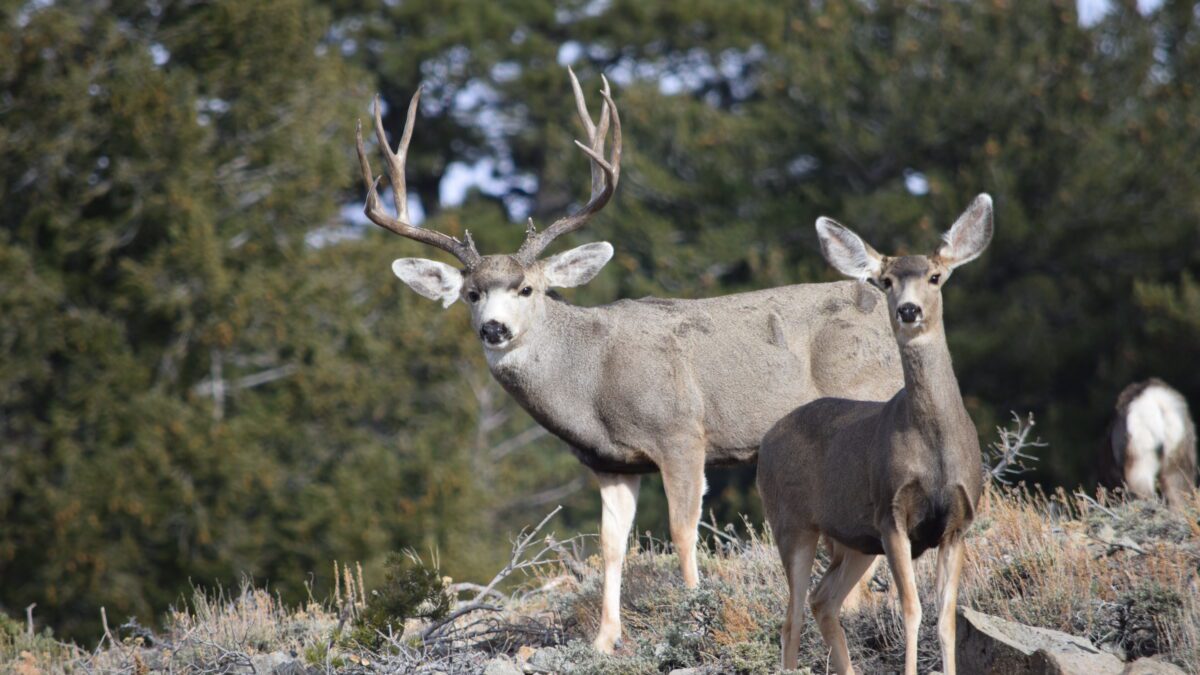
Mule deer move through Utah habitat. The Division of Wildlife Resources completed 133 projects during fiscal year 2025 to restore and protect more than 114,000 acres of deer habitat statewide. Photo: Utah Division of Wildlife Resources.
State report highlights work on more than 114,000 acres, including projects in the Wasatch Back
SALT LAKE CITY — Utah wildlife officials completed 133 projects intended to restore or protect mule deer habitat during the 2025 fiscal year, including several efforts in and around the Wasatch Back.
The Utah Division of Wildlife Resources said the projects covered or preserved more than 114,000 acres statewide between July 2024 and June 2025. The work represented an investment of approximately $55.2 million from the state and 49 funding partners, including federal agencies and wildlife conservation groups.
The agency’s annual report lists several Central Region projects with local or regional connections, including a wildlife-vehicle collision reduction study along State Route 248, shrub restoration at the Wallsburg Wildlife Management Area and habitat work in the Wasatch Sheep Creek and Mill Creek watersheds.
Projects across Utah involved thinning encroaching trees, reseeding native vegetation, restoring streams and wetlands, improving wildlife fencing, and acquiring land for habitat protection.
“While we have made significant progress in restoring and preserving winter ranges for deer over the past 15 years, we are increasing our efforts to restore deer summer range areas and transition ranges, as well,” DWR Habitat Restoration Coordinator Daniel Eddington said in a statement.
Utah’s estimated mule deer population is approximately 324,000, according to DWR. Statewide estimates during the past decade have ranged from about 278,000 to 374,000.
Wildlife managers say habitat quality is one of the primary factors limiting mule deer populations. Many areas deer depend on contain aging vegetation with reduced nutritional value, while drought, invasive grasses, and expanding stands of conifer trees have further diminished forage.
In some sagebrush areas, pinyon and juniper trees have crowded out grasses, shrubs, and flowering plants that deer eat. In higher-elevation summer habitat, pine and fir trees can overtake aspen stands that provide food and cover. DWR crews use methods including mechanical tree removal, prescribed fire, reseeding, and wildfire rehabilitation to restore those landscapes.
“For mule deer populations to thrive in Utah, it is essential that extensive habitat treatments be completed to revert sagebrush habitat areas back to young, shrub-dominated plant communities and to restore aspen communities,” Eddington said.
The number of deer-related projects increased from 115 in the previous fiscal year.
Under Utah’s statewide mule deer management plan, wildlife officials aim to improve vegetation on at least 600,000 acres of crucial mule deer range between December 2024 and December 2030. The agency said future work will place greater emphasis on summer and transitional habitat while continuing to improve winter range and rehabilitate areas damaged by wildfire.
By: Rebecca Brenner


4251 E Lipizzan Jump
Moab, UT 84532
5758 Cobalt Circle
Park City, UT 84098
2266 E Garfield Avenue
Salt Lake City, UT 84108
733 Summit Way
Alpine, UT 84004Talk of the Town


Park City Jobs

Line Servers, Aubergine Kitchen
1 day ago Full time $16.00 hourly

Hiring Barista Assistants and Baristas, Silver King Coffee
5 days ago Part time $17.00 - $30.00 hourly

HOA On-Site Supervisor, All Seasons HOA Management
8 days ago Full time $65,000 - $70,000 yearly

Buildings and Grounds Maintenance Technician, National Ability Center
8 days ago Full time $23.00 - $27.00 hourly
Lodge and Hospitality Coordinator, National Ability Center
8 days ago Full time $22.00 hourly