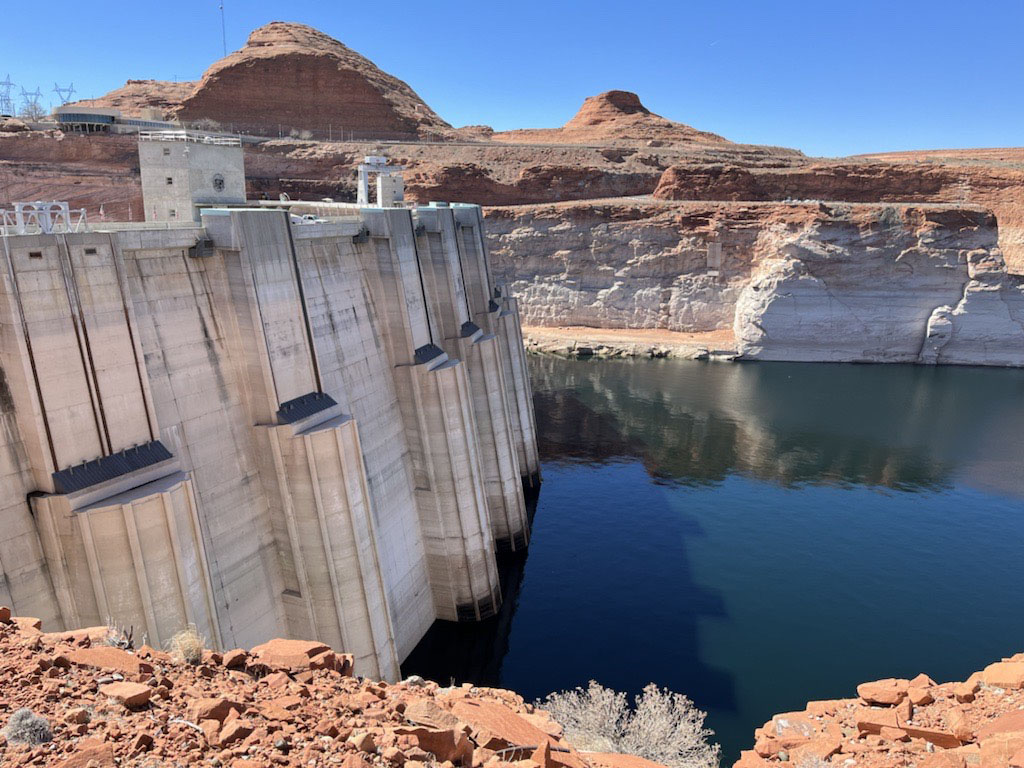
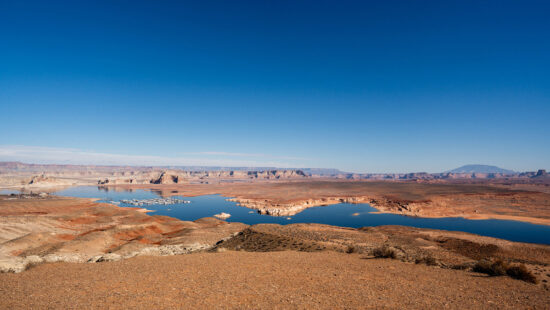
Lake Powell, Lake Mead sink toward historic lows as Colorado River crisis deepens

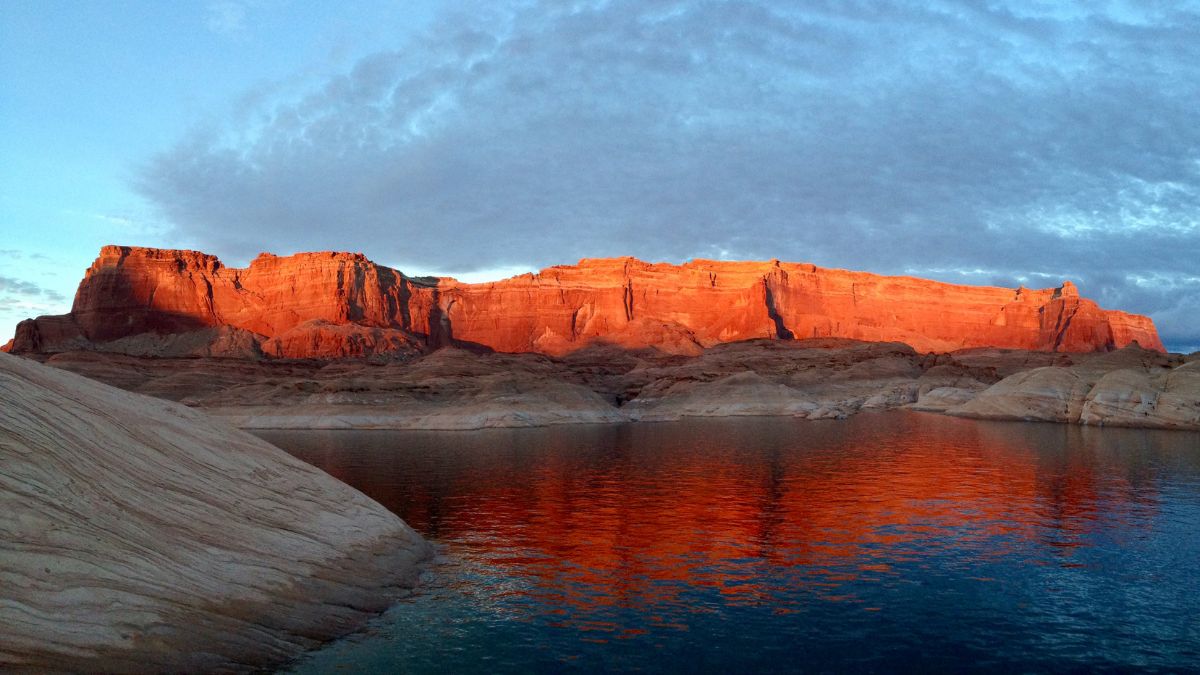
Federal officials are moving water from Flaming Gorge to protect Lake Powell, a step expected to accelerate declines at Lake Mead
PARK CITY, Utah — The Colorado River’s two largest reservoirs are approaching historic lows after an exceptionally dry winter produced little spring runoff across the basin.
Lake Powell, which straddles the Utah-Arizona border, stood at roughly 22% of capacity in early July and could fall to its lowest level since the reservoir began filling in the 1960s, according to federal projections and reporting by The Guardian.
Lake Mead, downstream near Las Vegas, ended June at an elevation of 1,044.58 feet, according to the U.S. Bureau of Reclamation. That is less than four feet above the record low reached in July 2022.
Together, the reservoirs form the backbone of the Colorado River system, which supplies water to about 40 million people across seven states, dozens of tribal nations and Mexico.
The Bureau of Reclamation said Lake Powell received one of the lowest inflow forecasts on record this year. The minimum probable inflow for the water year was projected at 2.78 million acre-feet, or 29% of the historical average. Without intervention, federal projections showed the reservoir could fall below 3,490 feet, the minimum level needed for normal hydropower generation at Glen Canyon Dam.
Federal water managers are responding by releasing up to 1 million acre-feet from Flaming Gorge Reservoir in Utah and Wyoming and keeping an additional 1.48 million acre-feet in Lake Powell that would otherwise flow downstream to Lake Mead.
The plan is expected to raise Lake Powell by about 54 feet by April 2027, but it comes with significant trade-offs. Flaming Gorge could fall from 83% to about 59% of capacity, while the reduced releases from Powell are expected to push Lake Mead lower and could cut Hoover Dam’s hydropower production by as much as 40% this fall, according to the Bureau of Reclamation.
The Associated Press reported that Lake Powell was recently about 3,526 feet above sea level, just 36 feet above the minimum power pool elevation. Glen Canyon Dam supplies electricity to more than 350,000 homes, while federal hydropower from the Colorado River system serves utilities across Utah and much of the West.
The emergency releases offer only temporary relief from a longer-term imbalance between the amount of water flowing into the Colorado River and the amount withdrawn by farms, cities and other users.
Jack Schmidt, director of Utah State University’s Center for Colorado River Studies, told The Guardian that Lake Powell experienced virtually no seasonal recovery this year.
“What’s unique this year is that there was no recovery at all,” Schmidt said. “What we expect to happen is that Lake Powell will go to unprecedented low conditions some time this fall.”
Negotiators from the seven Colorado River Basin states have yet to agree on new rules governing the river after the current operating guidelines expire. The increasingly depleted reservoirs raise the stakes for those discussions as the West continues to confront hotter temperatures, reduced runoff and more than two decades of drought.


621 E Canyon Gate
Park City, UT 84098
2266 E Garfield Avenue
Salt Lake City, UT 84108