The World We Farmed Out
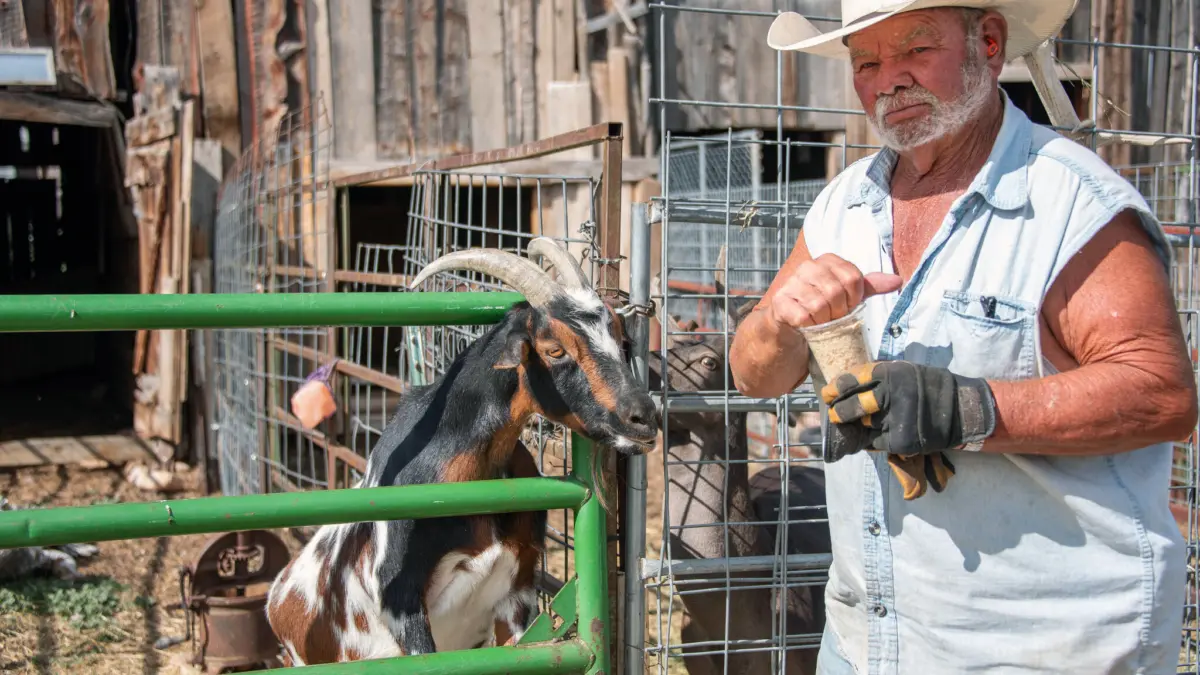
Sparky O’Driscoll wants kids to know that real, live farm animals exist. At his RunDown Ranch Kids Farm in Oakley, they can meet and feed miniature animals with colorful names and backstories
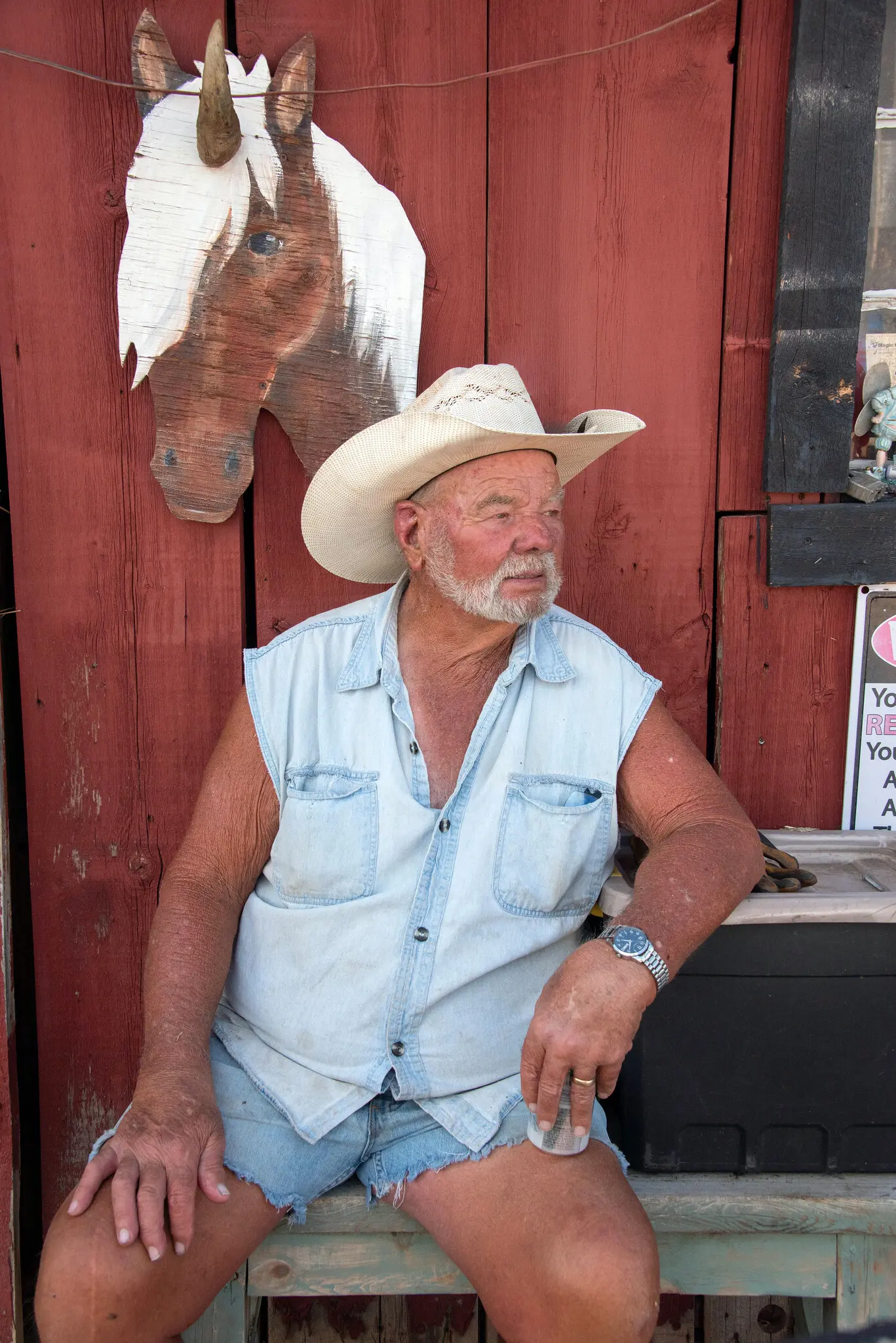
Michael “Sparky” O’Driscoll, proprietor of RunDown Ranch Kids Farm in Oakley, has a love-hate relationship with Vinnie the fallow deer. Vinnie has grown a powerful rack, and when the rut begins this fall, his alter-ego will come out. “I hate him for eight weeks because he tears my barn apart. That’s why all those boards are up there,” Sparky explains.
RunDown Ranch is many things: a childhood dream, a haven for animals, a retirement project, and a time capsule for the Kamas Valley. Above all else, it’s a place where many kids meet farm animals for the first time in their lives. That encounter matters, says Sparky, “So they actually know that they don’t make eggs in the store. They don’t make milk in the store. There’s no back room where they make meat. So they know there are animals out there to actually see.”
In 1869, Sparky’s ancestor, John O’Driscoll, was among the first people to settle the Kamas Valley. “We’re still considered outsiders,” Sparky jokes. Born in 1948, the son of a truck driver and one of four boys, Sparky grew up outdoors, fishing and hunting. As a teen, he spent summers working on his uncle and aunt’s dairy farm. It was “just regular farmwork, which I always loved,” Sparky says.
Meanwhile, he harbored dreams of owning what would become the RunDown Ranch. “There weren’t any windows in the house. The doors were gone. Every time we drove by here, I told my dad, ‘One of these days, I’m going to buy that place.’ And he said, ‘What would you want with that place?’”
There wasn’t a logical answer. “I didn’t know. I just liked it.”
Then Sparky went off to do his “grown-up thing,” working as fleet coordinator for Sunn Classic Pictures in Park City. The company was best known for the 1974 film The Life and Times of Grizzly Adams and its TV spinoff.
In 1979, during a lull between productions, Sparky bought the ranch that made no sense to his father. The president of Sunn encouraged him to bring along some company construction guys to help fix the place up. When they arrived, one of the carpenters got out of his pickup truck and looked around. “God, this is a rundown ranch,” he said, and the name stuck.
Sparky’s film career wasn’t to last. In 1980, Cincinnati-based Taft Enterprises bought Sunn and offered him a position in California. “I said I haven’t lost anything in California,” Sparky recalls. “No thanks.”
Instead, he went to the police academy and eventually became police chief of Kamas. The work involved “really serious stuff,” Sparky kids. A “little old lady” once called him, insisting she had a “prowler” out back. It turned out to be cats rummaging through her garbage.
After retiring from the police force, Sparky went into construction, dispatching ready-mix trucks and concrete pumps. Meanwhile, he solidified a retirement plan at least as physically grueling as his career.
That plan began with miniature horses. Sparky and his wife, Julie, began to breed them at the RunDown Ranch. When the mare had foals, Sparky put them right on the lawn in front of their home. People would swing by to watch the “baby minis” playing. Julie suggested that Sparky bring in more animals for the visitors once he retired.
After retiring in 2018, Sparky opened RunDown Ranch Kids Farm. The reactions from visitors surprised him.
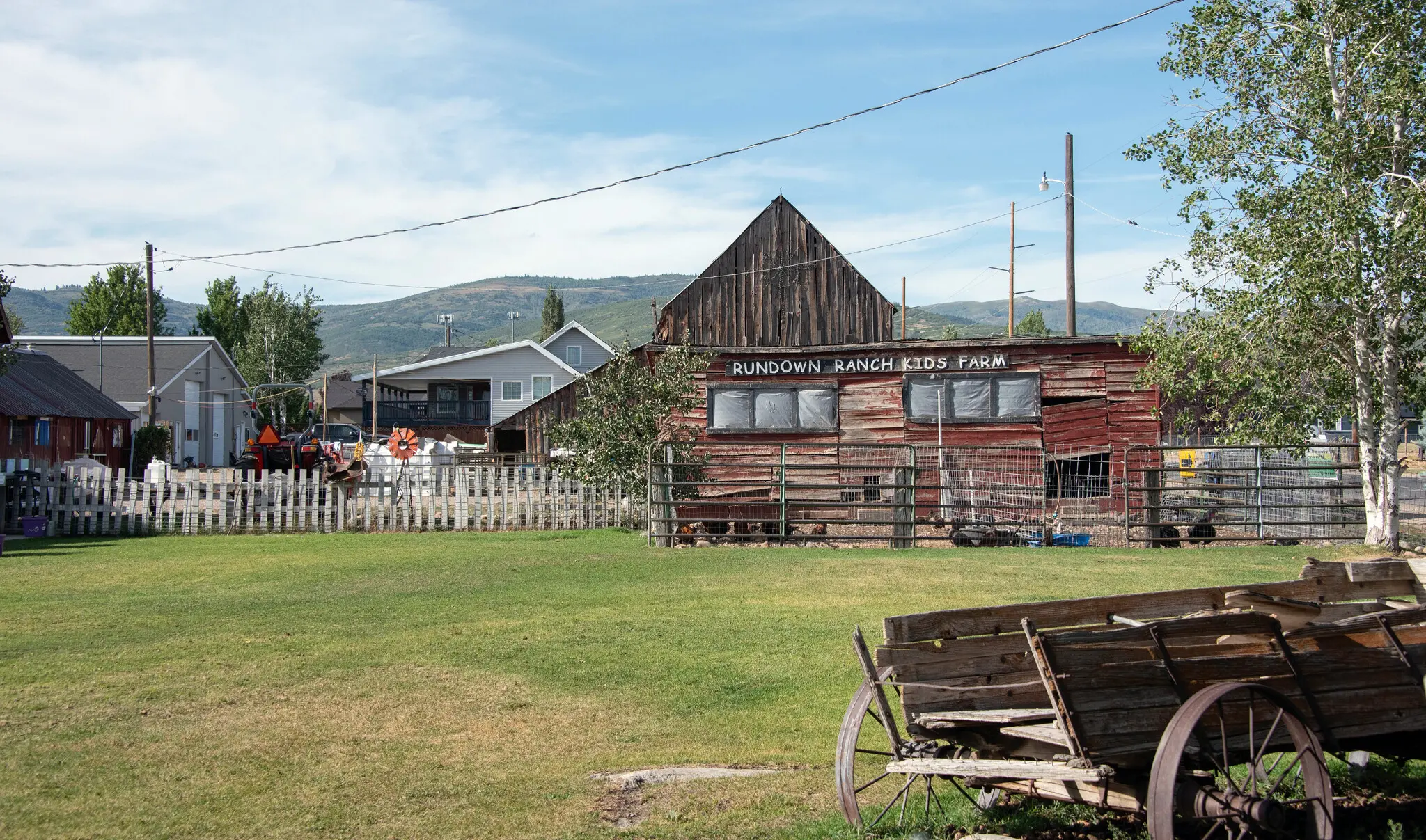
“There are so many kids in America today that have never seen a live farm animal,” Sparky says. “I couldn’t believe it until I opened this place.”
He recalls an 8-year-old, raised in a Chicago high-rise, who visited last year. He was petting Trigger, the ranch dog, and his parents were taking pictures of it, which struck Sparky as odd. It turned out that the boy had never touched a dog, let alone farm animals.
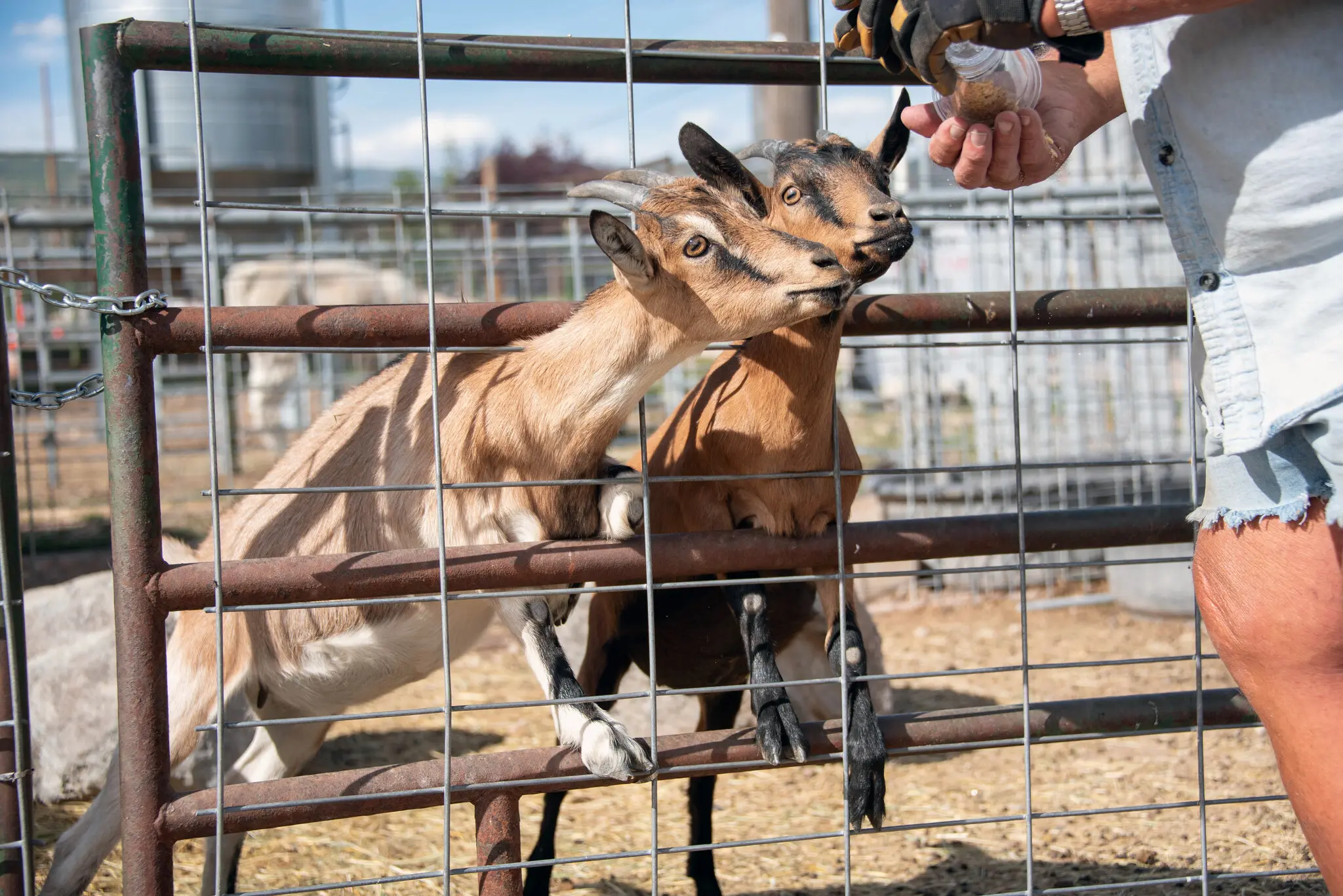
Unlike many kids’ farms that forbid touching the animals, RunDown Ranch encourages it. For a $5 donation, visitors can feed a cup of grain to the animals. “It’s specially mixed, and it’s candy to them,” Sparky says. As we tour the ranch with a grain cup in hand, the animals approach us.
“Vinnie, you want some grain?” Sparky calls out. The deer he loves to hate comes for candy. Sparky’s nephew used to raise fallow deer nearby but sold his herd to a Texan, who didn’t want baby Vinnie. So, RunDown Ranch took him in. The same is true of many other residents. Unwanted, lost, or mistreated, they found refuge at RunDown Ranch.
That’s certainly true for Stevie Nicks, the alpaca. “Friends of ours found her mother run over [by a car] near the Jordanelle Dam,” Sparky notes.
Across from Stevie Nicks are Moana and Heyhey, who are Kunekune pigs native to New Zealand. The goats, Pancho and Lefty, are also eager for treats. “They were going to be barbecue,” notes Sparky, summarizing their backstory.
Pepe the miniature horse was a newcomer to the ranch two weeks earlier. He’d been abused. Friends rescued him and brought him to Sparky. He wouldn’t come anywhere near the fence at first. Now, he’s comfortable, which, I suspect, has something to do with Sparky. There’s a gentleness to him that is calming, whether you walk on four legs or two.
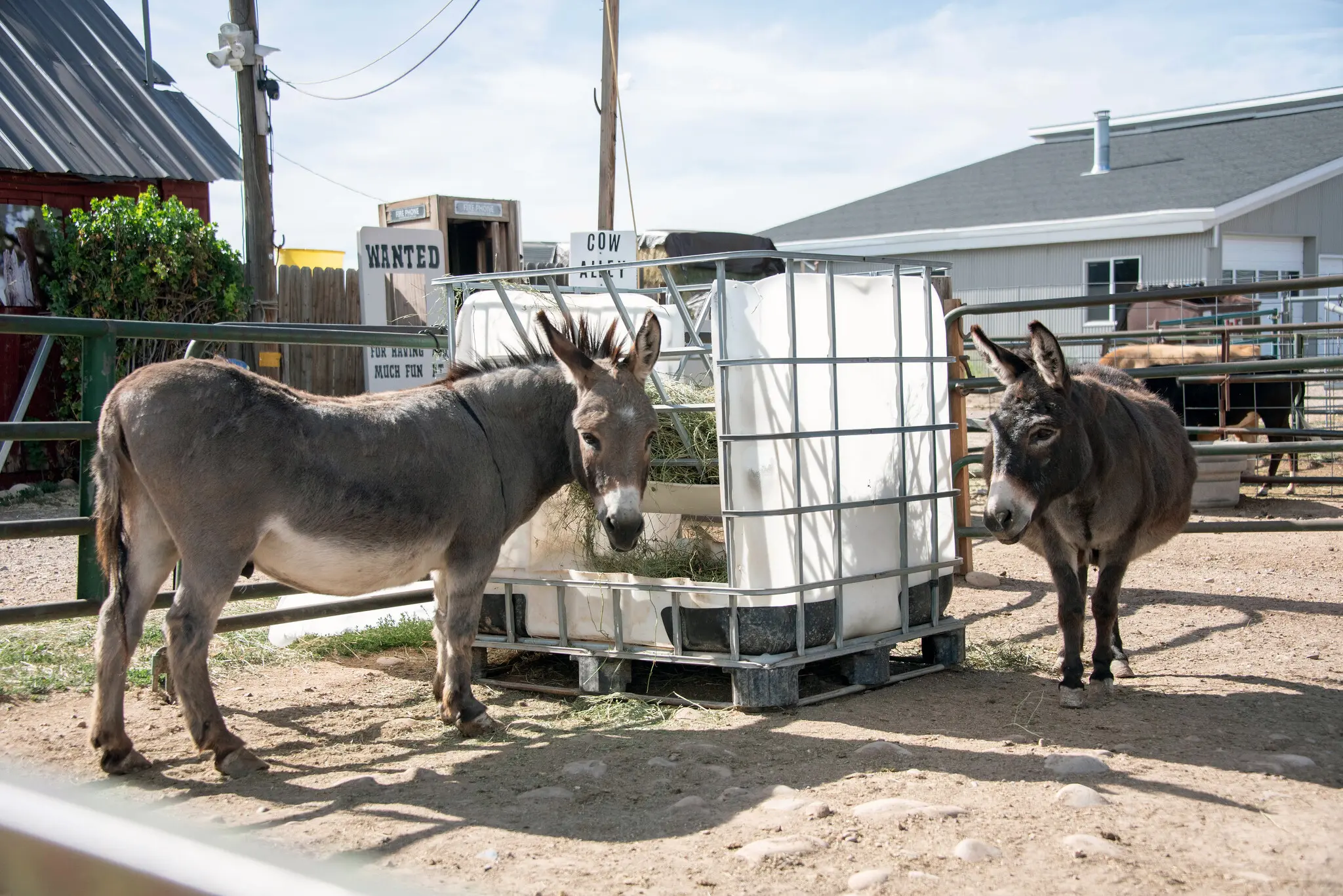
Cisco and Rico, the Jerusalem donkeys, greet us next. Then we meet the queen herself: MooDonna the cow. She sees the grain but doesn’t heed Sparky’s call. She’ll see us at her leisure.
“Hurry up!” warns Sparky. “I’ll give it to Banjo.” Banjo is the male zebu, a species of South Asian cattle.
“She’s half miniature Texas Longhorn and half miniature Swiss Highland, and she’s a sweetheart, aren’t you?” Sparky says. “Kids just love her.”
Last, we greet Loretta Lynn and LaDonna, the female zebus. They will have babies next year, thanks to Banjo. Sparky assures me the zebus date only at night (in case any parents were wondering).
The RunDown Ranch has made Sparky’s retirement purposeful, though not easy. His days start at sunrise with “poop patrol” and end late with feedings. Asked what he does in his free time, Sparky says he fixes things. Something on the ranch always needs fixing (thanks, in part, to Vinnie).
RunDown Ranch Kids Farm will be here as long as Sparky is. Funding comes from visitors’ donations. “It pays for itself. We don’t make a fortune, as you can see,” he says.
Once, Sparky recalls, a visitor from New York offered to change that. “She says, ‘I’d like to leave you my information. You have a gold mine here. If you’ll let me take over and advertise, you could have people lined up down the road.’”
“I said, ‘I don’t want people lined up.’”
That’s not what drew Sparky to RunDown Ranch as a kid, or what draws visitors there today. There’s something refreshingly authentic about this throwback to days before “ranch” meant “luxury development with five-million-dollar homes.”
A line down the block can’t give Sparky anything he wants anyway. He has the ranch of his dreams and a purposeful retirement that introduces children to a world increasingly hidden from sight. Sparky just needs enough visitors to cover costs—and maybe for Vinnie to stop breaking the frickin’ barn.


2266 E Garfield Avenue
Salt Lake City, UT 84108