Will Planning Commission follow the code? Lift vote reopens Park City capacity debate

PARK CITY, Utah — As the Park City Planning Commission prepares to vote on major lift upgrades at Park City Mountain Resort, debate over the projects has increasingly shifted from whether the lifts should be replaced to whether the city must first verify the upgrades comply with the resort’s capacity rules.
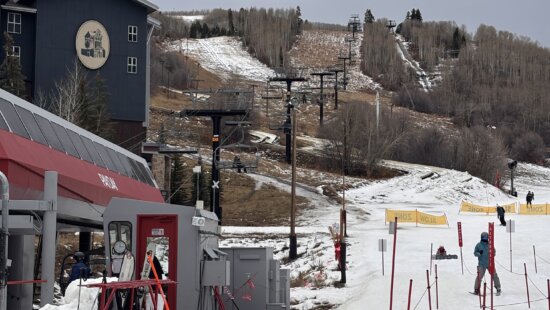
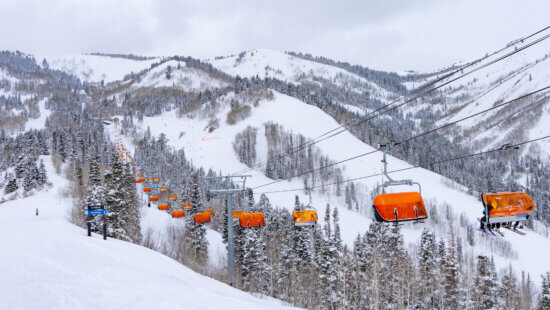
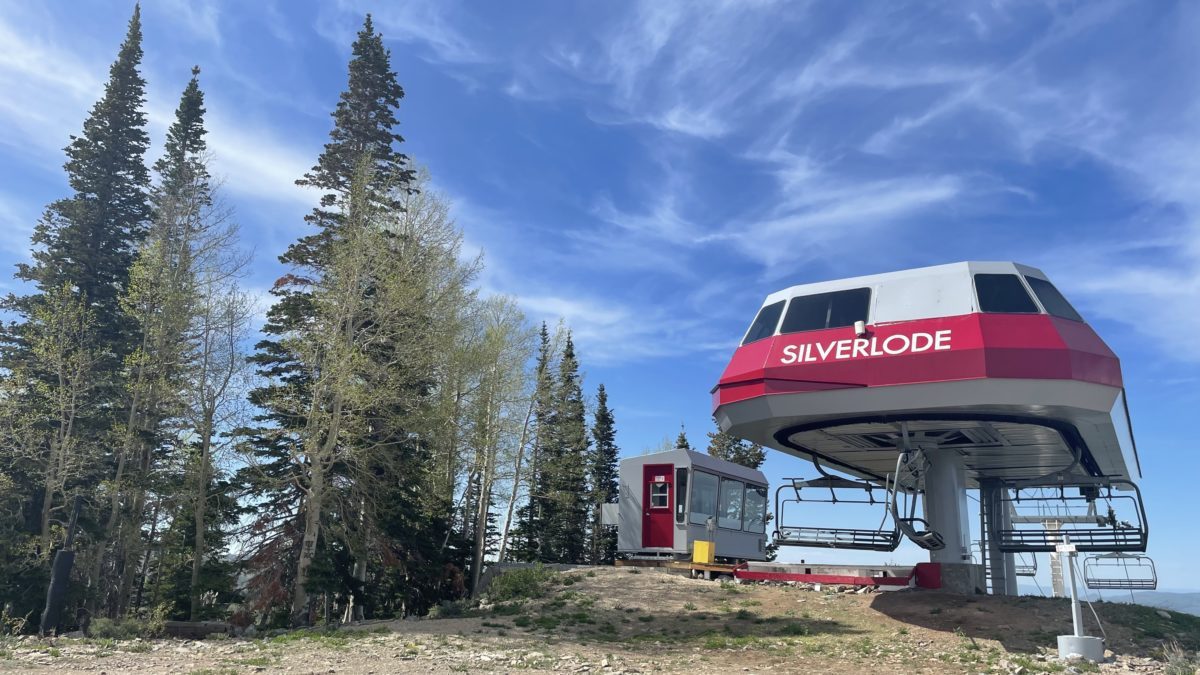
The applications from Vail Resorts would replace the Silverlode Express with a new eight-person detachable chairlift and replace the Eagle and Eaglet lifts with a six-person detachable chairlift and mid-mountain station.
At a May 13 hearing, resort officials framed the projects as infrastructure replacements rather than resort expansion.
Park City Mountain Director of Mountain Planning Zach Purdue told commissioners the projects would increase uphill lift capacity — nearly 16% at Eagle and 20% at Silverlode — but argued they are not expected to increase visitation because no new terrain or base access points are being added.
“Based on industry experience and expert opinion, these projects are not expected to create an increase in visitation,” Purdue said.
Critics say projected visitation is not the governing standard under the resort’s 1998 Development Agreement and Mountain Upgrade Plan (MUP). Instead, they say the triggering issue is expansion of lift capacity itself and whether increased uphill volume remains balanced with downhill terrain and supporting infrastructure.
Resort President Deirdre Walsh told commissioners parking demand has eased since the resort began paid parking and carpool incentives during the 2022-23 season. According to Walsh, more than 64% of vehicles now arrive with four or more passengers and vehicle trips to base areas have declined roughly 40%.
City transportation official Andrew Latham said municipal data generally supports those trends and that resort parking lots are typically 65% to 70% full during much of the ski season.
“We track the number of times throughout a ski season that Park City Mountain Resort sees a sellout,” Latham said. “This past ski season, we saw four times that they sold out the lots.”
City planners told commissioners the applications otherwise comply with local land-use code and that an updated “comfortable carrying capacity,” or CCC, analysis is not explicitly required under the conditional use permit process — a conclusion opponents dispute, citing the Development Agreement, the Planning Commission’s 2022 findings and subsequent court rulings.
That disagreement sits at the center of the current debate
“We are not asking the Commission to deny the lift upgrades,” Park City resident Angela Moschetta told commissioners. “We are asking that the process be followed and that the covenants of the Development Agreement and the Mountain Upgrade Plan be applied.”
The current applications follow a legal battle over similar lift upgrades proposed in 2022 through a process that bypassed full Planning Commission review.
That approval was later overturned after commissioners concluded the resort had not adequately shown compliance with capacity provisions in the Development Agreement and MUP. Vail Resorts subsequently lost appeals in both district and appellate court before returning this year with two separate conditional use permit applications.
Under the Development Agreement and MUP, resort capacity is tied not only to lift infrastructure, but also to downhill terrain, skier circulation and supporting facilities.
Ahead of the May hearing, residents Angela Moschetta and Frode Jensen submitted letters arguing Park City’s Land Management Code requires commissioners to identify and mitigate detrimental impacts associated with conditional use permits, including overcrowding and skier safety concerns.
Moschetta pointed to resort filings showing Silverlode would increase design capacity from 3,000 skiers per hour to 3,600, while Eagle would add roughly 1,000 skiers per hour.
“The triggering condition is expansion of lift capacity,” Moschetta wrote. “The analytical obligation is to identify and quantify that expansion.”
Jensen, who said he supports replacing the lifts, warned commissioners that increasing uphill capacity without studying downstream trail impacts risks worsening crowding and safety concerns.
“The consequence of exceeding downhill capacity is overcrowding and an unsafe ski experience,” Jensen said during public comment.
He cited congestion on runs like Home Run — commonly referred to by skiers as the “Bowling Alley” — as an example of existing choke points.
Supporters of the projects argued the current infrastructure itself contributes to congestion and safety issues.
Jeremy Ranch resident Scott Shapiro urged approval, writing that the existing lifts “struggle to meet demand.”
Charles Morrison, medical director of the Park City Mountain Resort clinic, also submitted a letter supporting the upgrades, arguing modern lift infrastructure could reduce congestion-related incidents and improve skier circulation.
Dispute increasingly centers on what information commissioners must review before voting
The Mountain Upgrade Plan identifies additional investments intended to balance future lift improvements, including skier-service facilities, beginner terrain and portal improvements designed to distribute skiers more evenly across the mountain.
Critics argue the broader improvements called for in the MUP have not been built alongside the lift proposals, and the current applications focus mainly on shortening two of the resort’s most visible lift lines without fully looking at how more skiers moving uphill could affect trail crowding, safety, parking and traffic elsewhere on the mountain and in town..
Another unresolved issue is whether the resort should disclose the calculations behind its comfortable carrying capacity analysis.
The ski industry’s methods for calculating resort capacity were originally developed by Sno.engineering, now part of SE Group, which has worked on Park City Mountain’s capacity analysis. During earlier hearings, attorneys for Vail Resorts argued some of the calculations and formulas used in that analysis were proprietary.
That issue became central during the 2022 proceedings and subsequent litigation.
Third District Court Judge Richard Mrazik, whose ruling was later upheld on appeal, said planning commissioners were entitled to independently examine the assumptions behind expert conclusions rather than simply defer to them.
“Qualifications are one thing,” Mrazik said during court proceedings. “Veracity of the opinion is entirely different.”
“There is a duty that the planning commission has to make sure staff are getting it right,” he added.
At the May 13 hearing, Commissioner John Frontero asked whether the resort would provide updated carrying-capacity data and inputs. Resort representatives did not commit to submitting additional information before the May 27 vote.
Walsh responded that resort capacity had already been analyzed during the 2022 proceedings.
Critics note the adequacy of that analysis was the central issue challenged in the 2022 appeal and later reviewed by both district and appellate courts. They argue the key question now is whether commissioners will require disclosure of the inputs and formulas behind the resort’s capacity calculations, verify them against the Development Agreement’s overall resort limits, and only then determine whether proposed mitigation measures are sufficient.
If commissioners approve the projects without resolving those questions, the applications could face another legal challenge similar to the one that delayed the original upgrades for four years.
Supporters of the projects say further delays would prolong the congestion and operational problems the upgrades are intended to address.
Commissioner Adam Strachan has recused himself from deliberations and voting because he previously advocated for the lifts. The Planning Commission is expected to vote on May 27.


4251 E Lipizzan Jump
Moab, UT 84532