Park City approves PCMR lift upgrades after yearslong dispute over resort capacity

Planning Commission vote clears Silverlode and Eagle replacements, but critics say approval leaves unresolved questions about required capacity analysis and legal compliance
PARK CITY, Utah — The Park City Planning Commission unanimously approved major lift upgrades at Park City Mountain Resort Wednesday, concluding a long dispute that has repeatedly raised questions about how the city applies its land-use agreements governing resort expansion.
While the projects themselves received broad support and are widely viewed as replacements for aging infrastructure, some critics, including a former Park City planning commissioner, questioned whether the city fully completed required review steps related to overall resort capacity before granting approval.
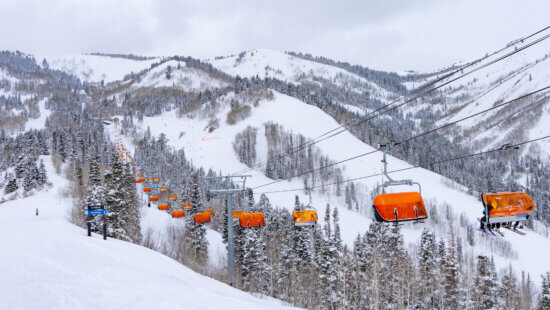
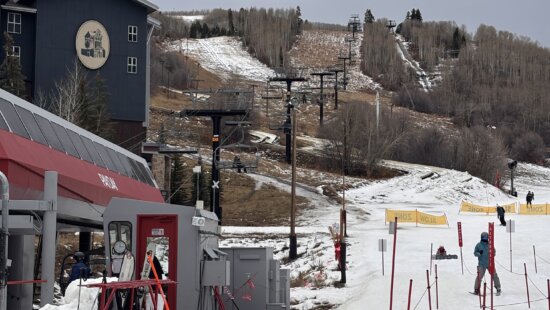
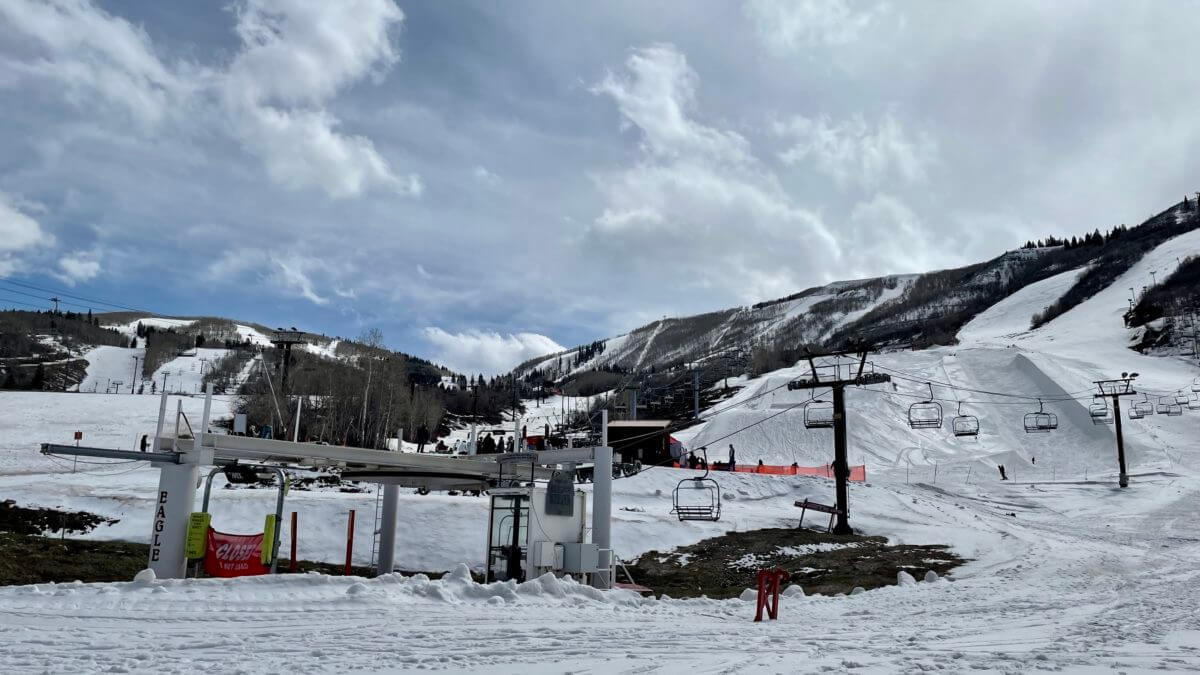
The vote clears the way for replacing the Silverlode Express with a new eight-person detachable chairlift and consolidating the Eagle and Eaglet lifts into a new six-person detachable lift with a mid-mountain station. Resort officials estimate the upgrades will increase uphill lift capacity by roughly 20% at Silverlode and 16% at Eagle.
The commission approved the projects without requiring updated Comfortable Carrying Capacity (CCC) analysis specifically prepared for the 2026 applications.
Ahead of the vote, the city received numerous public comments including from local families, ski industry professionals, medical personnel, and representatives affiliated with U.S. Ski & Snowboard and Deer Valley Resort. Supporters and critics alike said replacing aging infrastructure is beneficial.
Resort officials framed the projects as modernization not expansion, stating that while uphill capacity would increase, overall visitation is not expected to change. Vail officials said the upgrades should not increase skier visits because no new terrain, parking, or access points are being added.
Critics said the city’s agreements with Park City Mountain require a specific review anytime lift capacity increases. They pointed to the 1998 Development Agreement and Mountain Upgrade Plan, which tie lift capacity to things like terrain, parking, traffic, and how skiers move around the mountain. Because of that, they argue the city should have reviewed updated capacity impacts at the same time it approved the lift upgrades.
Subsequent litigation upheld the city’s authority to independently review capacity assumptions rather than rely solely on applicant-provided analysis, reinforcing the role of the commission in evaluating compliance.
That history has shaped debate over the 2026 applications, particularly regarding whether updated CCC analysis was necessary at this stage of review.
During the meeting, City Attorney Mark Harrington told commissioners that prior court rulings do not directly govern the legal standards for the current applications, which are reviewed under separate criteria, but he acknowledged that the Development Agreement still informs certain mitigation requirements within the review process.
Commissioner Seth Beal asked whether earlier litigation changed how the commission should apply the Land Management Code.
“Is there anything in the prior legal rulings that would make us think that LMC 15-1-10 and 15-4-18 are not the governing standard?” Beal asked.
“No, there’s nothing in the litigation that is directly applicable,” Harrington said, adding the application is reviewed under separate standards with some “interplay” from the agreement, including parking mitigation.
Beal said he believed the code and appellate rulings supported approving the project based on the record, citing parking and traffic mitigation measures.
Commissioner John Frontero raised concerns about whether the commission had enough information to evaluate overcrowding impacts tied to increased uphill capacity.
“I’m unable at the moment to verify that the uphill capacity is not going to cause reasonable conditions that need to be mitigated,” Frontero said, adding that he believed updated capacity analysis should have been provided.
Resort officials said no new Comfortable Carrying Capacity analysis was completed for the 2026 applications, pointing instead to earlier reports used in prior proceedings.
“This is the exact same application that was before you in 2022,” resort representative Zach Purdue said.
Frontero pushed back, noting the time gap.
“This is a new application. Four years have gone by,” he said. “What is the reluctance… to present updated CCC calculations?”
Resort attorney Julie Decheco said requiring new analysis was unnecessary and raised due process concerns, citing prior expert review of CCC data.
Harrington said the legal standard required identifying “reasonably anticipated detrimental effects” supported by evidence, not requiring applicants to disprove impacts not shown in the record.
Frontero said he remained uncertain how mitigation could be evaluated without updated capacity data.
“I just haven’t seen a capacity analysis,” he said.
During the public comment portion of the meeting, attorney and Parkite Frode Jensen also argued that approving increased uphill capacity without updated CCC analysis makes it difficult to demonstrate compliance with the resort’s governing documents.
“The consequence of exceeding downhill capacity is overcrowding and an unsafe ski experience,” Jensen said.
The dispute traces back to a 2022 permitting process in which almost identical lift upgrades were initially reviewed through an expedited administrative pathway. The Planning Commission later overturned those approvals, finding the resort had not adequately demonstrated compliance with the Development Agreement and Mountain Upgrade Plan.
A related issue throughout the process has been the handling of CCC data itself. During earlier litigation, Vail Resorts argued portions of the calculations were proprietary, while opponents contended the figures must be subject to public review as part of land-use decision-making.
Third District Judge Richard Mrazik previously questioned the distinction between methodology and conclusions in that context.
“Qualifications are one thing,” Mrazik said. “Veracity of the opinion is entirely different.”
Former Planning Commission Chair Laura Suesser wrote that she believes the commission reversed course from its 2022 decision by approving lift upgrades without the same level of capacity analysis that previously led both the commission and courts to reject earlier applications.
She argued that “it makes absolutely no sense” to proceed without an updated CCC study, saying the increase in lift capacity constitutes a change in use that must be analyzed and mitigated under city code before approval.
The decision moves the resort forward with upgrades officials say are needed ahead of the 2034 Winter Olympics and continued visitation pressures.


4251 E Lipizzan Jump
Moab, UT 84532