Wildlife
Utah wildlife officials warn drought may push more moose into Wasatch Back neighborhoods

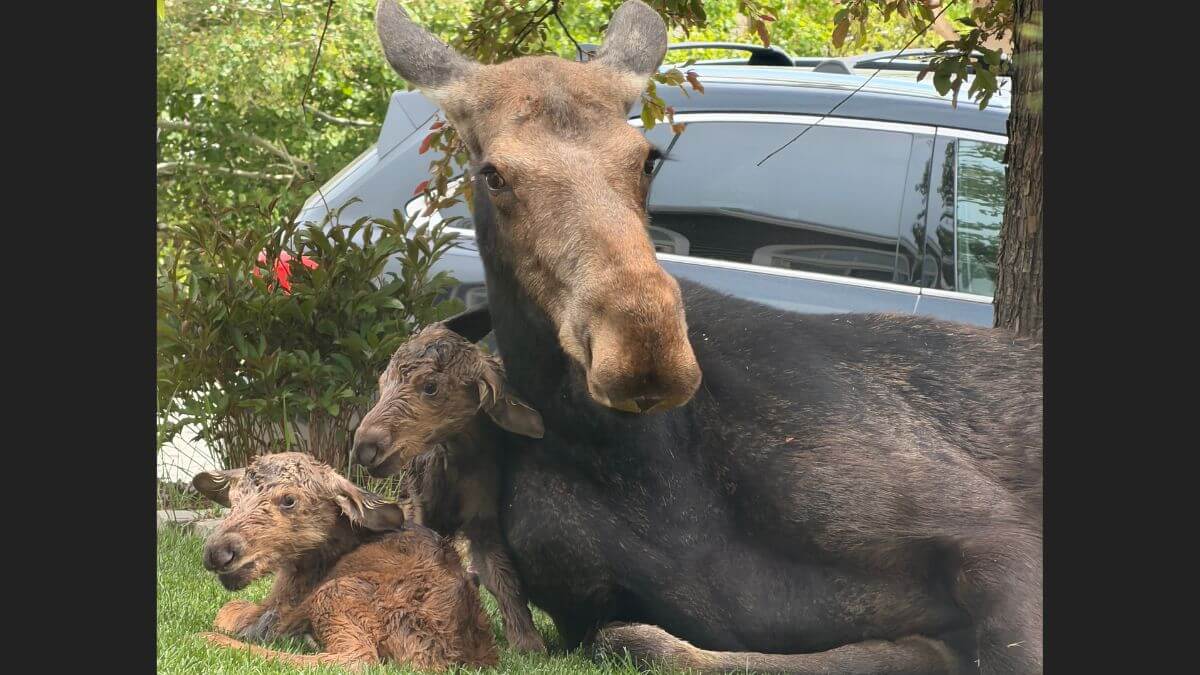
Photo: Moose twins
PARK CITY, Utah — The mountains of Utah are home to between 2,500 and 3,000 moose, so it’s not uncommon to see these large ungulates wandering trails and meadows in the Wasatch Back.
In the spring, residents can even see small calves trailing behind their mothers.
This certainly was the case in the Pinebrook neighborhood, where a moose gave birth to twins over Memorial Day weekend. Since then, residents have come together to provide a safe environment for the mom and newborns, as well as the community.
As cute as moose appear, the Utah Division of Wildlife Resources warns that they can be aggressive and unpredictable, especially mothers with new calves and males during the fall mating season.
“In my years of working with wildlife, I have dealt with bears, rattlesnakes, cougars and moose, and the only species that I’ve had turn and come back at me was a moose,” Utah Division of Wildlife Resources Once-In-A-Lifetime Species Coordinator Rusty Robinson said. “Because they are not predators, people often underestimate how aggressive moose can be.”
Robinson also emphasized that the drought conditions this year may drive more moose to migrate to lower elevations to find food and water. “People should be alert and always give moose plenty of space if they encounter them,” he said.
The Utah DWR receives reports of injuries to dogs and people each year due to encounters with moose. Adult moose in Utah can weigh between 600 to 1,000 pounds, and bulls can stand 6 feet tall at the shoulder. Moose can be dangerous when they feel threatened, and their large size adds to the danger. In some areas of the U.S., wildlife agencies report that more people are injured by moose than bears each year.
When to report a moose
Moose naturally inhabit foothill areas, but when they wander into city limits or densely populated neighborhoods, the DWR asks the public to report them so they can relocate the animals.
If moose aren’t relocated, they can stay in an area for a long time and potentially injure someone or damage property. Avoid approaching moose or attempting to “herd” them out of yards or roads.
“Like with most wildlife, if you give moose plenty of space and don’t try to get too close, it will help keep you and them safe,” Robinson said. “Our biologists relocate numerous moose in urban areas every year, and we really want people to admire these amazing animals from a distance and stay safe. If you normally hike with your dog, we strongly recommend keeping them leashed when you are in mountain areas with moose.”
Stay safe on the trails this summer
The Utah DWR offered guidelines for staying safe during moose encounters, especially as cow moose are protecting calves in late May and early June, and bull moose become more territorial during the September breeding season.
Understand warning signs
Moose often signal agitation before acting aggressively.
Watch for:
- Head lowering
- Hair standing up on the neck
- Licking their snout
- Ears pinned back
How to avoid conflict
- Give moose plenty of space and monitor their behavior.
- Never approach or feed a moose.
- Keep dogs leashed and under control. It is illegal in Utah for dogs to chase or harass protected hoofed wildlife.
- Stay calm and avoid running. Talk in a steady voice and slowly back away.
- If charged, hide behind a tree or solid object, or try to reach a vehicle or building.
- If knocked down, curl into a ball, protect your head and remain still until the moose leaves.
For more information or to report a moose in a populated area, contact the Utah Division of Wildlife Resources.
By: Heather Bergeson


1548 W Woodsview Lane
St. George, UT 84770
1263 E Wild Maple Court
Draper, UT 84020
29 Marilyn Court
Park City, UT 84060
336 W Broadway Unit 201
Salt Lake City, UT 84101Talk of the Town


Park City Jobs

Concierge, Washington School House Hotel
1 day ago Full time $22.00 - $23.00 hourly

Park City Boutique Manager, CHAMMOMILE
1 day ago Part time $35,000 - $45,000 yearly

Soldier Hollow Snowmaking, Grooming and Trail Lead, Utah Olympic Park
2 days ago Seasonal $21.00 - $28.00 hourly
Mountain Operations Crew (Snowmaker), Utah Olympic Park
2 days ago Seasonal $22.00 - $25.00 hourly
Maintenance Tech I, Utah Olympic Park
2 days ago Full time $20.00 - $24.00 hourly