Park City mayor, councilmembers’ salaries will more than double after 4-1 vote

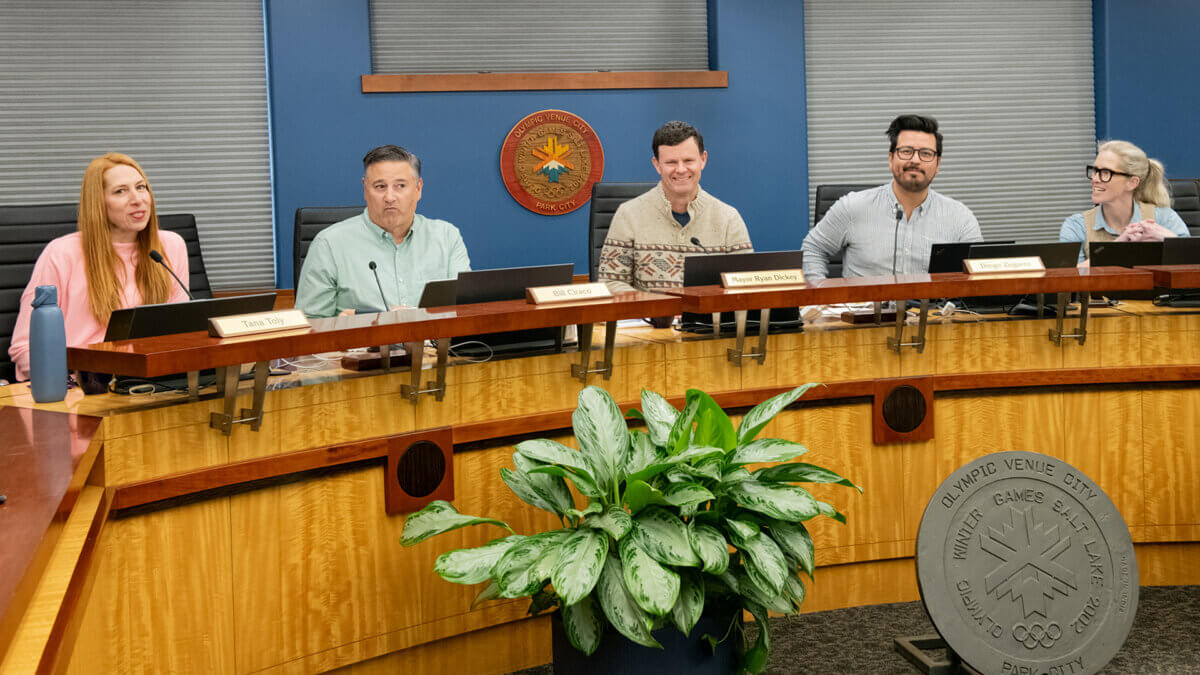
PARK CITY, Utah — The Park City Council voted 4-1 Thursday night to approve substantial compensation increases for elected officials, doubling the salaries of city council members and the mayor.
The new salaries increase the total compensation package, including health benefits, for the mayor to $149,397 per year and councilors’ to $88,064 each. The pay increases will take effect in July at the beginning of the next fiscal year.
City staff said the proposed compensation levels were derived primarily from a comparison to Summit County, which recently increased pay for its elected officials to $70,000 each for five members.
Staff calculated the city salaries by taking the county council’s total compensation pool and dividing it among Park City’s six elected positions, with the mayor traditionally receiving roughly twice the compensation of a councilmember.
Budget officials also reviewed compensation in other resort communities, including Jackson, Wyoming, but said Summit County provided the most relevant comparison because both governments face similar cost-of-living pressures and oversee comparable budgets.
The vote came after a public hearing that drew former elected officials, past candidates, and longtime residents, many of whom questioned both the size and timing of the increases.
Public comments focus on optics, public service
Several public commenters emphasized that their concerns were less about the workload of elected officials and more about the appearance of councilmembers voting on their own raises.
Former mayoral candidate Jack Rubin urged the council to consider how Park City’s compensation compares with other communities that operate under a council-manager form of government, questioning whether compensation should be tied to the responsibilities of elected officials or the professional staff who oversee day-to-day operations.
“The question is the role of the city manager and the city mayor. Where does the executive power rest, and what are we paying for?” Rubin asked.
Former Park City Mayor Nann Worel offered one of the only endorsements of the proposal during the public hearing, arguing that many residents underestimate the amount of work required to serve in elected office.
“Their comment always is, ‘Wow, I thought it was just a part-time job,'” Worel said of conversations she has had with residents. “They don’t realize the time that you spend preparing for this meeting, talking to constituents, talking to staff, and on and on and on.”
Worel said compensation has long discouraged otherwise qualified candidates from running for office.
“Any qualified people that would serve this community beautifully simply can’t afford to quit their current job, cut back their hours in order to meet the time commitment required to serve on the council or as mayor,” she said. “The community loses great candidates.”
Other residents remained unconvinced.
One resident said the proposal creates a stark contrast with city employees, who are expected to receive a 2% cost-of-living adjustment and up to 4% merit increases.
“This is a bad look, no matter how careful the analyses and projections are,” she said.
She suggested that any increases should take effect after the next election cycle rather than benefiting current officeholders.
“It looks like self-dealing for an elected body to double its salary while seated with still several years to go,” she said.
Another resident acknowledged the significant time commitment required of elected officials but said the timing of the proposal could undermine public confidence.
“Three months into your terms, for many of you, to be asking for a double of salary, it just doesn’t look good,” he said.
Councilmembers defend proposal
Councilmembers supporting the increase repeatedly argued that compensation has failed to keep pace with both inflation and the growing demands of governing Park City.
Councilmember Tana Toly, the longest-serving member of the current council, said the issue has been discussed for years and pointed to comparisons with Summit County, where elected officials recently received compensation increases.
“I know what the county council does,” Toly said. “They do the same work, they are the same constituents. We have the same budget.”
Toly said Park City council compensation has increased roughly 30% over the past 12 years, while Summit County council compensation has risen approximately 113% during the same period.
Councilmember Ed Parigian echoed those concerns, describing council service as effectively a full-time commitment despite being classified as part-time.
“This raises our salary to $28 an hour,” he said. “You can go serve pizza at Vail for 20.”
Parigian said residents often expect elected officials to be available for meetings, events and constituent concerns at all hours.
“At some point it can’t all be sacrifice,” he said.
Councilmember Diego Zegarra framed the issue as correcting more than a decade without significant compensation adjustments.
“We’re catching up more than a 10-year lag in any meaningful increases,” Zegarra said.
He also pointed to rising housing costs and the county’s area median income as evidence that compensation should better reflect the realities facing working residents.
Ciraco casts lone dissenting vote
Councilmember Bill Ciraco cast the council’s only dissenting vote, arguing that elected office should remain fundamentally an act of public service rather than employment.
“The hard part about this conversation is whether this is a job or it’s public service,” Ciraco said. “I look at this as public service.”
Ciraco recounted personal financial sacrifices he made earlier in life to create the flexibility needed to serve in public office and rejected suggestions that only wealthy residents can afford to participate.
“This is not a job,” he said. “I don’t think we should be benchmarking against other places.”
While emphasizing that he harbored no resentment toward colleagues who supported the raises, Ciraco said he believed the proposal sends the wrong message to residents.
“I don’t view this as a job. I view it as public service, and therefore I’m going to dissent,” he said.
The ordinance ultimately passed 4-1, with Ciraco voting against the measure.