Cox’s Gigawatt Summit at Deer Valley East Village puts MIDA at the center of Utah’s nuclear and AI data center push


The Operation Gigawatt Summit is a one-day working session on accelerating the energy production, grid modernization and policy changes needed to power the next wave of American AI and industrial growth.
WASATCH COUNTY, Utah — Gov. Spencer Cox opens the Operation Gigawatt Summit on Friday, May 22 at the Grand Hyatt Deer Valley. The hotel, Utah’s largest proposed AI data center and a planned uranium enrichment equipment site at Camp Williams all fall under one state land use authority: the Military Installation Development Authority (MIDA). The agency advanced both the nuclear and AI data center projects at its April 24 board meeting. The Abundance Institute, which is co-hosting the summit with Cox, precedes Friday’s program with its own gala Thursday evening at the same hotel.
The Operation Gigawatt Summit is a one-day working session on accelerating the energy production, grid modernization and policy changes needed to power the next wave of American AI and industrial growth.
Nuclear Regulatory Commission Chairman Ho K. Nieh will open the summit with Cox at 8:30 a.m. in a main-stage conversation titled “Powering the Next American Century,” according to a notice issued by the NRC on May 18. U.S. Energy Secretary Chris Wright is scheduled for a 9:15 a.m. fireside chat with the governor, and EPA Administrator Lee Zeldin will appear at 12:55 p.m., according to the governor’s published schedule.
The summit’s published agenda also includes a 10 a.m. breakout titled “Utah’s Nuclear Playbook: A Model for the Nation,” featuring Emy Lesofski of the Utah Office of Energy Development.
From Deer Valley East Village to data centers and nuclear
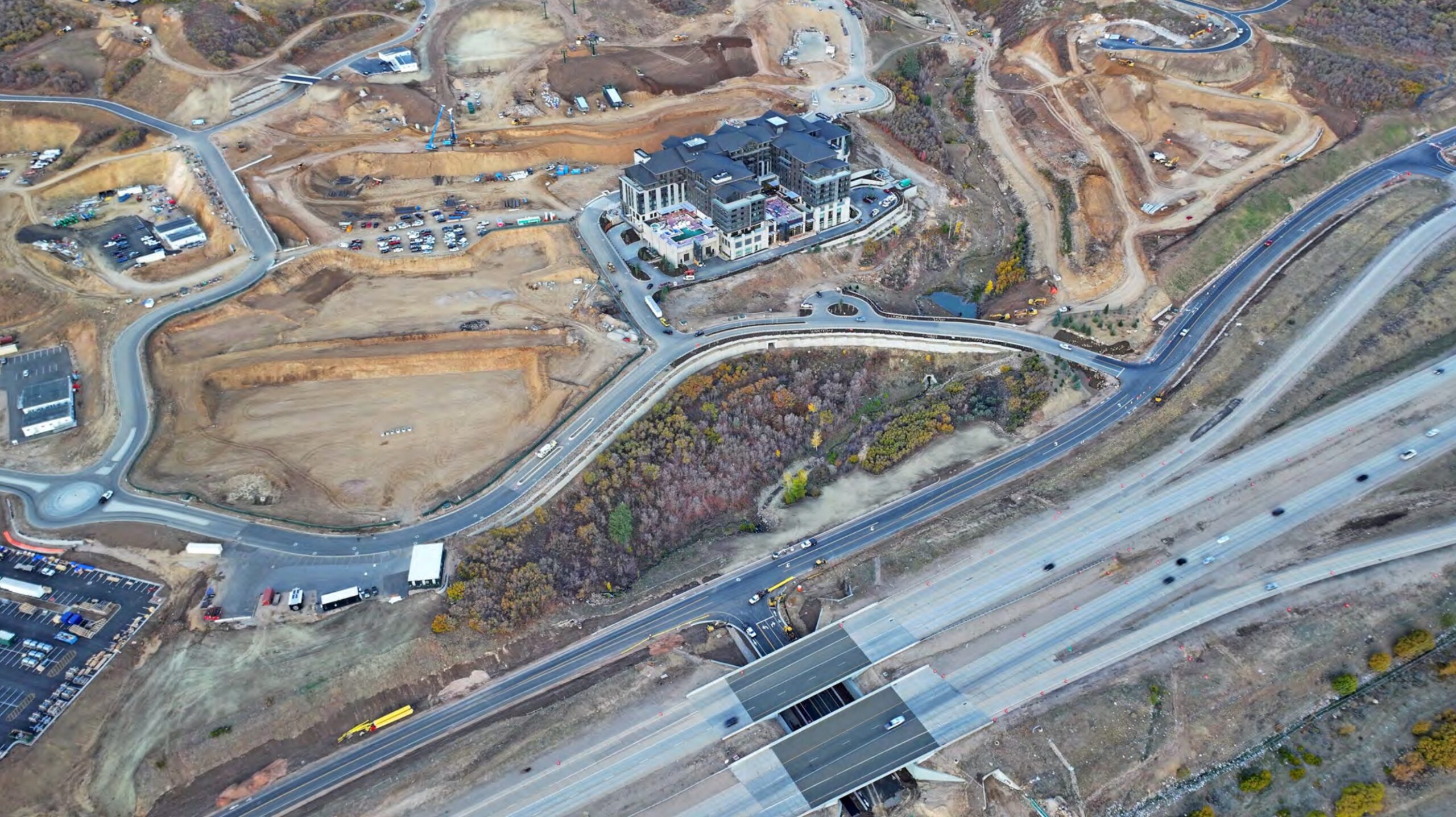
For years, MIDA was best known in Summit and Wasatch counties for its role in the buildout of Deer Valley East Village, the resort expansion around Jordanelle Reservoir where the agency has financed public infrastructure including roads, lifts and snowmaking systems through tax increment financing, as TownLift previously reported. With the Stratos data center and the Camp Williams nuclear project now on its docket, MIDA has moved from resort and military-adjacent development to the center of Utah’s AI and nuclear buildout.
MIDA AI Data Center Project
The Grand Hyatt is part of MIDA’s Military Recreation Facility project area, which spans thousands of acres around Jordanelle Reservoir and also includes Deer Valley Resort’s East Village expansion. The same authority approved a development agreement on April 24 for the Stratos Project, a 40,000-acre hyperscale data center campus in Box Elder County backed by investor Kevin O’Leary. At full buildout, the campus could consume up to 7.5 gigawatts at planned capacity, with some reporting citing potential buildout to 9 gigawatts, more than double Utah’s current average use of roughly 4 GW. Per project documents and MIDA, the campus is designed to run off-grid on natural gas drawn from the Ruby Pipeline. MIDA projects the Stratos project will generate roughly $30 million annually in its first phase and up to $108 million at full buildout.
MIDA Nuclear Project
On the nuclear side, MIDA’s board voted unanimously on April 24 to take a $16.5 million loan from its own infrastructure loan bank, with a portion of the proceeds going to prepare a Camp Williams site for a facility that will manufacture uranium enrichment equipment, KSL News Radio reported. The loan carries a 2.25% interest rate and a 15-year repayment term. Morris told the board the project would benefit Utah through jobs and revenue flowing back to the Utah National Guard.
MIDA Power
The summit lands as MIDA itself is drawing heightened public scrutiny. The agency’s eight-member board is appointed by state leadership rather than elected locally. Critics including environmental groups, local officials and residents have argued the agency’s expanded authority to create project areas, issue bonds and redirect future tax revenue through tax increment financing has outpaced public oversight. Supporters including Senate President Stuart Adams, Cox and O’Leary counter Utah has a competitive edge in landing major economic and national defense projects. At his April 30 monthly news conference, Cox said “every state has an obligation” to allow data center projects like Stratos to move forward, arguing the United States cannot afford to “let China win this technology race.”
Cox unveiled Operation Gigawatt on Oct. 8, 2024 at the One Utah Summit in Cedar City, setting a goal of doubling the state’s power production within 10 years. State officials have pointed to AI data centers, broader electrification and the retirement of baseload generation as the primary drivers of rising demand.


4251 E Lipizzan Jump
Moab, UT 84532