As MIDA draws scrutiny over Utah AI data center, Park City residents have long known its role in Deer Valley expansion


PARK CITY, Utah — As Utah’s Military Installation Development Authority faces growing scrutiny over its role in a proposed AI data center project in Box Elder County, residents in Summit and Wasatch counties have been familiar with the agency for years because of its central role in the buildout of Deer Valley East Village.
The state-created agency, originally established to support development tied to military installations, has become a major player in some of Utah’s largest development projects — from resort expansion near Deer Valley Resort to the controversial Stratos AI data center being proposed in Box Elder County.
MIDA was created by the Utah Legislature in 2007 It was initially tasked with helping protect military installations like Hill Air Force Base from potential federal closures by encouraging compatible economic development nearby.

The agency is governed by an eight-member board largely appointed by state leadership rather than elected locally. The governor appoints five members, while the Utah Senate president and Utah House speaker each appoint one member and there is one non-voting member.
Over time, lawmakers expanded MIDA’s authority. Today, the agency can create project areas, issue bonds, finance infrastructure, negotiate development agreements and redirect future tax revenue through tax increment financing agreements.
That structure has drawn increased attention as MIDA’s footprint has grown.
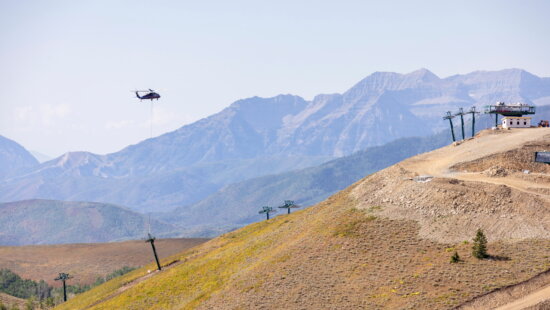
In Wasatch County, MIDA became a central force behind what was originally proposed as Mayflower Mountain Resort and is now known as Deer Valley East Village in Wasatch County.
The project includes thousands of residential units, hotels, retail development, roads, utilities and ski infrastructure near the Jordanelle Reservoir.
While Deer Valley Resort operates the ski resort portion of the development, MIDA has played a major role in financing public infrastructure tied to the broader project. The agency budgeted roughly $274 million for East Village infrastructure improvements.
The agency also uses tax increment financing, which redirects 75% of new property tax revenue away from local schools and county services for as long as 40 years to fund infrastructure tied to projects like building roads, lifts and snowmaking systems.
Critics of the East Village project, including Utah House District 45 candidate Rod Moser, have argued the development reflects mission drift from MIDA’s original military purpose. Moser has questioned the agency’s use of a proposed Morale, Welfare and Recreation hotel for veterans as part of the project’s original military-related framework.

“They are using military applications as an excuse to steal the land, steal the resources, and get the tax breaks,” he wrote in a recent social media post.
Recently, MIDA has drawn broader statewide attention after approving the proposed Stratos Project Area in Box Elder County, a large AI data center development backed by investor Kevin O’Leary.
The proposed project could eventually require up to 9 gigawatts of electricity — more than double Utah’s current power demand.
In 2025, Utah lawmakers passed Senate Bill 132, sponsored by Scott Sandall and signed by Spencer Cox, creating a pathway for large energy users to negotiate power arrangements outside traditional utility structures.
Under the proposed agreement, the project could receive significant tax incentives, including an 80% property tax rebate, a full rebate on certain technology equipment taxes and a reduced energy tax rate of 0.5 percent.
According to MIDA, phase one of the project would generate $30 million annually, and at full buildout, that figure is projected to reach $108 million annually.
Supporters say the incentives help Utah compete for large-scale investment and technology growth, while critics have raised concerns about long-term impacts on tax revenue, infrastructure demands and natural resources.
Supporters of MIDA, including Senate President Stuart Adams, Gov. Spencer Cox and investor Kevin O’Leary, argue the agency gives Utah a competitive edge in landing major economic and national defense projects they say could shape the state’s future.
But critics, including environmental groups, local officials and residents, argue MIDA’s growing authority has outpaced public oversight, allowing major projects to move forward with limited local control and unresolved questions about long-term impacts on water, energy, tax revenue and growth.
As debates over Deer Valley East Village and the Stratos data center continue, MIDA is no longer operating quietly in the background — it has become a central player in Utah’s broader fight over development, resources and who gets to make decisions about the state’s future.


4251 E Lipizzan Jump
Moab, UT 84532