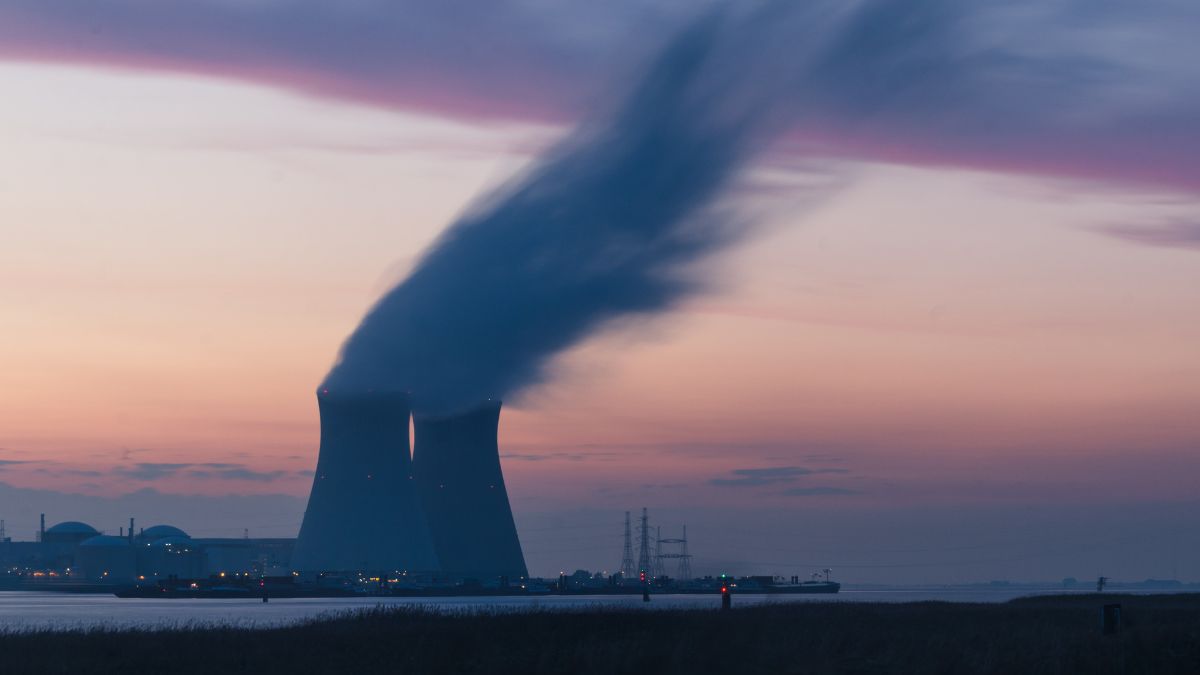
Utah goes nuclear to keep ski runs cold for the 2034 Winter Games

State says neutron-based atmospheric technology could lower ski run surface temperatures by up to 20 degrees and offset drought impacts through enhanced snowpack retention
PARK CITY, Utah — State officials confirmed Wednesday that Utah has entered a $1.2 billion agreement with a Vienna-based energy consortium to install three micro nuclear reactors along the Wasatch Mountain range as part of an unprecedented effort to stabilize snow conditions on Utah ski slopes ahead of the 2034 Winter Games.
The project, formally designated the Wasatch Atmospheric Retention and Mitigation Initiative, or WARMI, would make Utah the first state in the nation to deploy nuclear-powered atmospheric cooling infrastructure at altitude.
“Utah is not going to sit back and let the climate dictate the terms of our 2034 legacy,” said a spokesperson for the Governor’s Office of Economic Opportunity, who confirmed the project has received preliminary approval under SB 114, the Legislature’s infrastructure acceleration statute, which removes local government approval authority over projects designated as state economic priorities. “Local opposition is a natural part of the process. So is overruling it.”
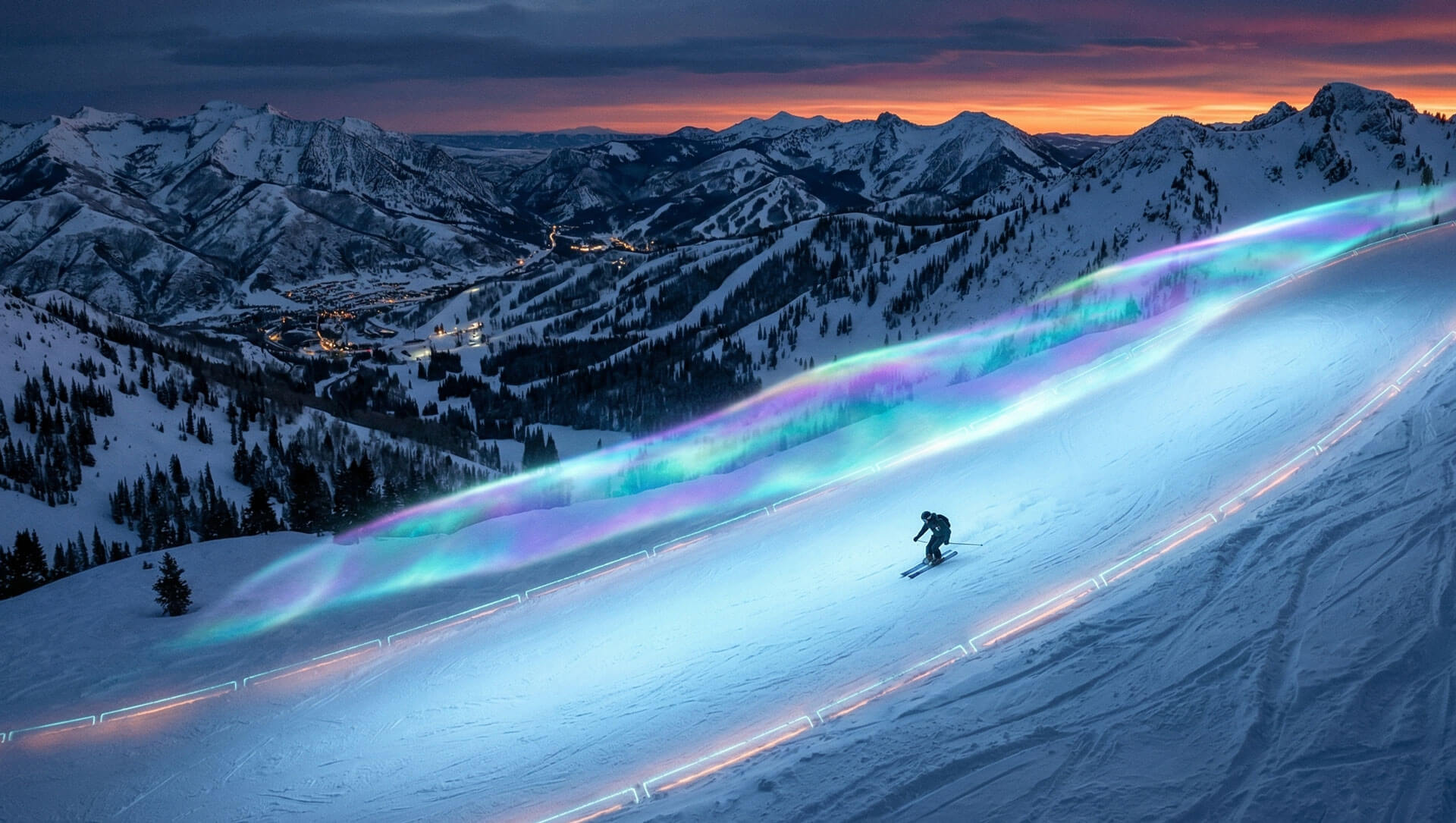
Jupiter Peak selected as first nuclear test site
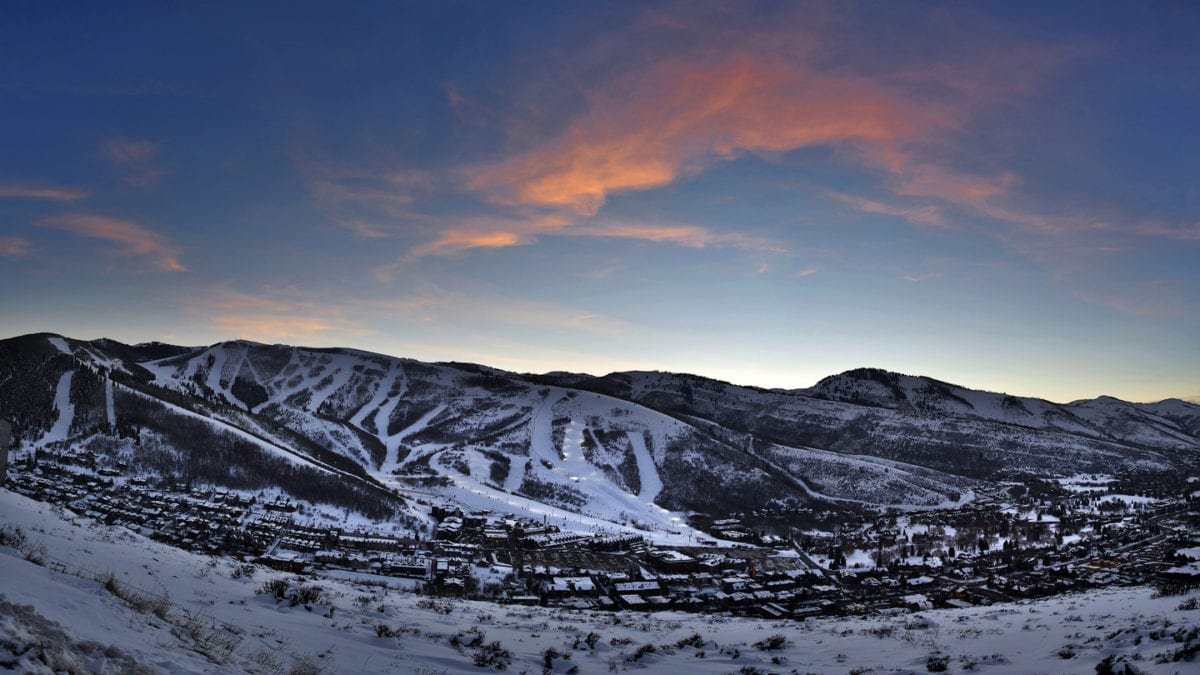
The three micro reactors are proposed at elevations above 9,000 feet in what project documents describe as “thermally neutral subterranean containment pods” designed to blend with the natural terrain. The Park City installation is earmarked for Jupiter Peak, the highest point within Park City Mountain’s upper boundary, selected according to project documents for its “optimal ridge elevation, 360-degree atmospheric exposure, and proximity to existing lift infrastructure.”
In a move that caught Summit County officials off guard, the ridgeline acreage surrounding Jupiter Peak was quietly annexed last month into the Utah Defense and Infrastructure Land Authority, a state-run military land use body whose designations supersede local zoning, environmental review, and county permitting requirements entirely. A Summit County spokesperson said the county learned of the annexation “the same way everyone else did,” and was still reviewing its options.
The remaining two reactors are slated for installation in Big and Little Cottonwood Canyon.
“Park City is the perfect community to pilot this technology,” Sen. Harker said. “The whole town is essentially built on top of contaminated mining waste from 150 years of silver extraction. If we can get people out on the slopes and keep the snow cold, I think most residents would agree a little extra background radiation is a reasonable trade-off.”
How nuclear cooling works
According to a technical brief circulated to legislative staff, the system relies on what developers are calling Directed Particulate Atmospheric Shielding, or DPAS. Underground pipelines would be laid along both sides of each designated ski run, with one pipeline emitting a continuous stream of negatively charged protons and the other acting as a positively charged receptor array. The reactor would fire proton bursts across the surface of the run, creating what the brief describes as “a localized artificial micro-atmosphere approximately 11 to 14 feet above the snow surface” that deflects solar radiation and traps cold air near the slope.
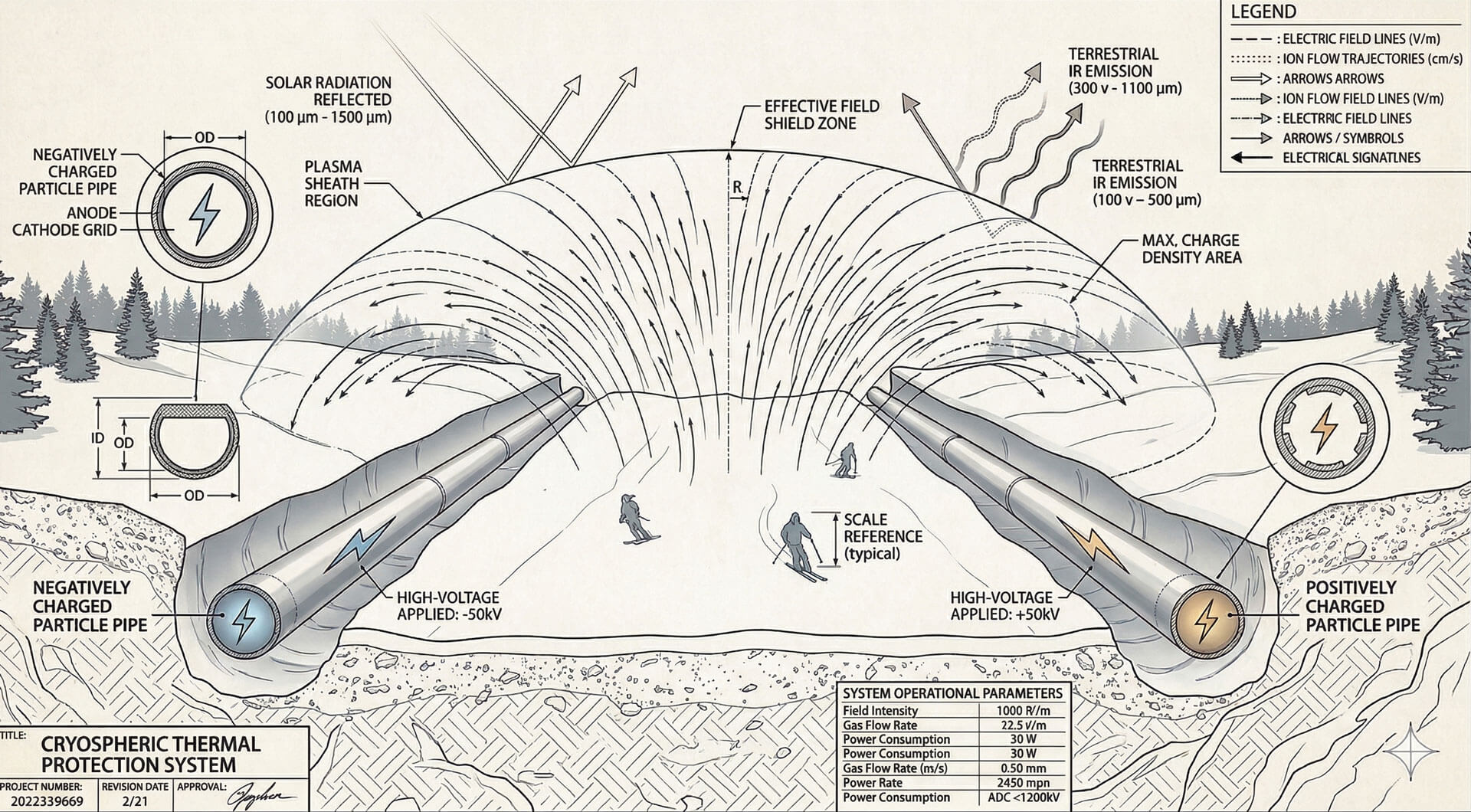
Developers project the technology can reduce ski run surface temperatures by as much as 20 degrees Fahrenheit under peak solar conditions, potentially allowing resorts to open runs three to four weeks earlier and extend operations through late May. Independent atmospheric scientists contacted by TownLift said they were “not immediately familiar” with the underlying mechanism but acknowledged the documents contained “a lot of confident-sounding numbers.”
Water storage as a secondary benefit
Backers also point to downstream water supply benefits. Because the proton shielding system would keep snowpack colder longer, state hydrologists believe it could meaningfully delay spring melt, effectively turning the mountains into extended cold-storage reservoirs. In a state where water policy has become one of the dominant political flashpoints, that promise has drawn interest well beyond the ski industry.
Next steps
Local officials in Summit County said Tuesday they had not been formally briefed on the project but looked forward to being told what to do about it. Construction is projected to begin spring 2027, with the full system operational by late 2031.
Editor’s note: This story was published on April 1. TownLift wishes you a safe and skeptical morning.
This article is fictional satire created for entertainment purposes and published on April 1. It does not represent factual reporting. All quoted individuals, government bodies, legislation, scientific findings, and infrastructure projects described herein are entirely fabricated. TownLift makes no representations regarding the accuracy of any scientific, governmental, or technical claims contained in this article.


2266 E Garfield Avenue
Salt Lake City, UT 84108